outdoor post lights

Structural Design and Wind Load Analysis for Outdoor Post Lights in Mechanical Engineering

When hurricane-force winds struck a coastal infrastructure project in 2022, dozens of newly installed outdoor post lights toppled like dominoes, causing widespread blackouts, road closures, and repair costs exceeding millions. Investigations revealed a common culprit: inadequate wind load analysis during structural design, leading to insufficient foundation depth, undersized anchor bolts, and pole deflection beyond limits.

As slender cantilevered structures, outdoor post lights—widely used in parking lots, pathways, campuses, highways, and public spaces—are particularly vulnerable to overturning moments, vortex shedding, and fatigue from environmental forces. In mechanical engineering, overlooking these dynamics can result in catastrophic failures, safety hazards, and non-compliance with codes.

This comprehensive guide equips mechanical engineers with expert methodologies for robust wind load analysis and structural design of outdoor post lights. Drawing from the latest standards as of 2026—including AASHTO LTS-6 (with 2025 interim revisions) and ASCE/SEI 7-22—we cover calculations, material selection, foundation detailing, and real-world examples to ensure safe, durable installations.

With over 20 years designing structural supports for transportation and infrastructure projects, I’ve applied these principles to prevent failures in high-wind zones. This skyscraper-level resource goes beyond basic overviews, providing step-by-step equations, tables, and case studies for superior outcomes.

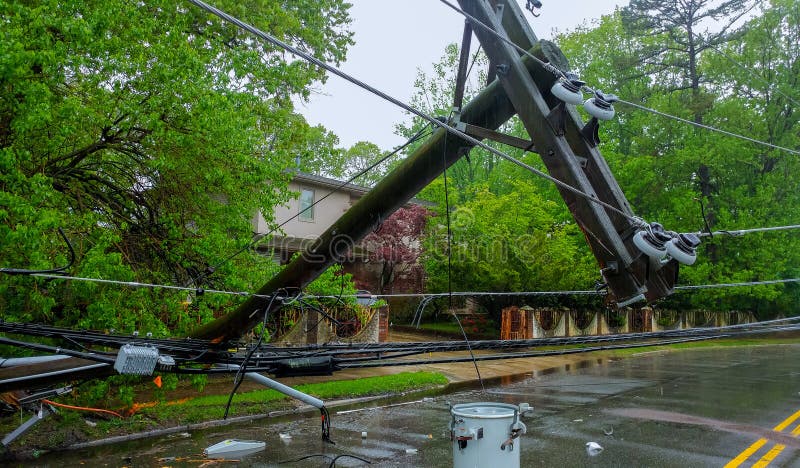
Examples of outdoor post light pole failures due to extreme wind events, highlighting the risks of inadequate design.

Understanding Outdoor Post Lights as Structural Elements

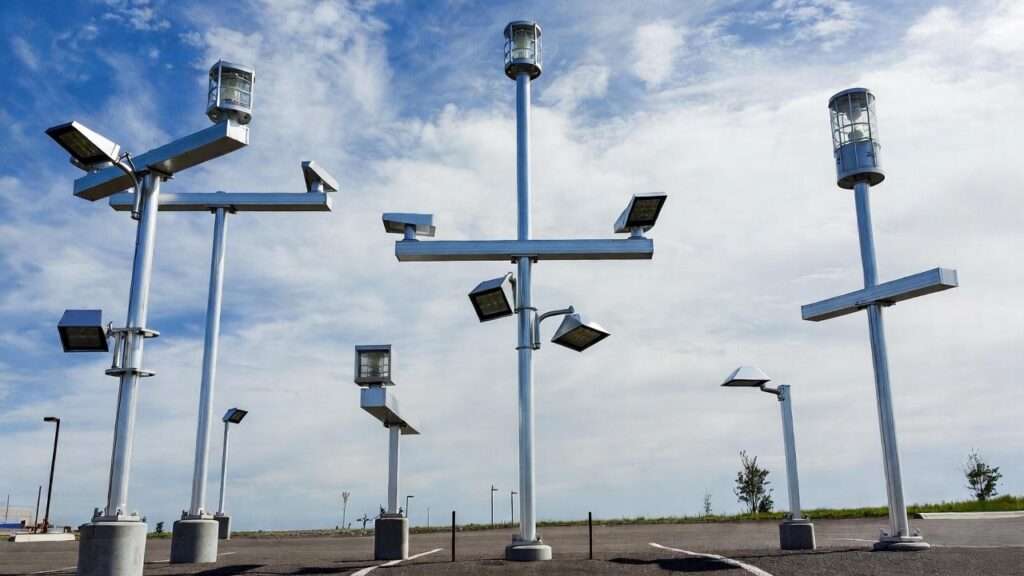
Types and Applications

Outdoor post lights encompass various configurations:

  • Straight round or square poles (15-40 ft typical).
  • Tapered poles for aesthetic and aerodynamic benefits.
  • High-mast lighting (50-150 ft) for large areas like interchanges.
  • With single luminaires, multiple fixtures, or decorative arms.

Applications include roadway illumination, parking facilities, pedestrian pathways, sports fields, and commercial sites. Mechanical engineers must consider loading from luminaires, banners, or attachments.

CAD renderings of tapered aluminum outdoor lighting poles, common in modern installations.

Key Structural Challenges

As cantilevers, poles experience high bending moments at the base. Dynamic effects include:

  • Vortex shedding → causing oscillations.
  • Galloping in ice/wind.
  • Fatigue from millions of cycles in traffic-induced gusts.

Material corrosion (especially coastal) and foundation soil interaction add complexity.

Governing Standards and Codes

Primary Standards for Design

The cornerstone is AASHTO Standard Specifications for Structural Supports for Highway Signs, Luminaires, and Traffic Signals, 6th Edition (LTS-6), updated with 2025 interim revisions. These address fatigue, truck gusts, and EPA.

Complementary: ASCE/SEI 7-22 for general wind provisions, and ASCE/SEI 72-21 for steel lighting poles.

Comparison: AASHTO vs. ASCE 7

AASHTO LTS-6 prioritizes highway-specific loads (e.g., fatigue categories I-III, truck gusts). Use for roadway/proximity installations.

ASCE 7-22 provides broader wind maps and velocity pressures; suitable for non-highway (e.g., parking lots). Cross-reference for Risk Category II structures.

Other Considerations

Local amendments to IBC, special wind regions (mountains, hurricanes), and manufacturer EPA certifications.

Wind Load Fundamentals

Wind Load Theory

Velocity pressure: qz=0.00256KzKztKdKeV2q_z = 0.00256 K_z K_{zt} K_d K_e V^2 (psf) per ASCE 7-22, where V is 3-second gust speed.

Force: F=qzGCfAF = q_z G C_f A (AASHTO simplified).

Load Cases per AASHTO/ASCE

  • Natural wind gusts.
  • Truck-induced (highway).
  • Fatigue (equivalent static).
  • Ice accretion (northern climates).

Diagrams illustrating wind forces and moments on high-mast lighting poles.

Determining Basic Wind Speed

Use ASCE 7-22 hazard tool for Risk Category II (typical). Exposure C for open terrain.

Step-by-Step Wind Load Calculation

Calculating Effective Projected Area (EPA)

The EPA represents the wind-exposed area adjusted by force coefficients. Manufacturers provide rated EPA for fixtures, but engineers must verify total system EPA.

Total EPA = EPA_pole + EPA_arm + EPA_luminaire(s)

For round poles: EPA_pole ≈ (D_avg × Height) × C_f / 144 (ft²), where D_avg is average diameter in inches.

Typical values:

  • 4-inch diameter pole: ~0.8 ft² per 10 ft height.
  • LED cobrahead luminaire: 1.2–2.0 ft².

Force and Moment Computation

Per AASHTO LTS-6:

Force on element: F=qz×G×Cf×EPAF = q_z \times G \times C_f \times EPA

Moment at base: M=∑(Fi×hi)M = \sum (F_i \times h_i)

Where:

  • qzq_z: Velocity pressure at height z.
  • G: Gust effect factor (0.85 simplified for rigid structures).
  • C_f: Force coefficient (1.8 round tapered, 2.0 square).

Worked Example: 30-ft tapered aluminum pole (5″ to 4″ OD), single LED fixture (EPA 1.5 ft²), V = 115 mph (Risk Cat II, Exposure C).

  1. Velocity pressure at 33 ft (effective height): qz=0.00256×1.0×1.0×0.85×1152=28.9q_z = 0.00256 \times 1.0 \times 1.0 \times 0.85 \times 115^2 = 28.9 psf
  2. Pole EPA ≈ 3.2 ft² (calculated). Total EPA = 3.2 + 1.5 = 4.7 ft²
  3. Force: F=28.9×1.0×1.8×4.7≈244F = 28.9 \times 1.0 \times 1.8 \times 4.7 ≈ 244 lb (using C_f = 1.8 for tapered)
  4. Moment at base ≈ 244 × 28 ft (centroid) ≈ 6,832 ft-lb

Gust Effect Factor and Directionality

For flexible poles (>50 ft or natural frequency <1 Hz), use rigorous G_f >1.0. Directionality K_d = 0.85 (AASHTO).

Fatigue Considerations

Fatigue-critical in highway settings. Use Category I (high traffic) equivalent static load: 20–30 psf on EPA.

Material Selection and Pole Design

Steel vs. Aluminum Poles

Galvanized Steel:

  • Higher strength (Fy = 50–65 ksi).
  • Better for high-mast or heavy loads.
  • Heavier → larger foundations.

Aluminum (6063-T6 or 6061-T6):

  • Excellent corrosion resistance.
  • Lighter (1/3 steel weight).
  • Preferred for coastal or aesthetic applications.
  • Allowable stress ~18–22 ksi (AASHTO).

Tapered designs reduce weight and wind load while maintaining moment capacity.

Deflection and Vibration Control

Service deflection limit: H/50 to H/100 (AASHTO recommends ≤ height/50 at 50 mph).

Natural frequency: Avoid resonance with vortex shedding (Strouhal number ~0.2).

Critical wind speed: Vcr=fn×D0.2V_{cr} = \frac{f_n \times D}{0.2}

For f_n ≈ 1 Hz, D = 0.4 ft → V_cr ≈ 60 mph → install damper if < design wind.

Anchor Bolt and Base Plate Design

Overturning induces tension in 2–4 bolts. Use A354 or F1554 Grade 105.

Base plate: AISC equations for bending and bolt pullout.

Foundation Design for Wind Resistance

Types of Foundations

  • Drilled Piers (Caissons): Most common; 3–6 ft diameter, 10–30 ft deep.
  • Direct Embed: Pole buried 10% height + 3 ft.
  • Spread Footings: Rare for tall poles due to overturning.

Overturning Moment Resistance

For caisson: Passive soil pressure + skin friction.

Resisting moment ≈ (Soil bearing × area) × lever arm + weight.

Design Example: Same 30-ft pole, M = 6,832 ft-lb ultimate (LRFD γ = 1.35 wind).

Soil bearing 4,000 psf, use 4-ft diameter pier, 15 ft deep.

Check embedment for passive pressure (Rankine theory).

Reinforcement and Detailing

Vertical rebar: #8 @ 12″ spiral or ties. Provide bolt cage template for precise anchor placement.

Site-Specific Geotechnical Considerations

Always obtain soil report: Bearing capacity, lateral modulus (p-y curves for FEA), groundwater, frost heave.

Practical Examples and Case Studies

Worked Example 1: Parking Lot Post Light

25-ft aluminum pole, Exposure B, V = 110 mph, single fixture EPA 1.3 ft².

  • q_z ≈ 24 psf
  • Total EPA ≈ 4.0 ft²
  • Base moment ≈ 5,000 ft-lb
  • Foundation: 3-ft diameter caisson, 12 ft deep, #6 verticals

Worked Example 2: Highway High-Mast

80-ft steel pole, 4 luminaires (total EPA 12 ft²), Fatigue Category I, V = 120 mph.

  • Include truck gust (additional 30 psf on lower 20 ft)
  • Base moment > 80,000 ft-lb
  • Foundation: 6-ft caisson, 35 ft deep, heavy rebar cage
  • Vibration damper required

Before-and-After Failure Analysis

Case: 40-ft poles in Midwest failed at welds after 10 years → fatigue from unaccounted galloping. Redesign: Added internal dampers, upgraded weld details.

Software Tools

  • Commercial: PoleFD (Hapco), SpunLite, custom Excel with AASHTO equations.
  • FEA: ANSYS or SAP2000 for nonlinear p-y analysis.
  • Free resources: FHWA spreadsheets.

Best Practices and Common Pitfalls

Dos and Don’ts

Do:

  • Verify manufacturer EPA with independent calculation.
  • Include 1.2–1.5 safety factor on foundation.
  • Specify hot-dip galvanizing + powder coat for longevity.

Don’t:

  • Rely solely on ASCE 7 without AASHTO fatigue for roadside.
  • Ignore ice/wind combination loads in northern states.

Vibration Mitigation

Stockbridge or viscous dampers inside pole (effective for 2nd mode).

Maintenance and Inspection

Annual visual + biennial ultrasonic weld checks for fatigue-critical.

Sustainability and Cost Optimization

Use recycled aluminum, LED fixtures for energy savings. Lifecycle cost often favors deeper foundations over frequent replacements.

Conclusion

Robust wind load analysis and structural design transform outdoor post lights from potential liabilities into reliable, long-lasting assets. By applying AASHTO and ASCE standards, selecting appropriate materials, and detailing foundations for site-specific conditions, mechanical engineers ensure safety, code compliance, and performance under extreme winds.

Implement these principles in your next project—start with a geotechnical investigation and precise EPA calculation. The result: infrastructure that stands strong for decades.

Frequently Asked Questions (FAQs)

What wind speed should I design outdoor post lights for? Minimum 115–150 mph 3-sec gust (Risk Category II), depending on location—use ASCE 7-22 maps or local codes.

Is AASHTO or ASCE 7 better for non-highway applications? ASCE 7-22 for general/parking lots; AASHTO mandatory near highways due to fatigue and truck gust provisions.

How deep should the foundation be for a 30-ft pole? Typically 12–18 ft for caissons, depending on soil and wind zone—always verify with calculations.

Can I use manufacturer-provided EPA directly? Yes for preliminary, but verify total system EPA and apply correct C_f for your pole shape.

What if my site is in a special wind region? Consult local meteorologist or use ASCE 7 Chapter 26 special wind regions—higher velocities required.

Index
Scroll to Top