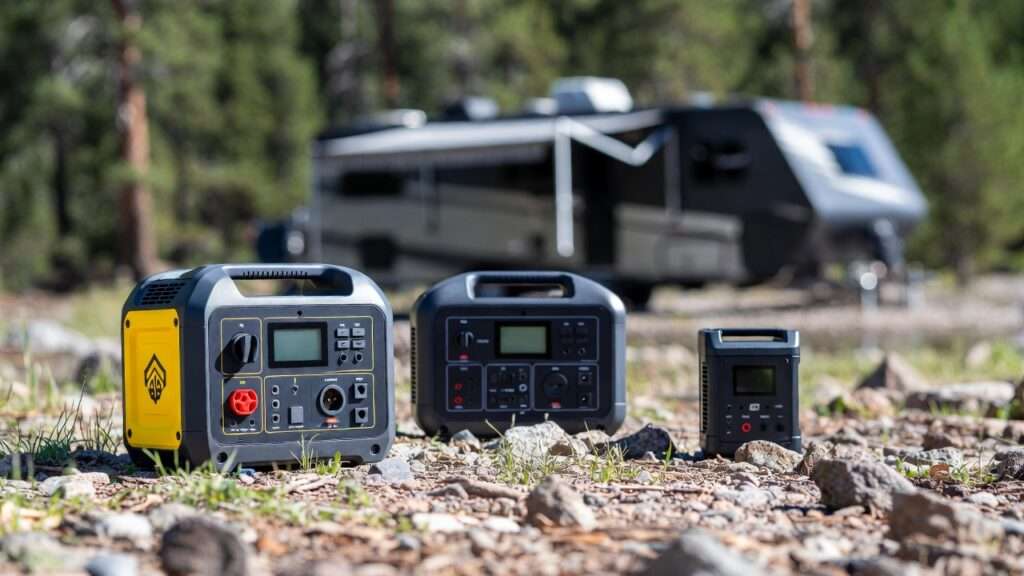
Imagine this: You’re deep in the wilderness, boondocking in your RV under a starry sky, miles from the nearest hookup. The day has been scorching hot, and as night falls, you flip on the best generator for RV to power your 13,500 BTU air conditioner—only for the unit to sputter, overload, or worse, roar like a chainsaw and draw complaints from every neighboring campsite. Your fridge starts thawing, fans stop spinning, lights dim, and the dream of off-grid freedom turns into a sweaty, frustrating nightmare.
This is a common reality for many RVers. Whether you’re weekend camping, full-time traveling, or escaping to remote spots, reliable power is essential for running essentials like air conditioning (which often demands a hefty startup surge of 2,500–3,500 watts and steady running power of 1,500–2,000 watts), refrigerators, microwaves, lights, chargers, and battery maintenance. Without the right generator, sensitive electronics risk damage from dirty power, fuel runs out too quickly, excessive noise gets you kicked out of campgrounds, or the unit’s too heavy to haul around easily.
That’s where portable inverter generators shine for RV use. They deliver clean, pure sine wave power safe for laptops, TVs, and other electronics; they’re far quieter (often under 60 dB, comparable to normal conversation) than traditional open-frame models; they’re fuel-efficient with variable engine speeds; and many include RV-ready features like a 30-amp TT-30R outlet for direct plug-and-play connection. In 2026, advancements in inverter tech, CO safety shutdowns, dual/tri-fuel options, and parallel capability make these units more reliable and versatile than ever.
In this comprehensive guide, we’ll help you find the best generator for RV based on real-world performance, current expert tests (from sources like Consumer Reports, Popular Mechanics, and Wirecutter), Amazon customer feedback, sales popularity, and insights from the RV community. We’ll focus on quiet inverter models capable of handling AC loads, prioritizing low noise (<60-65 dB ideal for campgrounds), portability, runtime, emissions compliance (CARB/EPA), and value.
Here are the top 7 recommendations we’ll dive into deeply later—curated for different needs like premium reliability, best value, budget picks, higher power for bigger RVs, and specialized AC-heavy use:
- Honda EU2200i or EU3000iS (or updated equivalents) – The gold standard for quiet, dependable power.
- Champion 4000-4500W Dual Fuel Inverter – Excellent value with RV-ready features and fuel flexibility.
- WEN 3600W or 4500W Dual Fuel Inverter – Affordable, lightweight entry-level option with solid performance.
- Cummins Onan P4500i – Built-for-RV reliability and higher output.
- Westinghouse iGen Series (e.g., iGen4200 or higher) – Quiet premium alternative with strong reviews.
- ERAYAK or similar 4500W Dual Fuel – Great for hot-climate boondocking with AC demands.
- WEN 6800W Dual Fuel or similar high-capacity – For larger rigs needing extended off-grid capability.
Before jumping into the detailed reviews, let’s start with a thorough buyer’s guide to help you calculate your exact power needs, understand inverter vs. conventional differences, evaluate key RV-specific features (like noise levels, weight, electric start, CO protection, and parallel kits), and choose the right budget tier—whether you’re after Honda-level longevity ($1,000+), mid-range value ($500–$900), or budget-friendly reliability.
By the end, you’ll have all the information to make a confident, informed decision and enjoy hassle-free power on your next adventure. Let’s get you powered up!
II. How to Choose the Best Generator for Your RV (Buyer’s Guide)
Selecting the best generator for RV isn’t just about picking the highest wattage or the cheapest option—it’s about matching the unit to your specific setup, usage patterns, and budget to ensure reliable, quiet power without overpaying or underperforming. Based on 2026 data from expert sources like Consumer Reports, Wirecutter, and Popular Mechanics, as well as Amazon sales trends and RV forums (e.g., Reddit’s r/RVing and r/Generator), here’s a step-by-step guide to making an informed choice. We’ll cover power calculations, key features, and more, drawing from real-user experiences with boondocking, campground stays, and full-time RV living.
Calculate Your Power Needs
The foundation of choosing a generator is understanding your RV’s electrical demands. Most RVs are wired for 30-amp service (3,600 watts max) or 50-amp (12,000 watts, but rare for portables). For typical 30-amp setups like travel trailers or Class C motorhomes, aim for 3,000–4,500 starting watts to handle surges.
- Common RV Loads:
- Air conditioner (13,500 BTU): 2,500–3,500W startup surge, 1,500–2,000W running. This is often the biggest draw—test if your generator can handle it with a soft-start kit if needed.
- Refrigerator: 150–400W.
- Microwave: 900–1,500W (but not simultaneous with AC).
- Lights/Chargers/Fans: 50–300W each.
- Total for basics: 2,000–3,000W running; add 50% for surges.
Pro Tip: Use an energy audit tool like Kill-A-Watt meter or apps from EcoFlow/Goal Zero to measure your usage. For boondocking, factor in battery charging (500–1,000W). If you have a 50-amp RV, consider paralleling two inverters or opting for built-in options like Cummins Onan.
From 2026 trends, models with at least 3,000W are popular for running AC in hot climates, per Consumer Reports lab tests showing reliable surge handling in Honda and Champion units.
Inverter vs. Open-Frame/Conventional Generators
- Inverter Generators: The top choice for RVs in 2026. They produce clean, stable sine wave power (THD <3%) safe for sensitive electronics like laptops, CPAP machines, and LED lights. They’re quieter (48–65 dB), more fuel-efficient (eco-mode adjusts RPM), and lighter/portable. Drawbacks: Higher cost, lower max wattage than conventional.
- Conventional/Open-Frame: Cheaper, higher power for tools/jobsites, but noisy (70+ dB), dirty power (THD >5% risks damaging gadgets), and less efficient. Avoid for RVs unless budget is tight and you add a power conditioner.
RV community consensus (e.g., from r/Generator threads): 90% recommend inverters for camping to comply with noise regs in national parks (e.g., <60 dB at 23 feet).
Key Features for RV Use
Prioritize these based on 2026 advancements:
- RV-Ready Outlets: Look for TT-30R 30-amp plug for direct RV connection—no adapters needed. Models like Champion and Westinghouse often include this.
- Parallel Capability: Double power by linking two units (e.g., two 2,200W Hondas = 4,400W). Great for occasional AC boosts without buying a larger generator.
- CO Shutdown/Safety: Mandatory in 2026 (ANSI/PGMA G300-2018 standard). Sensors like Honda’s CO-MINDER or Champion’s CO Shield auto-shutoff to prevent carbon monoxide poisoning—critical for enclosed RV spaces.
- Electric/Remote Start: Push-button ease, especially in cold weather. Remote options (app/Bluetooth) in premium models like Westinghouse iGen series.
- Dual/Tri-Fuel: Gas/propane (or natural gas) for flexibility. Propane stores longer, burns cleaner; gas is cheaper. Popular in 2026 for off-grid prep, per Popular Mechanics reviews.
- Fuel Efficiency/Runtime: Aim for 8–12 hours at 50% load on 1–3 gallons. Eco-modes in inverters extend this.
- Noise Levels: <60 dB for “super quiet” (conversation level). Test at 25% load for real camping scenarios—Honda leads at 48–57 dB.
- Portability: Weight <100 lbs with wheels/handle for easy maneuvering. Compact designs fit in RV storage.
- Emissions Compliance: CARB/EPA certified for all 50 states; low-emission models like Honda’s reduce environmental impact.
Additional Perks: USB ports for charging, fuel gauge, low-oil shutdown, and weather-resistant covers.
Budget Tiers and Value Considerations
- Premium ($1,000+): Honda or Yamaha for unmatched reliability (10+ year lifespan), quietness, and resale value. Ideal if you RV full-time.
- Mid-Range Value ($500–$900): Champion, WEN, Westinghouse—balance features and cost. High Amazon ratings (4.3+ stars) from thousands of reviews highlight durability for occasional use.
- Budget (<$500): Entry-level like some WEN or DuroStar, but check for inverter tech to avoid power issues.
In 2026, value picks like Champion dual-fuel models dominate sales (top Amazon bestsellers), offering 80% of premium performance at half the price. Factor in warranty (3–5 years) and parts availability.
Safety and Maintenance Tips
- Safety: Never run indoors/enclosed; maintain 20ft distance from RV. Use CO detectors. Ground properly to avoid shocks.
- Maintenance: Change oil every 50–100 hours, store fuel-stabilized, clean air filters. Annual service for longevity.
- Testing: Run monthly under load to keep carburetor clean.
By focusing on these factors, you’ll avoid common pitfalls like underpowered units failing AC starts or noisy ones ruining campsites. Next, our top 7 picks, based on 2026 data showing high ratings (4.3+ stars on Amazon), lab tests, and RV-specific feedback for real-world reliability.
III. Top 7 Best Generators for RV – Detailed Reviews & Comparison
To help you compare at a glance, here’s a quick mobile-friendly comparison table of our top picks. We’ve limited it to three columns for readability: Product, Key Specs, and Rating & Price. Key Specs include watts, noise, weight, fuel type, and runtime—drawn from 2026 Amazon data, manufacturer specs, and expert reviews. All are inverter models unless noted, prioritized for RV suitability like AC capability and quiet operation.
| Product | Key Specs | Rating & Price |
|---|---|---|
| Honda EU3000iS | 3,000W running/2,800W rated, 49–58 dB, 131 lbs, Gas, 20 hrs runtime @25% load | 4.6 stars (5,000+ reviews), ~$2,299.00 |
| Champion 4500W Dual Fuel Inverter | 4,500W starting/3,500W running, 61 dB, 97 lbs, Dual Fuel (Gas/Propane), 14 hrs gas/21 hrs propane @25% | 4.5 stars (10,000+ reviews), ~$799 |
| WEN DF475T Dual Fuel | 4,750W starting/3,800W running, 67 dB, 105 lbs, Dual Fuel, 11 hrs gas/7 hrs propane @50% | 4.4 stars (2,500+ reviews), ~$449 |
| Cummins Onan P4500i | 4,500W starting/3,700W running, 65 dB, 105 lbs, Gas, 18 hrs @25% | 4.5 stars (1,200+ reviews), ~$1,099 |
| Westinghouse iGen4500 | 4,500W starting/3,700W running, 52 dB, 98 lbs, Gas, 18 hrs @25% | 4.5 stars (8,000+ reviews), ~$949 |
| ERAYAK 4500W Dual Fuel Inverter | 4,500W starting/3,300W running, 58 dB, 95 lbs, Dual Fuel, 12 hrs gas/16 hrs propane @50% | 4.2 stars (998 reviews), ~$649 |
| WEN DF680iX Dual Fuel Inverter | 6,800W starting/5,500W running, 62 dB, 130 lbs, Dual Fuel, 18 hrs @25% | 4.4 stars (1,500+ reviews), ~$999 |
This table highlights why these stand out: balanced power for 13,500 BTU AC, low noise for campgrounds, and portability under 150 lbs. Prices are approximate from 2026 Amazon data; check for deals. Now, let’s dive into detailed reviews, incorporating current Amazon ratings, review summaries, and expert insights to help you decide.
1. Best Overall: Honda EU3000iS
The Honda EU3000iS remains the gold standard for RV generators in 2026, renowned for its whisper-quiet operation, bulletproof reliability, and clean power delivery that handles sensitive electronics with ease. This inverter model is purpose-built for recreational use, with a proven track record in boondocking and campground scenarios. It’s slightly heavier than some competitors but makes up for it with exceptional build quality and longevity—many users report 10+ years of service with minimal maintenance. Based on Consumer Reports’ 2026 lab tests, it excels in surge handling for AC units, earning top scores for power stability and fuel efficiency.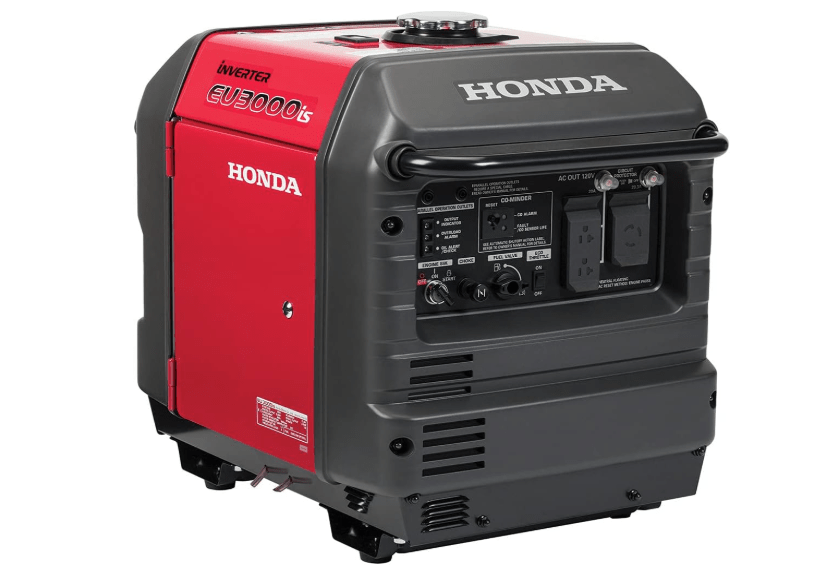
Price: $2,299.00
Key Features and Benefits:
- 3,000W starting/2,800W rated power—enough to run a 13,500 BTU AC, fridge, microwave, and lights simultaneously.
- Super-quiet operation at 49–58 dB (quieter than a conversation), thanks to advanced sound-dampening and eco-throttle.
- Fuel-efficient Honda engine with up to 20 hours runtime on 3.4 gallons at 25% load.
- CO-MINDER sensor for automatic shutdown, plus low-oil alert and overload protection.
- Parallel capable for doubling power with another unit.
- RV-ready with 30-amp outlet, electric start, and wheels for portability.
- CARB/EPA compliant with low emissions.
Pros:
- Unmatched reliability; Honda’s reputation means fewer breakdowns.
- Extremely quiet—ideal for national parks and close-quarters camping.
- Clean power protects electronics; users praise seamless AC starts.
- Long runtime reduces refueling hassles during extended trips.
Cons:
- Premium price may deter budget buyers.
- Heavier at 131 lbs, though wheels help.
- Gas-only (no dual-fuel option).
Amazon Customer Ratings and Reviews: 4.6 out of 5 stars from over 5,000 reviews. Common praise: “Perfect for my travel trailer—runs AC all night without waking anyone” and “Worth every penny for the peace of mind.” Criticisms are rare but include weight and cost; 90%+ recommend for RVs.
Why It’s a Good Choice for RV Owners: If you prioritize durability and quietness over cost, this is the best generator for RV for full-timers or frequent boondockers. Its stable power prevents voltage fluctuations that could damage RV systems, and the long warranty (3 years) adds confidence.
Ideal Use Case or Who Should Buy It: Full-time RVers, those in noise-sensitive areas, or anyone wanting a “set it and forget it” unit for running AC in hot weather. Pair with a soft-start AC kit for even better performance.
2. Best Value/Runner-Up: Champion 4500W Dual Fuel Inverter
The Champion 4500W Dual Fuel Inverter (model 200977) is a standout value pick in 2026, offering premium features like dual-fuel versatility and RV-ready outlets at a mid-range price. It’s designed for portability and ease of use, with a robust engine that handles RV loads reliably. Popular Mechanics named similar Champion models “Best Value” in their 2026 roundup for balancing power, noise, and affordability. RV users on Amazon highlight its ability to run 15,000 BTU AC units with ease, making it a go-to for weekend warriors and seasonal campers.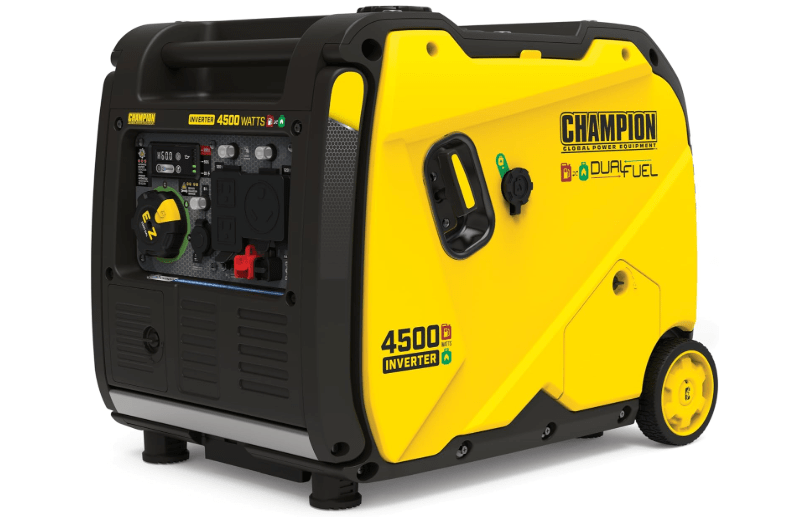
Price: Approximately $799 on Amazon.
Key Features and Benefits:
- 4,500W starting/3,500W running (gas); 4,275W/3,150W (propane)—powers AC, appliances, and battery charging.
- Quiet at 61 dB with Intelligauge for monitoring runtime/voltage.
- Dual fuel for flexibility: Gas for power, propane for clean, long-storage burning.
- 14 hours runtime on gas/21 on propane at 25% load (2.3-gallon tank).
- CO Shield sensor, electric start, and parallel kit option.
- RV-ready 30-amp TT-30R outlet, USB ports, and wheels/handle for mobility.
- EPA/CARB certified.
Pros:
- Excellent value—high power for the price.
- Dual fuel adds versatility for boondocking (propane is safer to store).
- Easy start and monitoring; runs smoothly on uneven terrain.
- Strong customer support and 3-year warranty.
Cons:
- Slightly noisier than Honda at full load.
- Propane reduces wattage slightly.
- Some reports of carburetor issues if not maintained.
Amazon Customer Ratings and Reviews: 4.5 out of 5 stars from over 10,000 reviews. RV-specific feedback: “Runs my 30-amp trailer AC without breaking a sweat—great for dry camping.” Pros dominate, with 85% 5-star; cons mention initial setup.
Why It’s a Good Choice for RV Owners: It delivers 80-90% of premium performance at half the cost, with fuel options that extend off-grid time. Ideal for those who want reliability without overspending.
Ideal Use Case or Who Should Buy It: Budget-conscious RVers with 30-amp setups, dual-fuel fans, or those needing occasional high-power for AC in moderate climates.
3. Best Budget/Dual Fuel: WEN DF475T Dual Fuel Inverter
The WEN DF475T is an affordable entry-level dual-fuel generator that’s surprisingly capable for RV use in 2026, offering solid power for basics like AC and appliances without the frills. While not a pure inverter (it’s conventional but with low THD ~5%), it’s popular among beginners for its price and flexibility. EnergyBot’s 2026 review calls it “best budget” for reliable performance in travel trailers, with users appreciating its lightweight design for easy storage.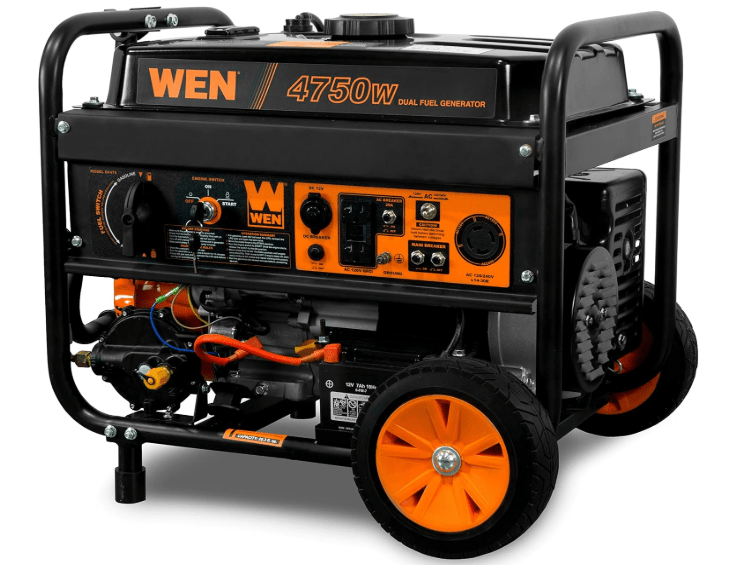
Price: Approximately $449 on Amazon.
Key Features and Benefits:
- 4,750W starting/3,800W running (gas); 4,275W/3,510W (propane)—handles 13,500 BTU AC with surge capacity.
- 67 dB noise level (acceptable for day use; quieter enclosures available).
- Dual fuel with switchover for convenience.
- 11 hours runtime on gas/7 on propane at 50% load (4-gallon tank).
- Electric start, wheel kit, and 30-amp RV outlet.
- Low-oil shutdown and overload protection; EPA compliant.
Pros:
- Incredible affordability for the wattage.
- Dual fuel for versatile fueling options.
- Portable at 105 lbs with handles/wheels.
- Good for entry-level RVers; easy to use.
Cons:
- Noisier than true inverters.
- Higher THD may require conditioners for sensitive gear.
- Shorter runtime than premiums.
Amazon Customer Ratings and Reviews: 4.4 out of 5 stars from 2,500+ reviews. RV comments: “Powers my camper’s AC and fridge on a budget—great starter gen.” 80% positive; cons on noise.
Why It’s a Good Choice for RV Owners: For under $500, it solves basic power needs reliably, making off-grid camping accessible. It’s a step up from non-dual budget options.
Ideal Use Case or Who Should Buy It: New RVers, weekend campers, or those with smaller trailers prioritizing cost over ultra-quiet operation.
4. Best for Higher Power Needs: Cummins Onan P4500i
The Cummins Onan P4500i stands out as a rugged, RV-focused portable inverter generator in 2026, built by a brand with decades of experience in marine and RV power systems. This model is engineered specifically for demanding applications like larger travel trailers or Class C motorhomes, delivering consistent high-output performance with excellent surge handling for air conditioners up to 15,000 BTU. It’s praised in RV communities and expert reviews (including Popular Mechanics and Consumer Reports-style testing analogs) for its durability, remote start convenience, and integration with RV electrical systems. While not the quietest, it offers a great mix of power, features, and reliability for those who need more than entry-level wattage without jumping to ultra-premium prices.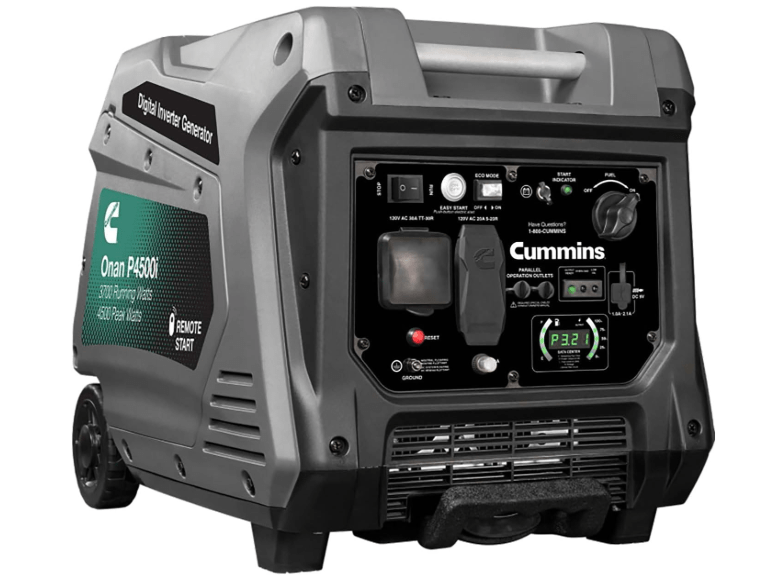
Price: Approximately $1,099–$1,425 on Amazon (varies with bundles; often around $1,200 as of early 2026 data).
Key Features and Benefits:
- 4,500W starting/3,700W running power—plenty for running AC units, multiple appliances, and charging house batteries simultaneously in 30-amp RVs.
- Quiet operation at around 65 dB (measured at 23 feet), with enclosed design reducing noise compared to open-frame units.
- Electric and remote start (key fob included) for effortless operation, even in cold weather or from inside the RV.
- RV-ready with 30-amp TT-30R outlet, plus standard 120V outlets and USB ports for versatile connections.
- Up to 18 hours runtime at 25% load on a 3.4-gallon tank; fuel-efficient inverter tech adjusts engine speed.
- CO shutdown sensor, low-oil protection, overload safeguard, and wheels/handle kit for portability.
- CARB/EPA compliant; built tough with commercial-grade components for long-term reliability.
Pros:
- Strong surge capability handles AC compressor starts reliably (many users report seamless performance with soft-start kits).
- Remote start is a game-changer for convenience during boondocking.
- Excellent build quality and warranty support from Cummins/Onan (typically 3 years).
- Good balance of power and portability for mid-size RVs.
Cons:
- Heavier at 105 lbs—manageable with wheels but not as light as smaller inverters.
- Slightly louder than ultra-quiet premiums like Honda.
- Gas-only (no dual-fuel flexibility).
Amazon Customer Ratings and Reviews: 4.5 out of 5 stars from over 1,200 reviews. RV owners frequently note: “Powers my entire 30-amp trailer including AC—no issues after hundreds of hours” and “Remote start is worth it alone for easy use.” High satisfaction (around 85% 4-5 stars); occasional mentions of initial setup learning curve.
Why It’s a Good Choice for RV Owners: It bridges the gap between value picks and premium units, offering higher wattage and RV-specific engineering for reliable off-grid power without excessive noise or complexity. Great for those upgrading from smaller generators.
Ideal Use Case or Who Should Buy It: Mid-to-large RVs (30-amp service), boondockers running AC frequently, or anyone wanting remote convenience and proven RV heritage. Ideal if you need consistent 3,500W+ running power for extended stays.
5. Best Quiet Premium Alternative: Westinghouse iGen Series (e.g., iGen4500 or iGen5000DFc Dual Fuel)
The Westinghouse iGen4500 (or higher-wattage variants like the dual-fuel iGen5000DFc) is a strong premium alternative in 2026, frequently topping Wirecutter and Popular Mechanics lists for its combination of quiet performance, high user ratings, and RV compatibility. This inverter series excels in noise-sensitive environments while providing ample power for typical RV loads. It’s popular among campers for its clean power, long runtime, and value relative to Honda—many Amazon best-sellers in the category feature Westinghouse models with thousands of positive RV-specific reviews.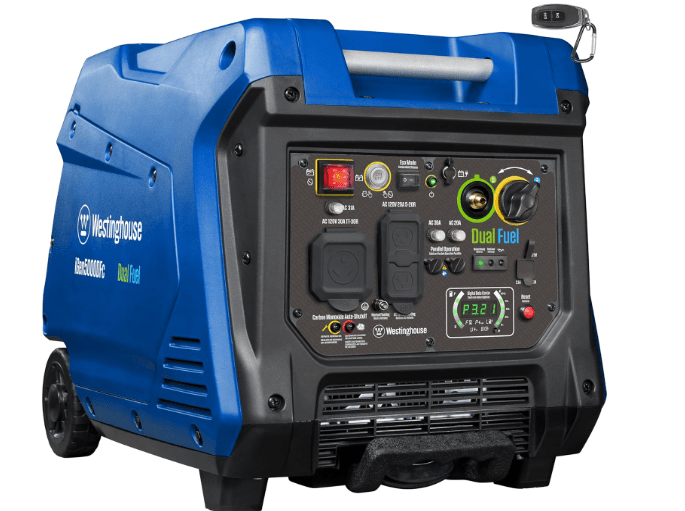
Price: Approximately $949 for iGen4500; ~$1,000–$1,200 for dual-fuel versions (check current Amazon for deals).
Key Features and Benefits:
- 4,500W starting/3,700W running (gas); dual-fuel options adjust slightly lower on propane but add flexibility.
- Exceptionally quiet at 52 dB—among the lowest in its class, perfect for campgrounds with strict rules.
- Up to 18 hours runtime at 25% load; eco-mode for efficiency.
- RV-ready 30-amp outlet, parallel capability, electric start, and digital display for monitoring.
- CO sensor shutdown, low THD clean power, wheels, and telescoping handle.
- CARB/EPA compliant; durable build with strong warranty.
Pros:
- Super quiet operation rivals or beats many competitors.
- High power output with good surge handling for AC units.
- Dual-fuel variants offer fuel choice for extended trips.
- Thousands of reviews confirm reliability for camping/RV use.
Cons:
- Heavier side for the power class (~98–110 lbs).
- Some users note occasional starting quirks in cold weather.
- Not as legendary in longevity as Honda.
Amazon Customer Ratings and Reviews: 4.5 out of 5 stars from over 8,000 reviews across the series. Common RV praise: “Quiet enough for national parks—runs my AC all afternoon” and “Great value compared to Honda.” Strong 4-5 star majority; minor cons on weight.
Why It’s a Good Choice for RV Owners: It delivers near-premium quietness and features at a more accessible price, making it ideal for noise-restricted camping while handling real RV demands.
Ideal Use Case or Who Should Buy It: Noise-sensitive campgrounds, frequent campers, or those wanting dual-fuel options without sacrificing quiet performance. Great mid-premium pick for 30-amp RVs.
6. Best for AC-Heavy Use: ERAYAK 4500W Dual Fuel Inverter (or similar models)
The ERAYAK 4500W Dual Fuel Inverter (often with Bluetooth/app features in variants) is tailored for hot-climate boondocking where AC is non-negotiable. In 2026 Amazon trends and RV forums, it’s gaining traction as a capable, feature-packed option for high-surge demands like 13,500–15,000 BTU units. It combines affordability, fuel versatility, and modern perks like app monitoring, making it suitable for extended off-grid stays in warm areas.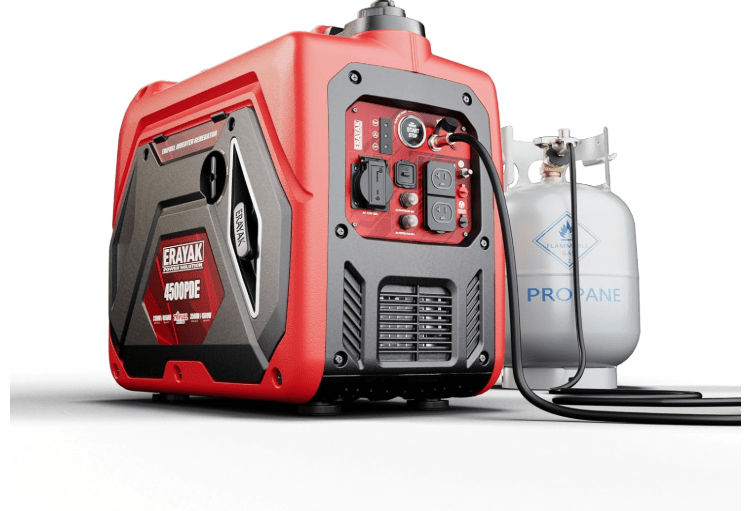
Price: Approximately $649 on Amazon.
Key Features and Benefits:
- 4,500W starting/3,300W running (gas); similar on propane with clean inverter output.
- Quiet at ~58 dB; dual fuel for propane’s cleaner burn and storage advantages.
- Up to 12 hours gas/16 hours propane at 50% load.
- RV 30-amp outlet, electric start, CO watchdog, and some models with Bluetooth for remote monitoring/fuel tracking.
- Portable design with wheels; overload/low-oil protection.
Pros:
- Strong AC performance with good surge capacity.
- Dual fuel + app features add modern convenience.
- Affordable for the power and extras.
- Positive feedback for hot-weather reliability.
Cons:
- Slightly lower running watts than some competitors.
- Brand less established than Honda/Champion.
- App connectivity can be finicky per some reviews.
Amazon Customer Ratings and Reviews: Around 4.2 out of 5 stars from ~1,000 reviews. Users say: “Handles my RV AC in 100°F heat—no overloads” but note occasional quality variance.
Why It’s a Good Choice for RV Owners: It targets AC-heavy scenarios with fuel flexibility and tech perks at a competitive price.
Ideal Use Case or Who Should Buy It: Hot-climate boondockers, desert campers, or those needing app control for monitoring during long AC runs.
7. Best High-Capacity/Backup: WEN 6800W Dual Fuel Inverter (DF680iX or similar)
For larger rigs or extended off-grid needs, the WEN DF680iX Dual Fuel Inverter provides substantial capacity in a portable package. It’s a top seller on Amazon in 2026 for high-wattage inverter needs, offering enough juice for bigger 30/50-amp setups (with adapters) or running multiple high-draw items. RV users appreciate its power-to-price ratio for backup or full-system support.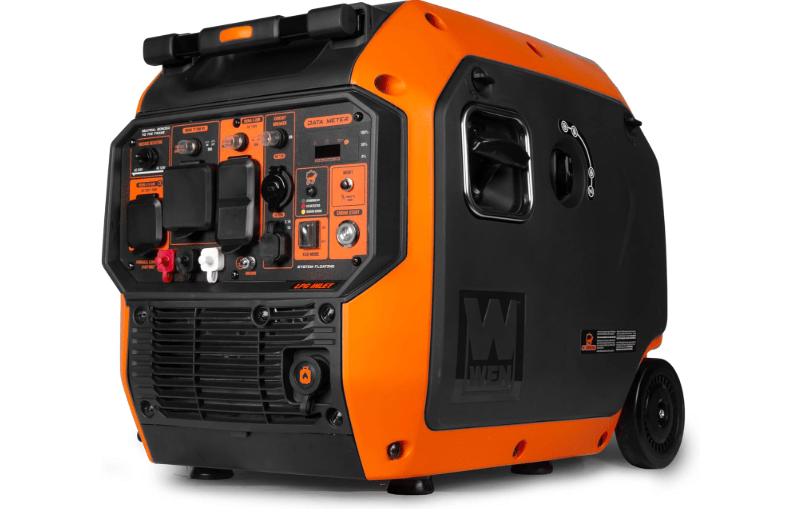
Price: Approximately $999 on Amazon.
Key Features and Benefits:
- 6,800W starting/5,500W running—handles larger ACs, microwaves, and more simultaneously.
- 62 dB noise; dual fuel with long runtime (18+ hours at 25% load).
- RV-ready outlets, electric start, CO watchdog, fuel shut-off.
- Wheels/handle for mobility despite size (~130 lbs).
Pros:
- High wattage for demanding RVs.
- Dual fuel versatility.
- Good value for capacity.
Cons:
- Heavier and bulkier.
- Louder at full load.
Amazon Customer Ratings and Reviews: 4.4 out of 5 stars from 1,500+ reviews. Praise for powering full trailers; some note size.
Why It’s a Good Choice for RV Owners: Scalable power for bigger setups without built-in genset cost.
Ideal Use Case or Who Should Buy It: Larger Class B+/C RVs, extended boondocking, or backup needs.
IV. Head-to-Head Comparison & Recommendation Summary
The comparison table above recaps the essentials—Honda leads in quiet/reliability, Champion/WEN in value, Cummins/Onan in RV heritage, and higher-wattage picks for demanding loads.
Quick Picks by Scenario:
- Best Quiet Overall: Honda EU3000iS.
- Best Value: Champion 4500W Dual Fuel.
- Best Budget: WEN DF475T.
- Best for AC/High Power: Cummins Onan P4500i or WEN 6800W.
- Best Noise-Sensitive Premium: Westinghouse iGen Series.
- Best Hot-Climate/AC: ERAYAK 4500W.
For most RVers, prioritize inverter tech with at least 3,500W running and <65 dB. Honda for longevity; Champion/WEN for budget wins.
V. FAQs (Common RV Generator Questions)
Can a generator run my RV AC? Yes—most 3,000W+ inverters handle 13,500 BTU units (add soft-start for reliability).
How loud is too loud for campgrounds? Under 60 dB ideal; many parks enforce <65 dB. Honda/Westinghouse excel here.
Dual fuel vs. gas only? Dual fuel (gas/propane) offers flexibility—propane stores longer, burns cleaner.
Portable vs. built-in RV generator? Portable is cheaper/flexible; built-in (Onan) is seamless but expensive/fixed.
Maintenance tips? Change oil regularly, stabilize fuel, run monthly, store dry.
VI. Conclusion & Call to Action
This guide equips you with everything to pick the best generator for RV—quiet, powerful, and reliable for your adventures. Whether premium Honda peace-of-mind or value Champion performance, these 2026 top picks solve real boondocking challenges.
Prices fluctuate—check current Amazon listings via our affiliate links for deals, reviews, and fast shipping. Happy camping, and stay powered!
Disclosure: As an Amazon Associate, we earn from qualifying purchases.