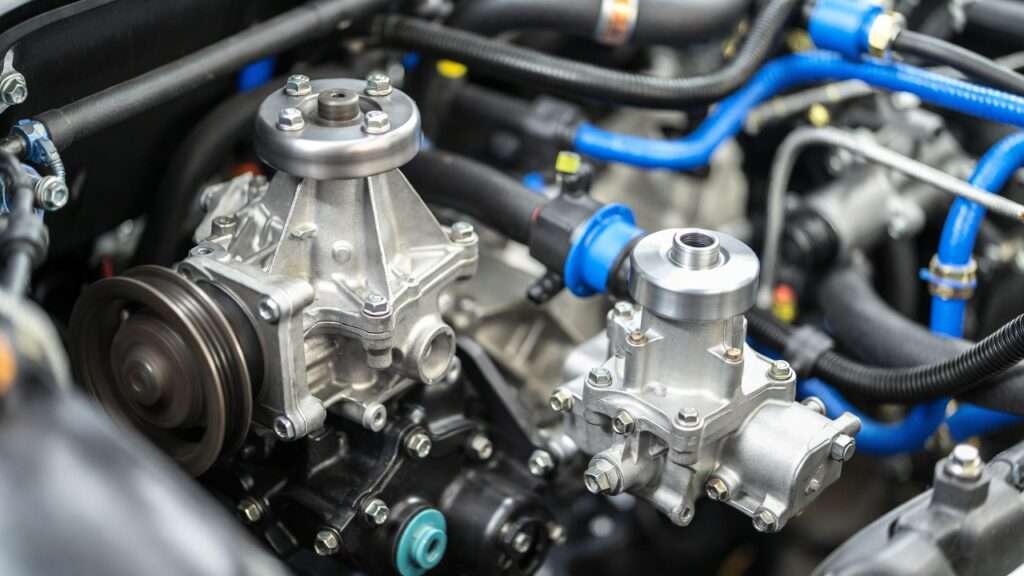
Imagine this: You’re pushing a high-performance engine to its limits on the track, only to feel the power fade as overheating creeps in during a low-RPM cooldown lap. Or perhaps you’re an automotive engineer optimizing a street vehicle for fuel efficiency, frustrated by unnecessary power losses from outdated components. These scenarios highlight a critical debate in mechanical engineering: the choice between traditional mechanical water pumps and modern electric water pumps. As engines evolve toward greater efficiency and performance, understanding this comparison isn’t just academic—it’s essential for solving real-world thermal management challenges.
In this comprehensive guide, we’ll dive deep into the electric water pump versus mechanical debate, exploring their mechanics, advantages, and applications from an engineering perspective. With roots in fluid dynamics and thermodynamics, electric water pumps offer innovative solutions to longstanding issues like parasitic drag and inconsistent coolant flow. Whether you’re designing hybrid systems, tuning performance vehicles, or simply seeking better engine reliability, this article equips you with the insights needed to make informed decisions. Backed by engineering principles, data-driven comparisons, and real-world examples, we’ll uncover why switching to an electric setup could unlock significant gains in horsepower, fuel economy, and overall system efficiency.
Understanding Water Pumps in Automotive Engine Cooling Systems
At the heart of any internal combustion engine (ICE) lies the cooling system, a symphony of components working to dissipate heat generated from combustion. The water pump—often overlooked yet indispensable—serves as the circulatory system’s pump, propelling coolant through the engine block, cylinder heads, radiator, and heater core. Without efficient coolant circulation, engines risk overheating, leading to warped components, reduced power output, or catastrophic failure. In mechanical engineering terms, this involves balancing heat transfer rates with fluid flow dynamics to maintain optimal operating temperatures, typically between 180°F and 220°F (82°C to 104°C).
From a thermodynamic standpoint, the cooling process relies on the heat balance equation: Q = m * c * ΔT, where Q is heat transferred, m is mass flow rate of coolant, c is specific heat capacity, and ΔT is temperature difference. The water pump directly influences m, ensuring sufficient flow to absorb and reject heat via convection in the radiator. In modern vehicles, including hybrids and electric variants (EVs), water pumps also cool batteries, inverters, and electric motors, expanding their role beyond traditional ICE applications.
Core Components of a Water Pump
A typical water pump comprises several key elements designed for durability and efficiency. The impeller, often a centrifugal design with curved vanes, imparts kinetic energy to the coolant, converting rotational motion into fluid velocity per Bernoulli’s principle. Surrounding it is the volute housing, which collects and directs the high-velocity fluid into pressure for system circulation. Seals, such as mechanical face seals or lip seals, prevent leaks while bearings (ball or roller types) support the shaft, minimizing friction losses.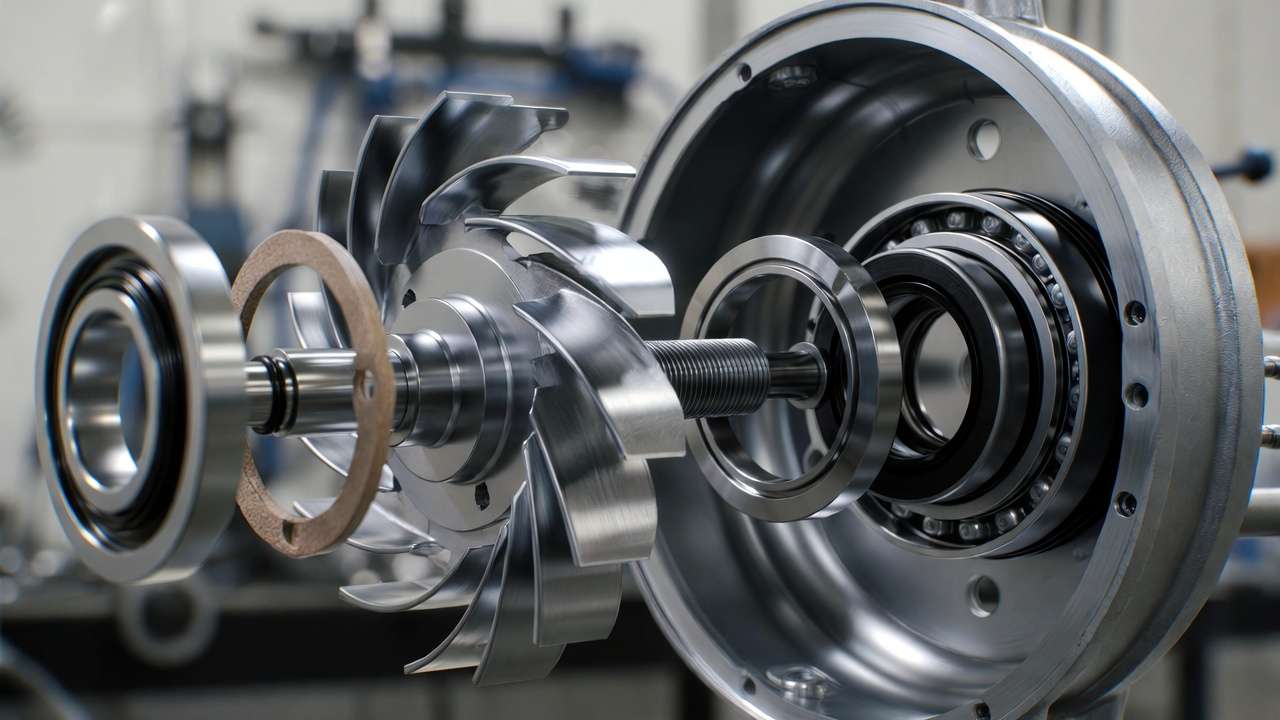
In high-performance setups, materials like cast iron, aluminum, or composites are chosen for thermal expansion compatibility and corrosion resistance against ethylene glycol-based coolants. Gaskets and O-rings ensure airtight integration with the engine block, while pulleys or direct-drive mounts interface with the power source.
Fluid Dynamics Basics in Cooling Systems
Fluid dynamics govern pump performance through concepts like Reynolds number (Re = ρVD/μ), which determines laminar versus turbulent flow—crucial for efficiency in narrow engine passages. Pump curves plot flow rate (Q) against head pressure (H), with the operating point intersecting the system’s resistance curve. Cavitation, a risk at high speeds or low pressures, occurs when vapor bubbles form and collapse, eroding impeller surfaces and reducing flow.
Engineers optimize these systems using computational fluid dynamics (CFD) simulations to predict vortex formation or pressure drops. For instance, variable vane impellers can adjust for different loads, enhancing overall thermal management. Understanding these basics sets the stage for comparing mechanical and electric variants, where control over flow becomes a game-changer.
How Mechanical Water Pumps Work
Mechanical water pumps have been the backbone of automotive cooling since the early 20th century, embodying simplicity and robustness in design. Driven directly by the engine’s crankshaft or camshaft via a belt, chain, or gear, their speed—and thus coolant flow—is inherently tied to engine RPM. As the engine revs up, the pump spins faster, increasing circulation to match rising heat loads from combustion.
This RPM-dependent operation leverages basic kinematics: rotational speed (ω) translates to impeller velocity, generating centrifugal force that propels coolant outward. Pros include mechanical reliability—no electronics to fail—and high flow capacity at peak RPM, ideal for sustained high-speed operation like highway cruising or racing. In many OEM setups, such as those in classic V8 engines, this design has proven durable, with lifespans often exceeding 100,000 miles under normal conditions.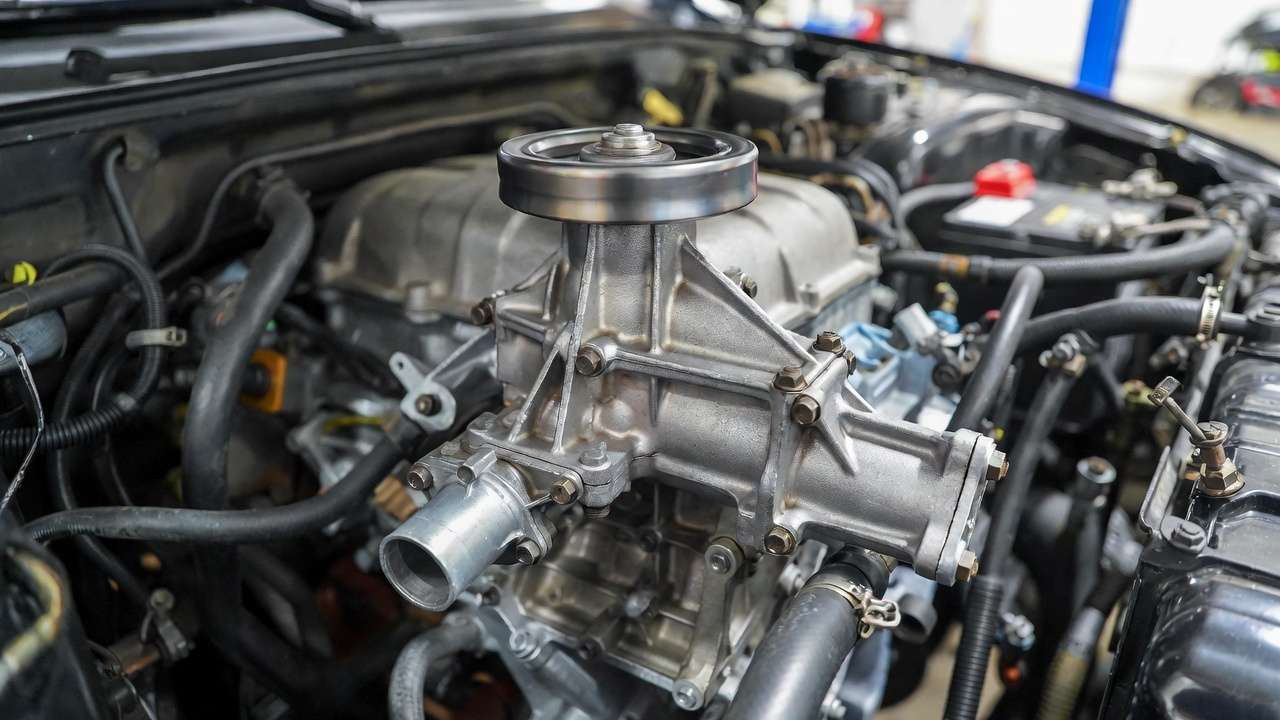
However, drawbacks stem from this direct coupling. Parasitic losses are a major concern; the pump constantly draws power from the engine, even when full flow isn’t needed. Estimates suggest 5-30 horsepower can be sapped at high RPM due to frictional drag in belts and bearings, reducing net power to the wheels. At low RPM, like idling in traffic, flow diminishes, risking hotspots in the cylinder heads and potential detonation in boosted engines.
Maintenance involves periodic belt inspections for wear, tension adjustments, and seal replacements to prevent coolant leaks. Failures often manifest as overheating or unusual noises from bearing wear. While cost-effective initially (around $50-200 for aftermarket units), the inefficiency in variable-load scenarios makes them less ideal for modern, efficiency-focused designs.
[Diagram Placeholder: Cross-section of a mechanical water pump showing belt-driven pulley, impeller, and housing.]
How Electric Water Pumps Work
Shifting paradigms in automotive engineering, electric water pumps decouple coolant circulation from engine RPM, offering precise control through electronic means. Powered by a brushless DC motor, these pumps receive energy from the vehicle’s electrical system—typically 12V or 48V in hybrids—and are governed by the engine control unit (ECU) or powertrain control module (PCM).
Operation begins with sensors monitoring coolant temperature, engine load, and ambient conditions. The ECU processes this data, sending a pulse-width modulation (PWM) signal to vary motor speed, achieving on-demand flow rates from near-zero to maximum. This variable-speed capability stems from the motor’s low-inertia rotor and efficient electromagnetic design, minimizing energy waste.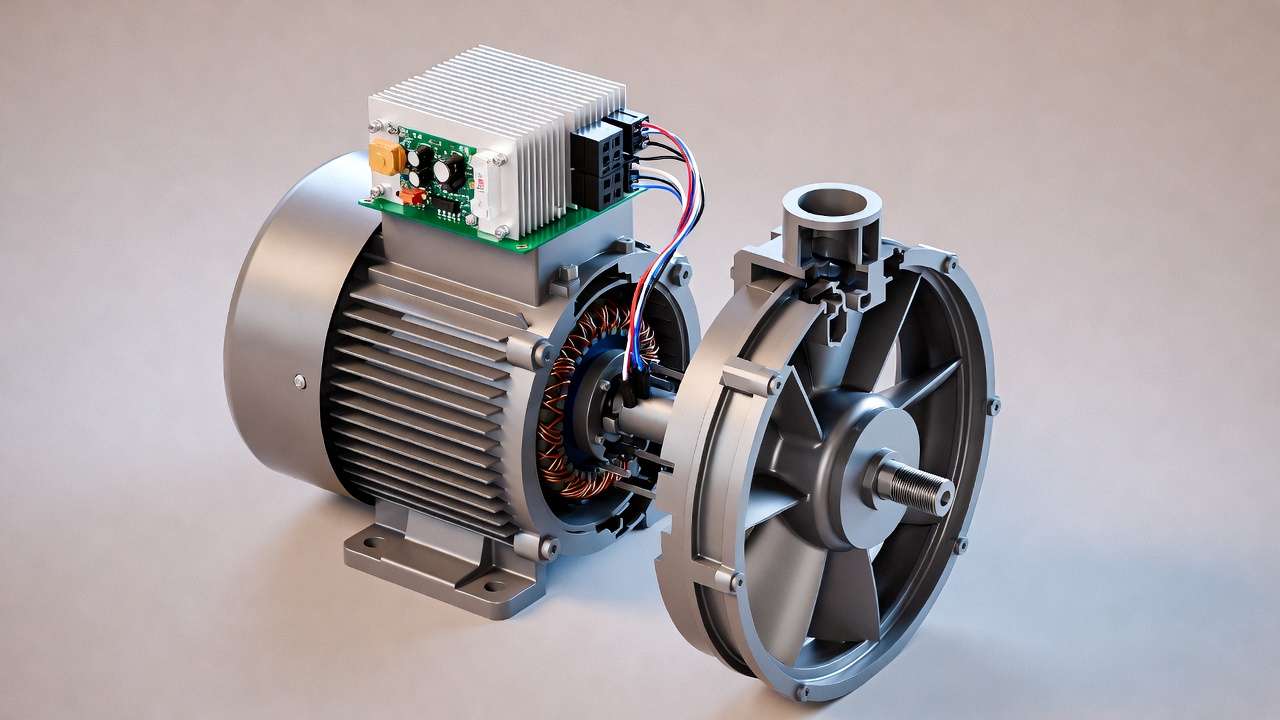
Key features include integrated controllers for fault diagnostics, thermal overload protection, and CAN-bus integration for seamless communication with other vehicle systems. Brushless motors enhance longevity by eliminating commutator wear, often achieving MTBF (mean time between failures) ratings over 200,000 hours. In applications beyond ICE, such as EV battery thermal management, they circulate coolant through chillers or heat exchangers, maintaining optimal lithium-ion cell temperatures for performance and safety.
From a mechanical engineering viewpoint, electric pumps reduce system complexity by allowing flexible mounting—away from the engine front for better packaging. Flow rates can reach 20-50 gallons per minute (GPM), tailored via software tuning. Brands like Bosch or Pierburg exemplify advanced designs with composite impellers for weight savings and noise reduction.
[Diagram Placeholder: Assembly view of an electric water pump highlighting the brushless motor, electronic controller, and centrifugal impeller.]
Head-to-Head Comparison: Electric vs Mechanical Water Pumps
To truly appreciate the engineering trade-offs, let’s compare electric and mechanical water pumps across critical metrics. This analysis draws from thermodynamic efficiency, power consumption data, and real-world testing, providing a data-backed perspective for engineers and enthusiasts alike.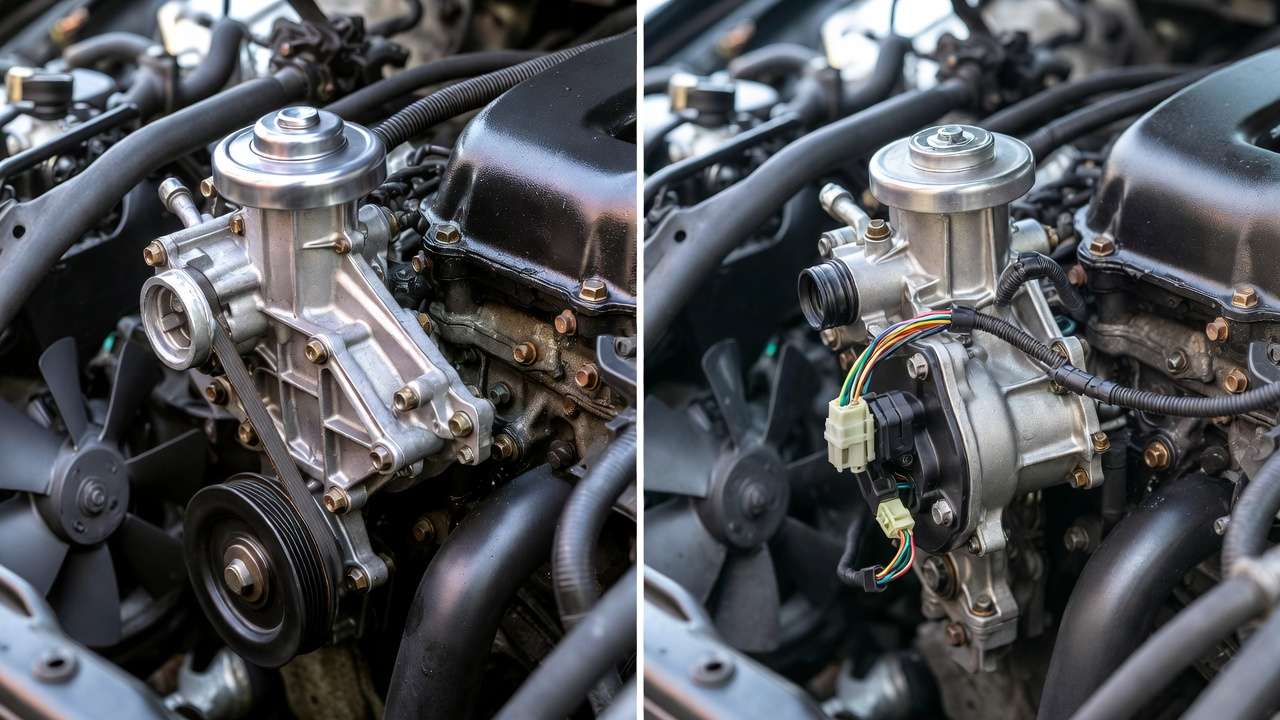
Quantitative insights reinforce these points. Studies from SAE International indicate electric pumps can reduce fuel consumption by 1-3% in urban driving cycles due to optimized flow, translating to lower CO2 emissions. Parasitic loss calculations show mechanical pumps consuming up to 10-15 kW in large-displacement engines, while electric counterparts draw just 200-500 watts, convertible to negligible horsepower via alternator efficiency (η ≈ 70%).
In performance testing, swapping to an electric pump on a 500 HP V8 can yield 10-20 HP gains at the wheels, as measured by dynamometer runs. However, mechanical pumps edge out in sheer durability for off-road or heavy-duty applications where electrical systems might falter from vibration or water ingress.
This comparison underscores electric pumps’ superiority in efficiency-driven scenarios, aligning with trends toward electrification in automotive design.
Engineering Advantages of Electric Water Pumps for Efficiency and Performance
Delving deeper, the engineering advantages of electric water pumps stem from their ability to address inherent limitations of mechanical designs through advanced control and energy management. First and foremost, reduced parasitic losses liberate engine power for propulsion. In mechanical systems, belt-driven pumps create drag proportional to RPM squared (per affinity laws: power ∝ RPM³), siphoning valuable horsepower. Electric alternatives, drawing from the alternator, impose minimal load—often less than 1 HP equivalent—allowing more torque at the crankshaft.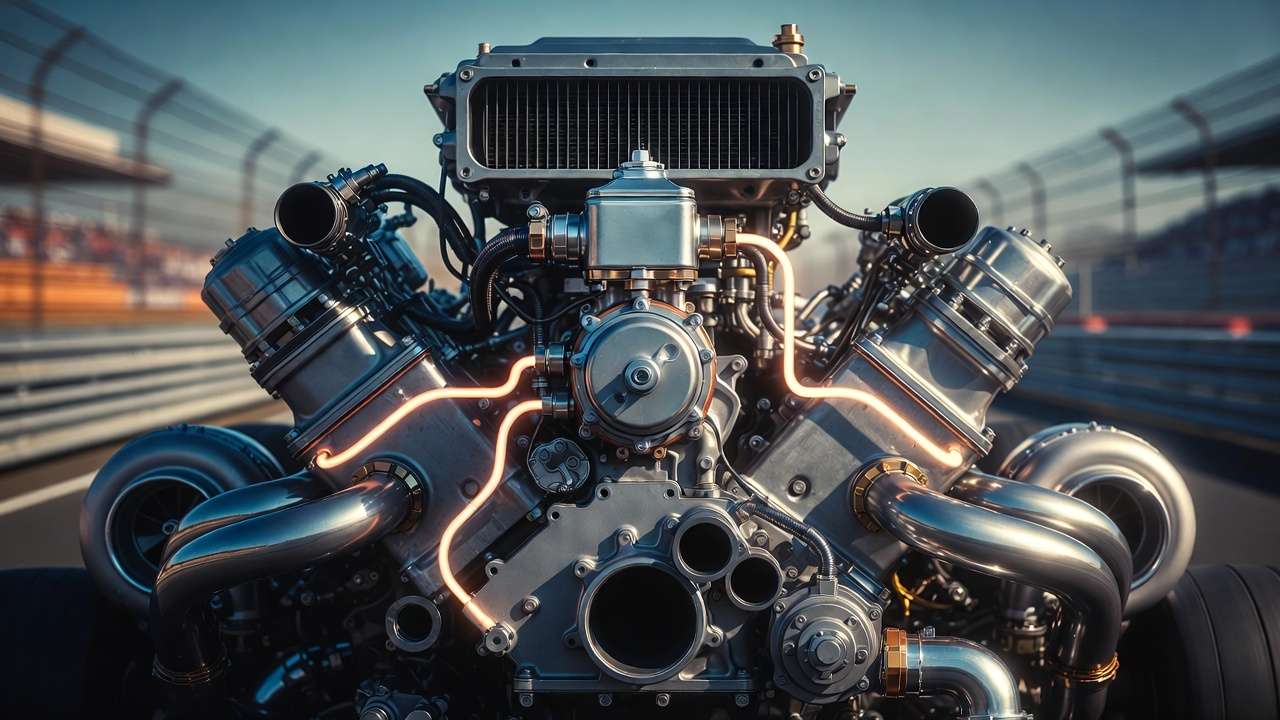
Thermodynamic efficiency shines in precise thermal management. By modulating flow based on real-time data, electric pumps maintain ideal coolant temperatures, optimizing combustion efficiency and reducing knock in turbocharged engines. For instance, during cold starts, reduced flow accelerates warm-up, cutting emissions by up to 20% per EPA cycles. Post-shutdown “after-run” operation prevents heat soak, extending component life in hot climates.
In high-performance contexts, such as racing or tuning, electric pumps ensure consistent cooling regardless of RPM. Track enthusiasts report lower lap times due to sustained power output, free from overheating in traffic or pits. Fluid power equations highlight this: Pump power P = Q * ΔP / η, where electric variants achieve higher η (80-95%) through variable speed, versus mechanical’s fixed 60-70%.
Additional benefits include noise reduction (no belt whine), weight savings (up to 5 lbs), and integration with hybrid powertrains for auxiliary cooling. Expert insights from automotive R&D emphasize CFD-optimized designs that minimize cavitation, ensuring laminar flow in tight engine bays. Overall, these advantages position electric pumps as a cornerstone for future-proofing engines amid stringent efficiency regulations.
Drawbacks and Limitations of Electric Water Pumps
Despite their merits, electric water pumps aren’t without challenges, which engineers must weigh for specific applications. Upfront costs are higher due to sophisticated electronics and motors, potentially doubling the price over mechanical equivalents. This can deter budget-conscious builds, though long-term savings in fuel and maintenance often offset it.
Complexity introduces failure modes: Electrical faults from wiring issues, ECU glitches, or sensor malfunctions can halt circulation, leading to rapid overheating. While rare in premium units (failure rates <1% per 100,000 miles), they require diagnostic tools like OBD-II scanners, unlike simple mechanical inspections.
In extreme high-horsepower scenarios—think 1,000+ HP dragsters—electric pumps may lack sufficient maximum flow, necessitating oversized motors or dual setups, adding weight and cost. Battery drain is another concern in vehicles with marginal alternators, though modern systems mitigate this with efficient regeneration.
Environmental factors, such as dust or moisture ingress, can compromise seals, emphasizing the need for IP67-rated designs. Ultimately, these limitations make mechanical pumps preferable for basic, low-tech applications where simplicity trumps optimization.
Real-World Applications and Case Studies
Electric water pumps have transitioned from niche aftermarket upgrades to OEM standards, demonstrating their value across diverse scenarios. In performance automotive, brands like Chevrolet integrate them in Corvette models for better low-speed cooling, enabling sustained track performance without power loss.
A notable case study involves a modified Ford Mustang GT, where enthusiasts at SEMA reported 15 HP gains after switching to a Davies Craig electric pump. Dyno tests showed reduced parasitic drag, with coolant temps stabilized at 190°F during idle, versus 210°F with the stock mechanical unit. This upgrade also improved fuel efficiency by 2 MPG in mixed driving.
In hybridization, Toyota’s Prius uses electric pumps for battery and inverter cooling, ensuring thermal stability that extends range by 5-10%. EVs like Tesla’s Model S employ them for motor cooling, preventing throttle derating under load.
Heavy-duty applications, such as marine engines, benefit from corrosion-resistant electric variants, while racing teams in NASCAR opt for them to shave seconds off laps through optimized engine temps. These examples illustrate how electric pumps solve efficiency bottlenecks in real engineering projects.
When to Choose Electric Over Mechanical (Decision Guide)
Deciding between electric and mechanical water pumps boils down to your application’s demands. Use this checklist:
- High-Performance or Track Use? Choose electric for consistent cooling and HP gains.
- Frequent Low-RPM Operation? Electric excels in traffic or idle scenarios to prevent overheating.
- Efficiency and Emissions Focus? Electric’s precise control supports greener designs.
- Budget Constraints? Stick with mechanical for cost savings in basic setups.
- Hybrid or EV Integration? Electric is mandatory for auxiliary systems.
For hybrids, consider auxiliary electric pumps alongside mechanical primaries for redundancy.
Installation and Upgrade Tips for Mechanical Engineers
Upgrading to an electric water pump requires careful planning. Start with compatibility checks: Ensure the pump’s flow rate matches your engine’s needs (e.g., 30 GPM for a 400 HP V8). Reroute plumbing to bypass the old mount, using AN fittings for secure connections.
Wiring involves connecting to a switched 12V source, with relays for high-current draws. Integrate with the ECU via PWM for variable control, or use standalone controllers like those from Meziere. Common pitfalls include inadequate grounding causing intermittent operation or undersized wiring leading to voltage drops.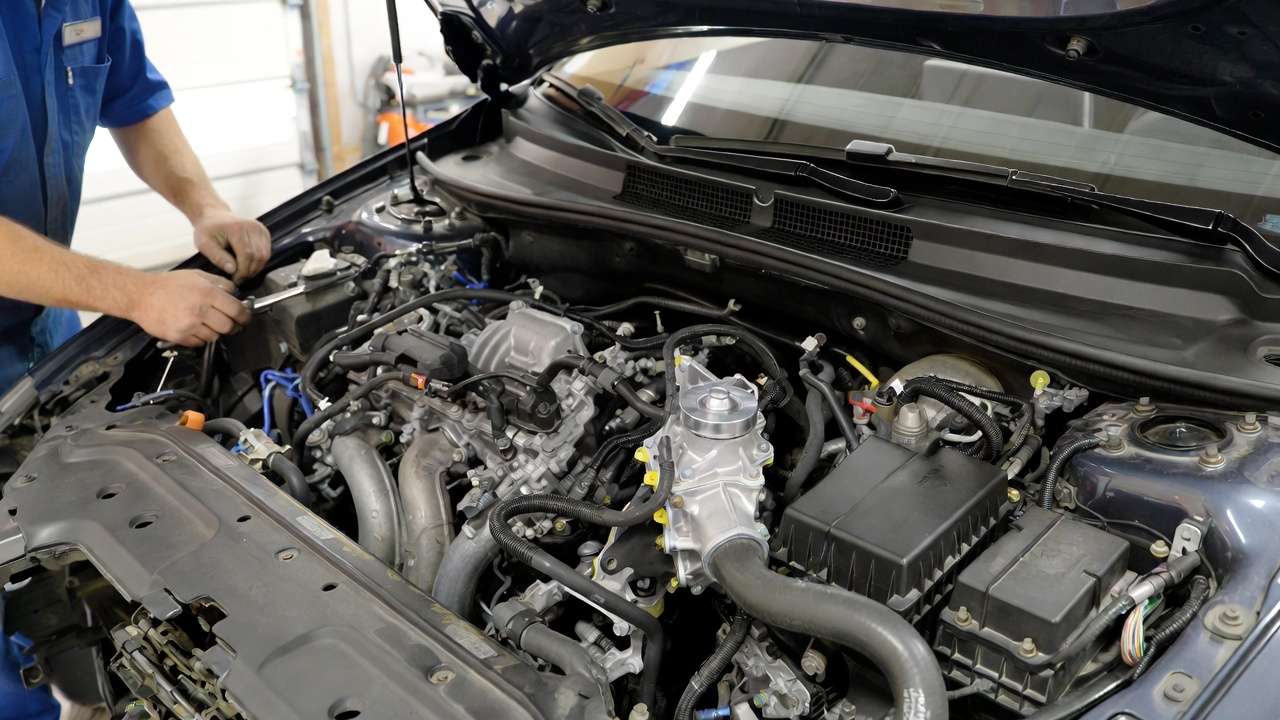
Test post-installation with a scan tool to monitor temps, and bleed the system thoroughly to avoid air pockets. For DIYers, budget 4-6 hours; professionals can halve that.
Frequently Asked Questions (FAQ)
Do electric water pumps really add horsepower? Yes, by eliminating parasitic drag. Gains of 10-30 HP are common in high-RPM engines, as power previously lost to belts is redirected to the wheels.
Are electric pumps reliable for daily driving? Absolutely, with modern designs offering lifespans comparable to mechanical ones. Quality brands like Bosch provide warranties up to 5 years.
Can I run both electric and mechanical pumps? In some setups, yes—for redundancy. The electric acts as a booster, controlled to activate under specific conditions.
What’s the typical power draw of an electric pump? Around 10-40 amps at full load, equating to 120-480 watts. This is negligible compared to mechanical losses.
How do electric pumps affect fuel economy? They improve it by 1-5% through optimized cooling, reducing engine strain and enabling faster warm-ups.
Are they suitable for off-road vehicles? With rugged, sealed units, yes—but ensure vibration resistance and waterproofing.
What maintenance do electric pumps require? Minimal: Check electrical connections annually and monitor for error codes via OBD.
Can electric pumps handle high-boost applications? Yes, but select models with high-flow impellers to match increased heat loads.
How do they integrate with aftermarket ECUs? Seamlessly via PWM outputs; tune maps for temp-based flow adjustments.
Are there noise differences? Electric pumps are quieter, lacking belt noise, which enhances cabin comfort.
Conclusion
In the electric water pump vs mechanical debate, the engineering advantages tilt toward electric for superior efficiency, performance, and adaptability. By minimizing losses, enabling precise control, and supporting modern powertrains, they address key challenges in thermal management. Whether optimizing a daily driver or a race build, consider your needs carefully— the right choice can transform engine reliability and output. Share your experiences in the comments or consult a mechanical engineer for tailored advice. Drive smarter, engineer better.