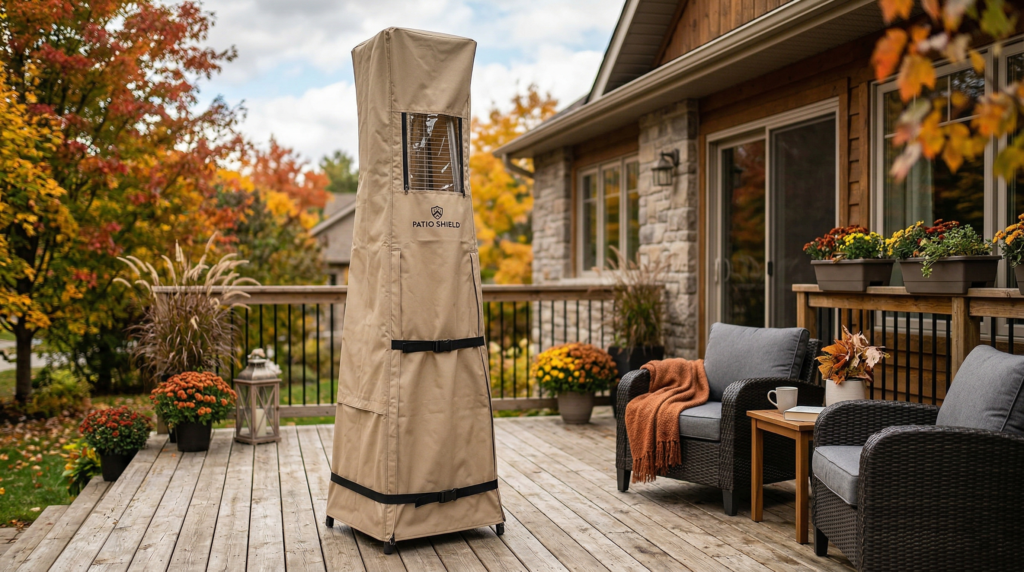
Imagine investing in a high-quality patio heater—only to see it rust, clog, or malfunction within a couple of seasons. The problem often isn’t the heater itself—it’s exposure. Rain, UV radiation, dust, and temperature fluctuations silently degrade components over time.
This is where a patio heater cover becomes not just an accessory, but an engineering necessity.
A well-designed cover acts as a protective barrier against environmental stressors, preserving both the structural integrity and performance of your heater. But here’s the catch: not all covers are created equal. Choosing the wrong material can trap moisture, accelerate corrosion, or fail under harsh weather conditions.
In this expert guide, we’ll break down how to select the right patio heater cover material using principles from material science and mechanical engineering—so you can maximize durability, ensure weather protection, and extend the lifespan of your outdoor heating investment.
Why a Patio Heater Cover Is Essential (Engineering Perspective)
Environmental Stress Factors Affecting Patio Heaters
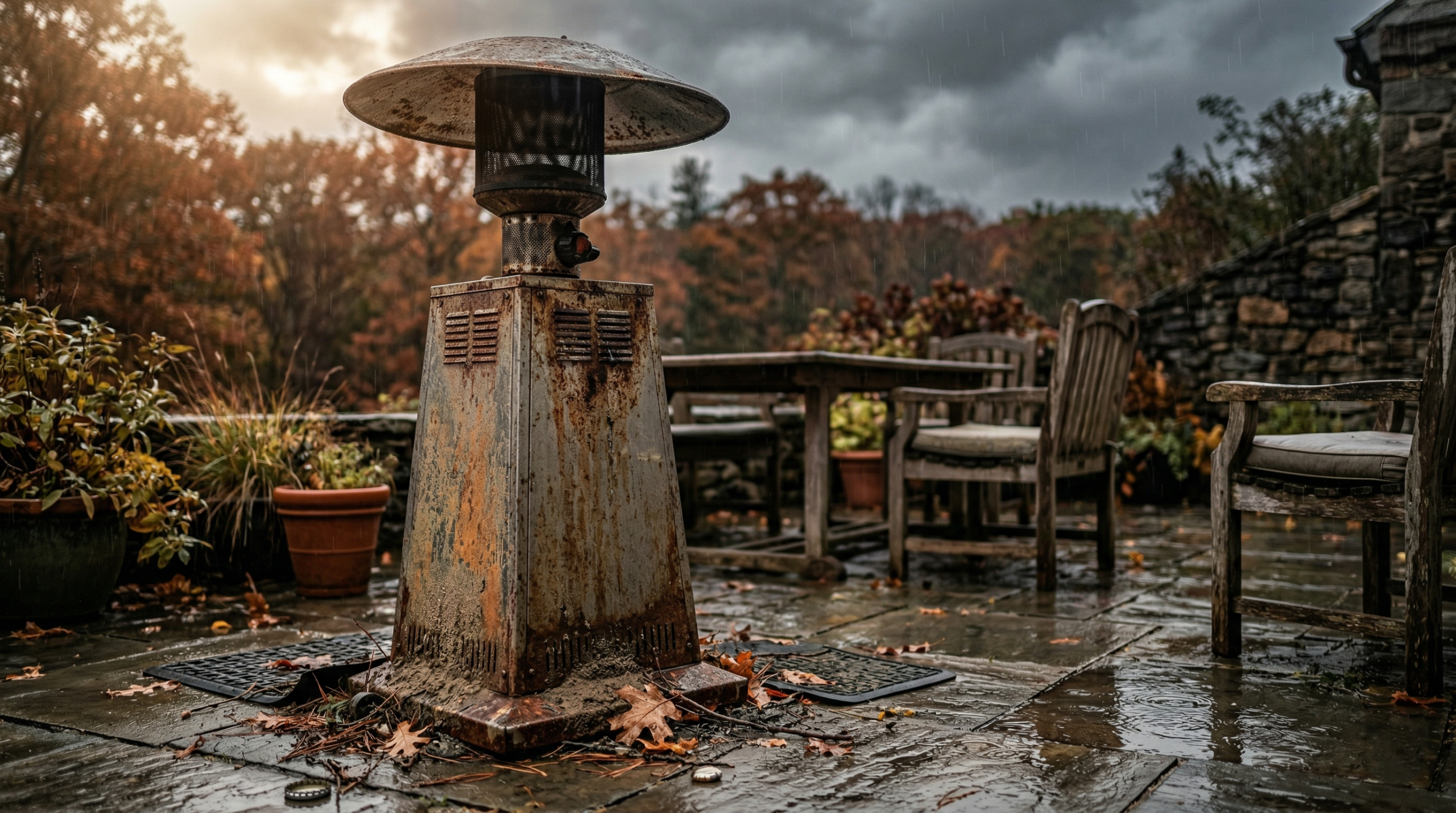
From an engineering standpoint, outdoor equipment is constantly subjected to multiple degradation mechanisms:
- UV Radiation (Photodegradation):
Prolonged sun exposure breaks down polymer chains in plastics and coatings, causing brittleness and fading. - Moisture and Humidity (Corrosion Mechanisms):
Water accelerates oxidation in metal components, leading to rust and structural weakening. - Dust and Debris (Mechanical Wear):
Particles infiltrate moving parts, causing abrasion and clogging burners or vents. - Thermal Cycling:
Daily temperature fluctuations cause expansion and contraction, leading to fatigue in materials and seals.
A patio heater cover acts as the first line of defense against these forces.
The Real Cost of Not Using a Cover
Neglecting proper protection leads to:
- Reduced equipment lifespan (often by 30–50%)
- Increased maintenance and repair costs
- Reduced heating efficiency
- Safety risks such as gas leaks or electrical failures
From a lifecycle cost perspective, a cover is a low-cost preventive investment with high returns.
Protective Role of a Patio Heater Cover
A high-quality cover provides:
- Barrier Protection: Shields against rain, UV rays, and contaminants
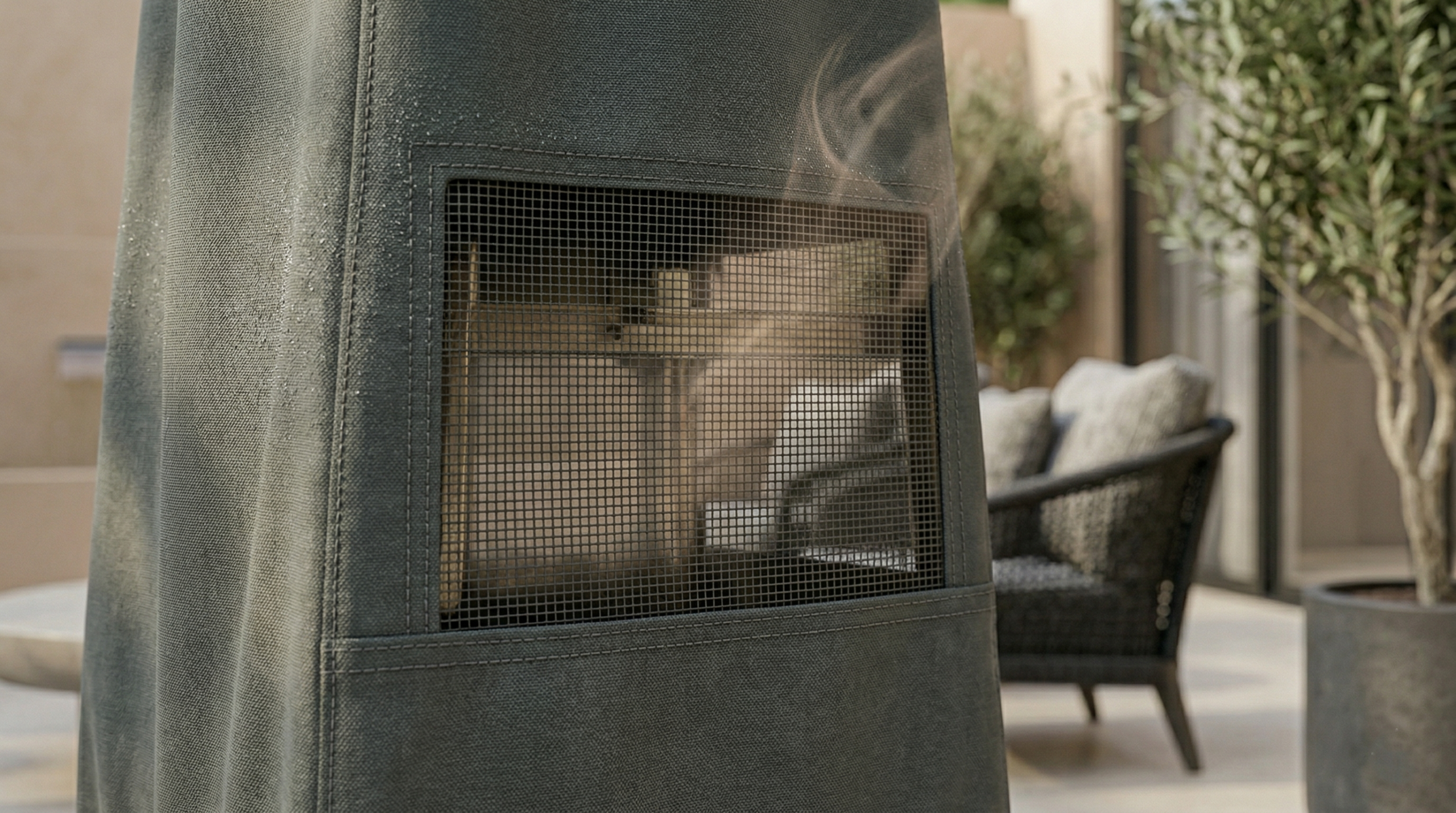
- Moisture Management: Prevents water accumulation while allowing ventilation
- Impact Resistance: Protects against physical damage from debris or accidental contact
Understanding Material Science Behind Patio Heater Covers
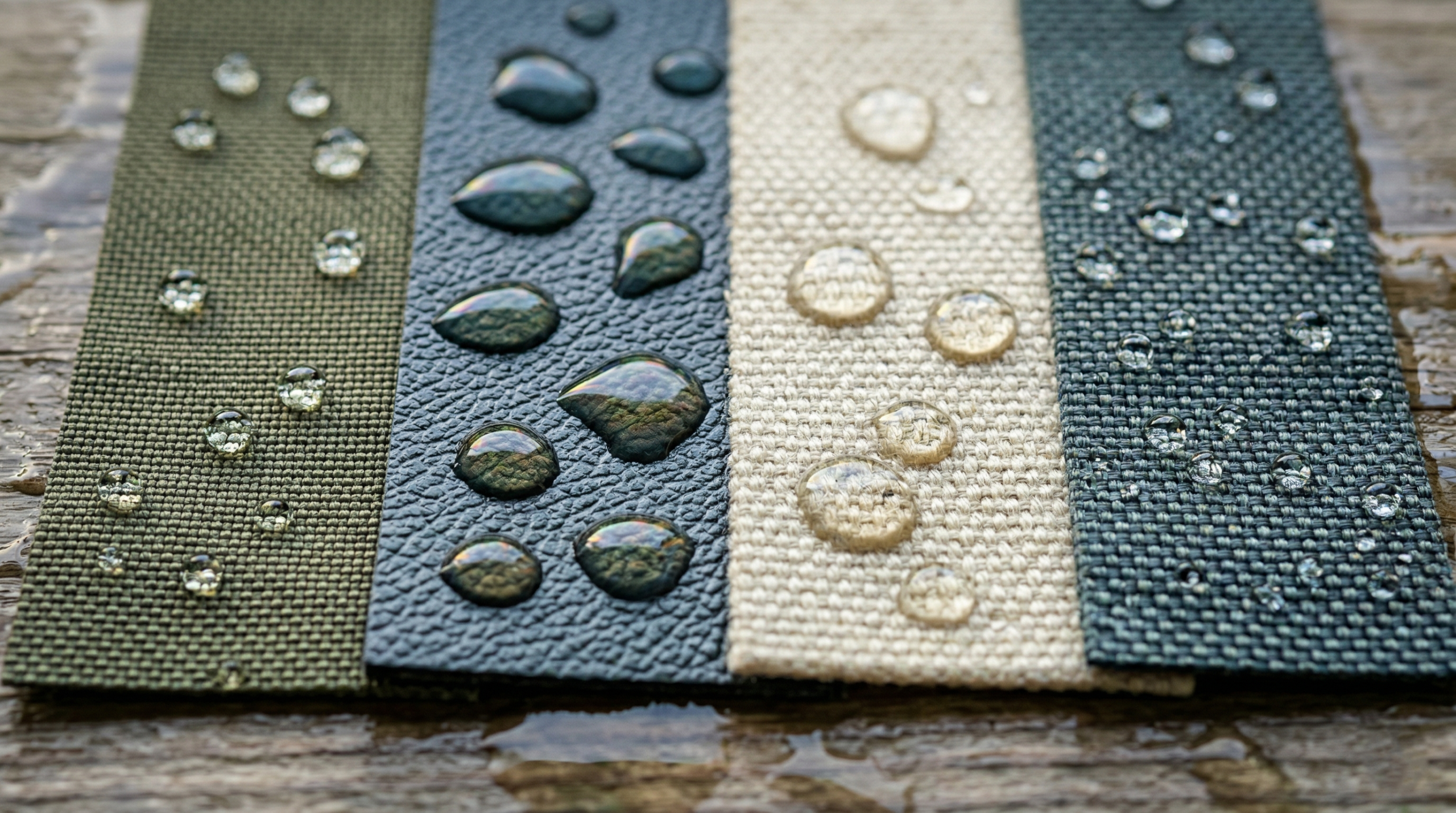
Choosing the right patio heater cover starts with understanding material behavior under environmental stress.
Key Material Properties to Consider
When evaluating cover materials, engineers focus on these critical properties:
- Tensile Strength: Resistance to tearing under stress (important in windy conditions)
- Water Resistance vs Waterproofing:
- Water-resistant: Repels light moisture
- Waterproof: Fully blocks water penetration
- UV Stability: Ability to resist degradation from sunlight
- Thermal Resistance: Stability under heat exposure
- Breathability: Prevents condensation buildup inside the cover
Balancing these properties is essential for optimal performance.
Common Materials Used in Patio Heater Covers
1. Polyester (Coated and Uncoated)
- Lightweight and flexible
- Often coated with polyurethane (PU) or PVC for water resistance
- Moderate UV resistance
2. Vinyl (PVC)
- Highly waterproof
- Excellent for heavy rain and snow
- Less breathable (risk of condensation)
3. Canvas
- Thick, durable, and breathable
- Naturally resistant to tearing
- Requires treatment for waterproofing
4. Oxford Fabric (High-Density Polyester)
- Engineered for durability
- Often used in premium covers
- Good balance of strength and water resistance
Engineering Trade-Offs
No material is perfect—each involves trade-offs:
| Property | Trade-Off Example |
|---|---|
| Waterproofing | Reduced breathability |
| Durability | Increased weight |
| Flexibility | Lower tear resistance |
| Cost | Lower performance materials |
Understanding these trade-offs helps you make a smarter decision.
Types of Patio Heater Covers Based on Material
Polyester Covers
Best for:
- Mild to moderate climates
- Occasional outdoor use
Advantages:
- Affordable
- Lightweight
- Easy to handle
Limitations:
- May degrade faster under intense UV exposure
Vinyl (PVC) Covers
Best for:
- Heavy rain or snow regions
Advantages:
- Superior waterproofing
- Strong resistance to environmental exposure
Limitations:
- Can trap moisture inside
- May crack in extreme cold
Canvas Covers
Best for:
- Humid environments
Advantages:
- Breathable
- Durable and long-lasting
Limitations:
- Heavier
- Requires maintenance (recoating)
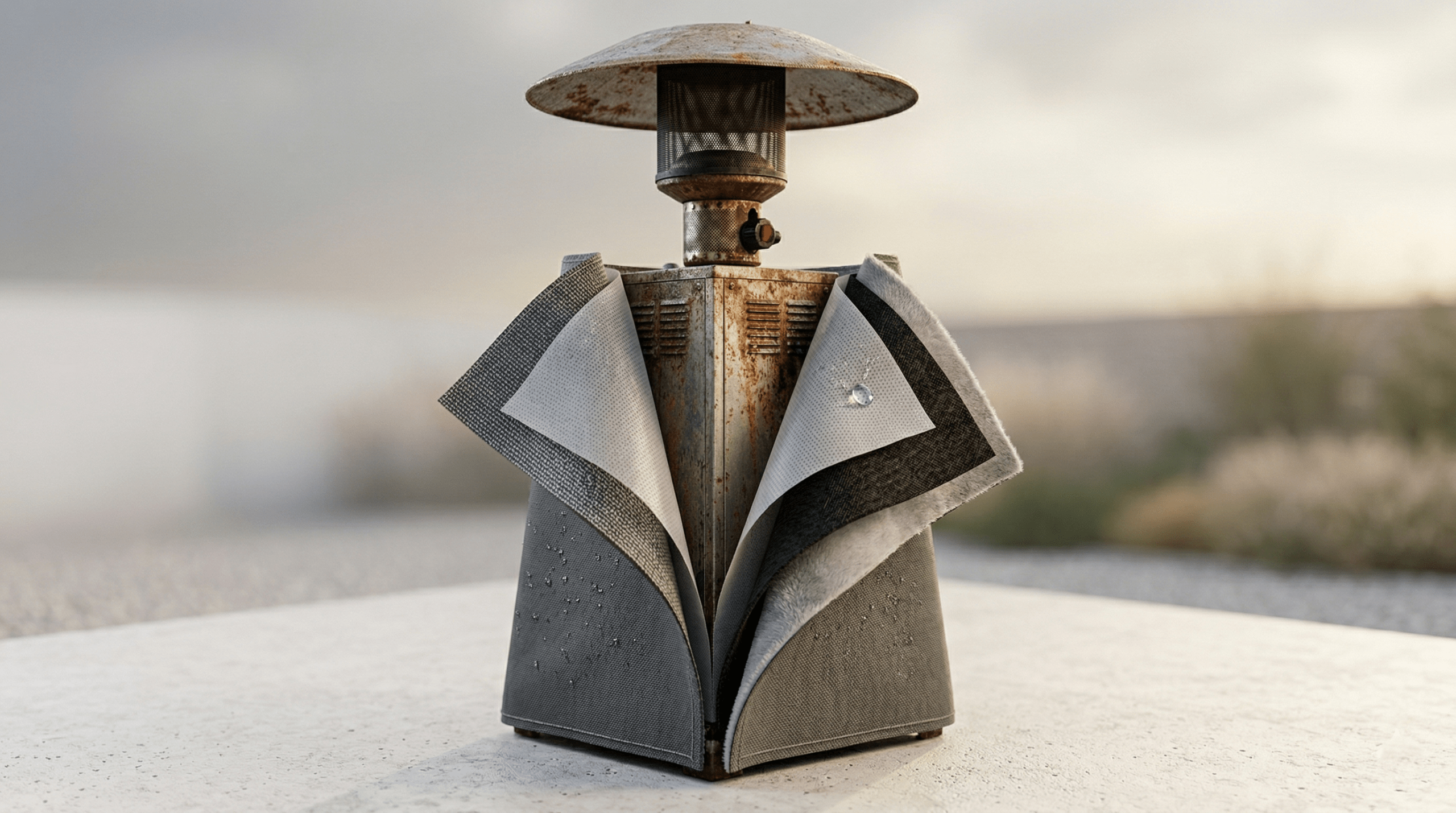
Multi-Layer Composite Covers
Best for:
- All-weather protection
Advantages:
- Combines multiple materials
- Optimized for durability, insulation, and UV resistance
Example structure:
- Outer layer: UV-resistant polyester
- Middle layer: Waterproof membrane
- Inner layer: Soft lining to prevent scratches
How to Choose the Right Patio Heater Cover (Step-by-Step Guide)
Step 1 – Assess Your Climate Conditions
Start with your environment:
- High rainfall areas: Require waterproof materials
- Hot, sunny regions: Need UV-resistant fabrics
- Cold climates: Require crack-resistant materials
Step 2 – Match Material to Environmental Needs
- Coastal areas → corrosion-resistant, breathable materials
- Urban environments → dust-resistant and easy-to-clean covers
- Snow-prone regions → heavy-duty, waterproof covers
Step 3 – Check Size and Fit
Improper sizing leads to:
- Water pooling (if too loose)
- Material stress and tearing (if too tight)
Best practice:
- Choose a snug fit with slight allowance for airflow
Step 4 – Evaluate Design Features
Look for:
- Ventilation panels (reduces condensation)
- Elastic hems or drawstrings (secure fit)
- Zippers for easy installation
- Reinforced seams for durability
Step 5 – Consider Ease of Maintenance
A good patio heater cover should:
- Be easy to clean
- Resist mold and mildew
- Maintain coating effectiveness over time
Key Features That Define a High-Quality Patio Heater Cover
Waterproof vs Water-Resistant Coatings
- Waterproof: Best for extreme weather
- Water-resistant: Suitable for light exposure
UV-Resistant Treatment
Prevents:
- Fading
- Material brittleness
- Structural weakening
Double-Stitched or Heat-Sealed Seams
- Prevents water leakage
- Enhances structural integrity
Wind Resistance Mechanisms
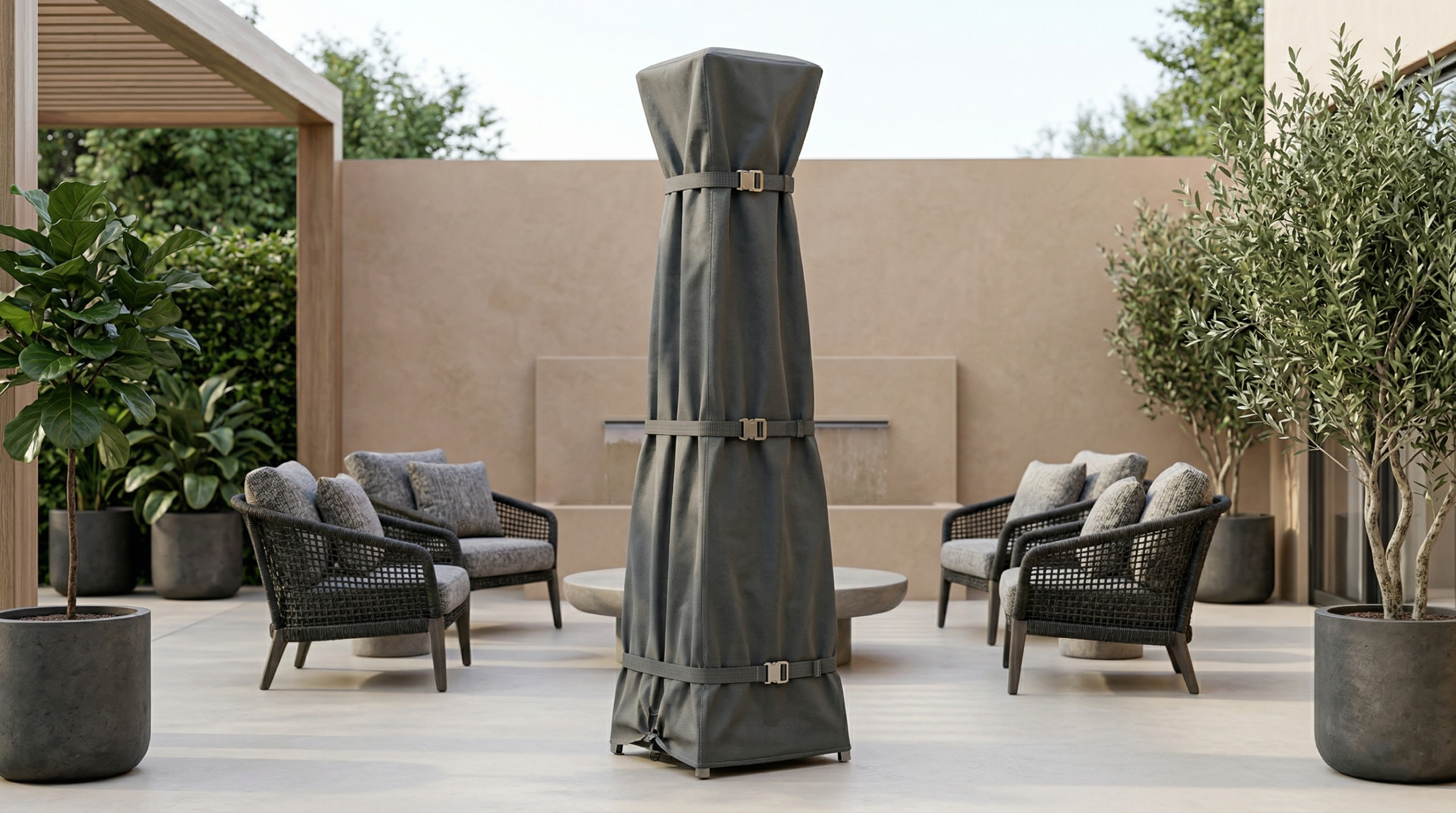
- Adjustable straps
- Buckles or drawstrings
- Weighted hems
Anti-Mold and Anti-Mildew Properties
Critical in humid climates to prevent:
- Odor buildup
- Material degradation
Common Mistakes to Avoid When Buying a Patio Heater Cover
- Choosing based on price alone
- Ignoring local climate conditions
- Overlooking ventilation features
- Buying incorrect size
- Neglecting material specifications
Maintenance Tips to Maximize Cover Lifespan
Cleaning Best Practices
- Use mild soap and water
- Avoid abrasive cleaners
- Rinse thoroughly and air dry
Storage Guidelines
- Store in a dry, ventilated area
- Avoid folding when wet
Periodic Inspection
Check for:
- Tears or punctures
- Seam damage
- Coating wear
Real-World Use Cases (Practical Insights)
Residential Patio Setup
- Moderate usage
- Seasonal protection needs
Commercial Outdoor Heating Systems
- High durability requirements
- Frequent exposure to harsh conditions
Coastal vs Urban Environments
- Coastal: Salt-induced corrosion
- Urban: Dust and pollution exposure
Expert Insights (Mechanical Engineering Perspective)
When evaluating a patio heater cover, most buyers focus on surface-level features. However, from a mechanical engineering standpoint, long-term performance depends on deeper material and structural considerations.
Material Fatigue and Long-Term Degradation
All materials degrade over time due to repeated environmental loading:
- UV-induced fatigue: Weakens polymer chains, reducing flexibility
- Thermal fatigue: Expansion and contraction cause micro-cracks
- Moisture cycling: Leads to coating delamination and internal weakening
Stress Distribution in Fabric Design
Wind forces create uneven stress across a cover’s surface. Poorly designed covers fail at:
- Corners
- Seams
- Attachment points
High-quality designs incorporate:
- Reinforced stitching
- Load-distributing panels
- Elastic hems to reduce localized stress
Engineering Principle:
Uniform stress distribution reduces the likelihood of tearing and extends durability.
Role of Coatings in Performance Enhancement
Modern patio heater covers use advanced coatings to improve performance:
- Polyurethane (PU): Enhances flexibility and water resistance
- PVC coatings: Provide complete waterproofing
- Acrylic coatings: Improve UV resistance
Each coating modifies the base material’s properties—making selection critical.
Engineering Recommendations for Maximum Durability
Based on field experience and material analysis:
- Choose multi-layer composite covers for all-weather use
- Prioritize UV-resistant coatings in sunny climates
- Ensure ventilation features to prevent internal corrosion
- Avoid fully sealed covers in humid regions (risk of condensation buildup)
Patio Heater Cover vs No Cover – Performance Comparison
Lifespan Comparison
| Condition | Average Lifespan of Heater |
|---|---|
| Without Cover | 2–4 years |
| With Basic Cover | 4–6 years |
| With High-Quality Cover | 6–10+ years |
Maintenance Cost Analysis
Without a cover:
- Frequent cleaning required
- Higher repair costs
- Component replacements
With a cover:
- Minimal maintenance
- Lower long-term costs
- Improved efficiency
Safety Implications
Unprotected heaters are more prone to:
- Gas line corrosion
- Burner blockages
- Electrical faults
A proper patio heater cover significantly reduces these risks.
Frequently Asked Questions (FAQs)
What is the best material for a patio heater cover?
The best material depends on your environment:
- Polyester with PU coating: Balanced performance
- Vinyl (PVC): Maximum waterproofing
- Canvas: Best for breathability in humid climates
For most users, multi-layer composite materials offer the best overall performance.
Are waterproof covers always better than breathable ones?
Not always. While waterproof covers block rain effectively, they can trap moisture inside.
Best approach:
Choose a waterproof cover with built-in ventilation panels.
How long does a patio heater cover last?
- Low-quality covers: 1–2 years
- Mid-range covers: 3–5 years
- High-quality engineered covers: 5–10 years
Proper maintenance significantly extends lifespan.
Can I use a tarp instead of a patio heater cover?
Technically yes—but it’s not recommended.
Why:
- Poor fit
- No ventilation
- Higher risk of condensation and damage
A purpose-built patio heater cover is far more effective.
How do I prevent condensation inside the cover?
- Choose breathable materials
- Use covers with ventilation panels
- Ensure the heater is dry before covering
- Avoid overly tight sealing
Conclusion: Protect Your Investment with the Right Choice
A patio heater is more than just an outdoor appliance—it’s an investment in comfort, functionality, and lifestyle. Yet without proper protection, even the best-designed heaters will degrade under environmental stress.
Choosing the right patio heater cover isn’t just about aesthetics or basic protection—it’s about applying material science and engineering principles to extend lifespan, reduce maintenance costs, and ensure safe operation.
By understanding how different materials respond to UV exposure, moisture, and temperature changes, you can make an informed decision that delivers long-term value.