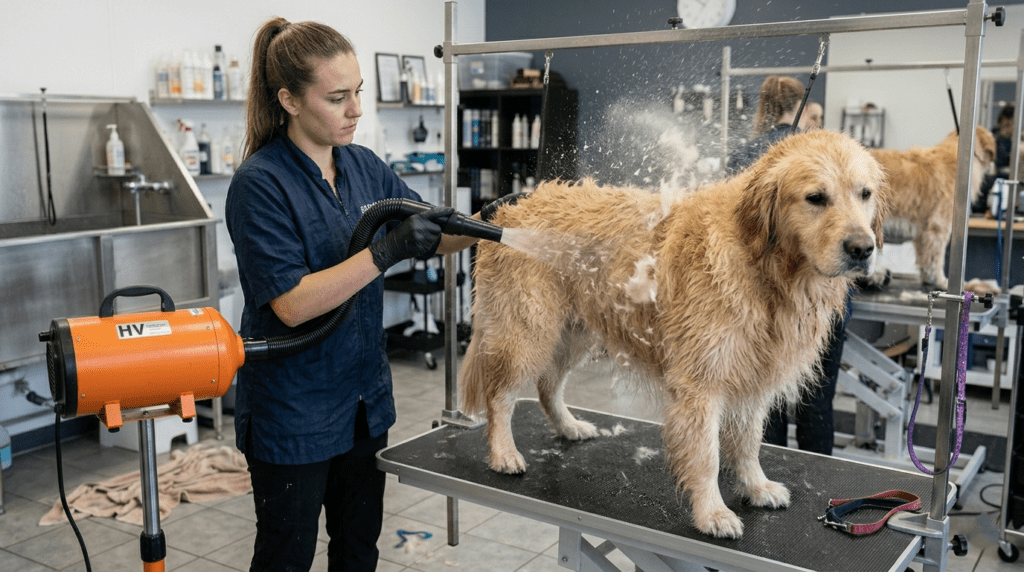
If you’ve ever tried drying a soaked dog with just a towel or a standard hairdryer, you already know the frustration—endless time, lingering moisture, and a restless pet. What most pet owners and even some groomers don’t realize is that the problem isn’t effort—it’s inefficiency in drying technology.
This is where a high velocity dog dryer changes everything.
Unlike traditional dryers that rely heavily on heat, high velocity systems use powerful, controlled airflow engineered to physically remove water from the coat. This isn’t just a convenience upgrade—it’s a mechanical engineering solution to a real-world inefficiency problem.
In this comprehensive guide, you’ll learn:
- The engineering principles behind high velocity drying
- Why it outperforms conventional methods
- How to select the right unit based on performance metrics
- Practical, expert-level tips for safe and efficient use
Whether you’re a professional groomer, engineer, or serious pet owner, this article will help you make an informed, technically sound decision.
Table of Contents
ToggleWhat Is a High Velocity Dog Dryer? (Engineering Perspective)
Definition and Core Function
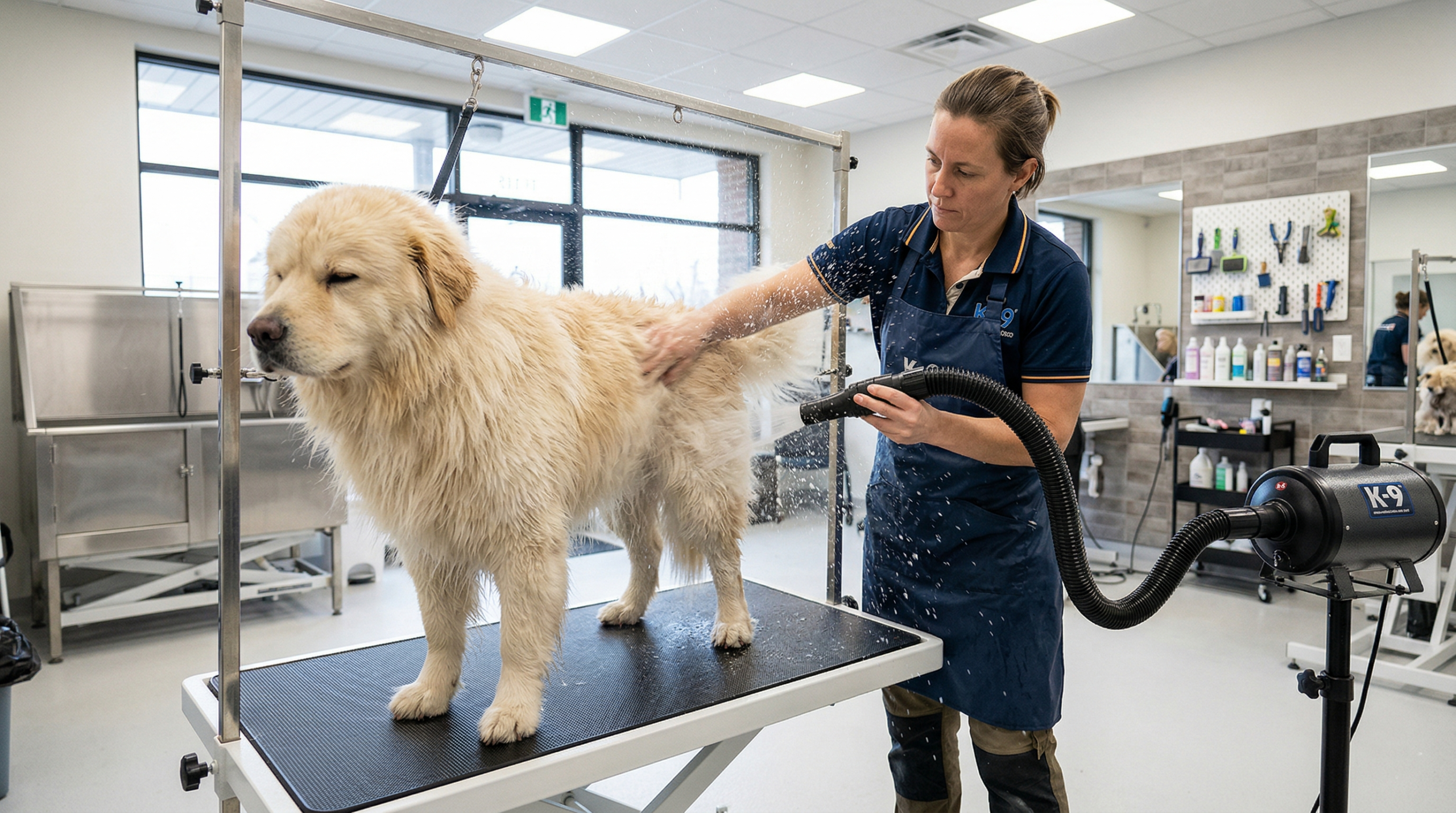
A high velocity dog dryer is a specialized drying device that uses high-speed airflow (rather than heat) to remove water from a dog’s coat. It is commonly used in:
- Professional grooming salons
- Veterinary clinics
- High-volume pet care environments
From an engineering standpoint, it is essentially a high-efficiency air displacement system, designed to maximize kinetic energy transfer to water particles trapped in fur.
Key Components and Design Features
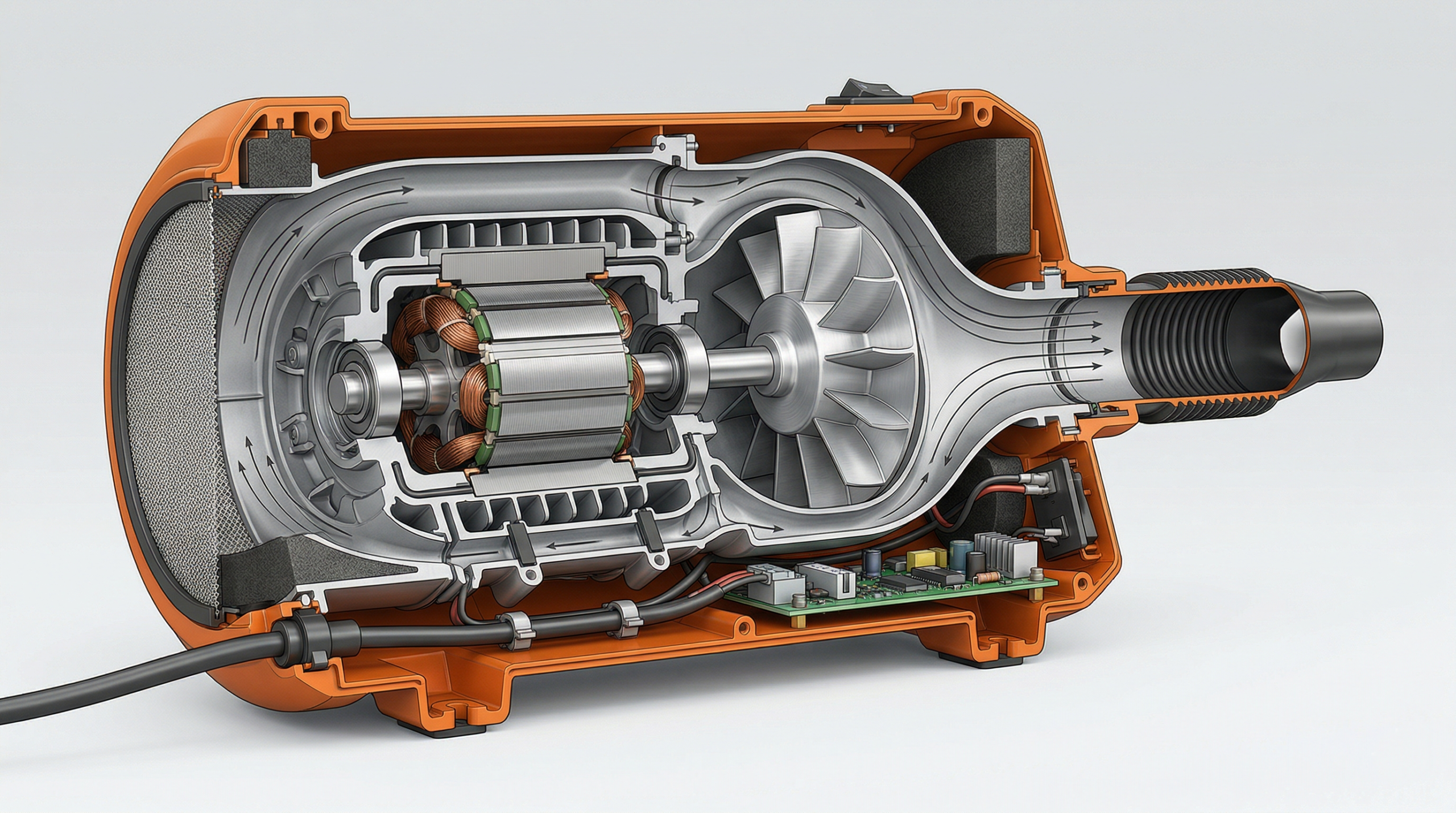
Understanding its internal design helps explain why it performs so effectively:
1. Motor System
- Typically uses brushless or carbon brush motors
- Available in single or dual turbine configurations
- Operates at high RPM to generate strong airflow
2. Airflow Generation (CFM)
- Measured in Cubic Feet per Minute (CFM)
- Determines how much air volume is pushed through the system
- Higher CFM = faster drying capability
3. Nozzle Engineering
- Interchangeable nozzles control:
- Air direction
- Pressure concentration
- Narrow nozzles increase velocity via flow restriction principles
4. Housing and Thermal Management
- Durable ABS or metal casing
- Built-in cooling systems prevent overheating
- Designed for continuous operation
How It Differs from Conventional Hair Dryers
| Feature | Traditional Dryer | High Velocity Dog Dryer |
|---|---|---|
| Drying Method | Heat evaporation | Airflow displacement |
| Efficiency | Moderate | High |
| Safety | Risk of overheating | Low heat exposure |
| Drying Time | Long | Significantly reduced |
| Engineering Basis | Thermal | Fluid dynamics |
How a High Velocity Dog Dryer Works
The Physics of High-Speed Airflow
At its core, a high velocity dryer operates on fluid dynamics principles.
- Air is accelerated using a high-speed motor
- Pressure differences create rapid airflow
- The system converts electrical energy → mechanical energy → kinetic airflow
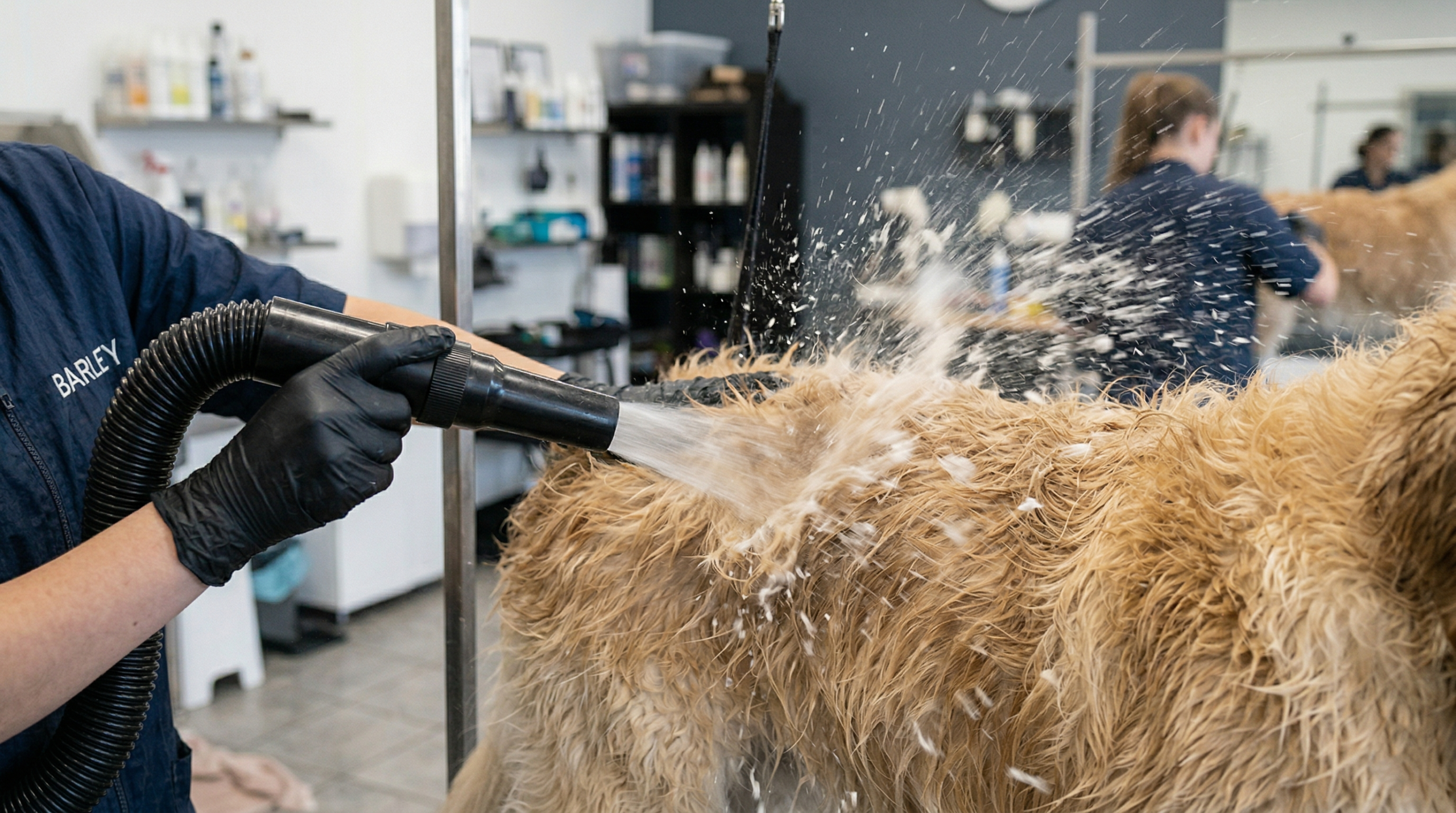
This high-speed airflow applies force to water droplets, effectively breaking surface tension and displacing water from fur.
Water Removal Mechanism
Unlike evaporation-based drying, this method uses a mechanical shearing effect:
- Air penetrates deep into the coat
- Water droplets are physically pushed off the hair shaft
- Works exceptionally well on double-coated breeds
This is why you often see water “blasting off” the dog’s coat—it’s not drying in the traditional sense, but removal through force.
Noise, Heat, and Efficiency Considerations
Why Are They Loud?
- High RPM motors
- Turbulent airflow
- Narrow nozzle pressure amplification
Heat Generation
- Minimal reliance on heating elements
- Some models include optional mild heating
- Safer for prolonged use
Efficiency Metrics
- Drying time reduced by up to 70%
- Lower energy consumption compared to heat dryers
- High output with relatively low thermal waste
Key Benefits of Using a High Velocity Dog Dryer
Faster Drying Time
One of the most significant advantages:
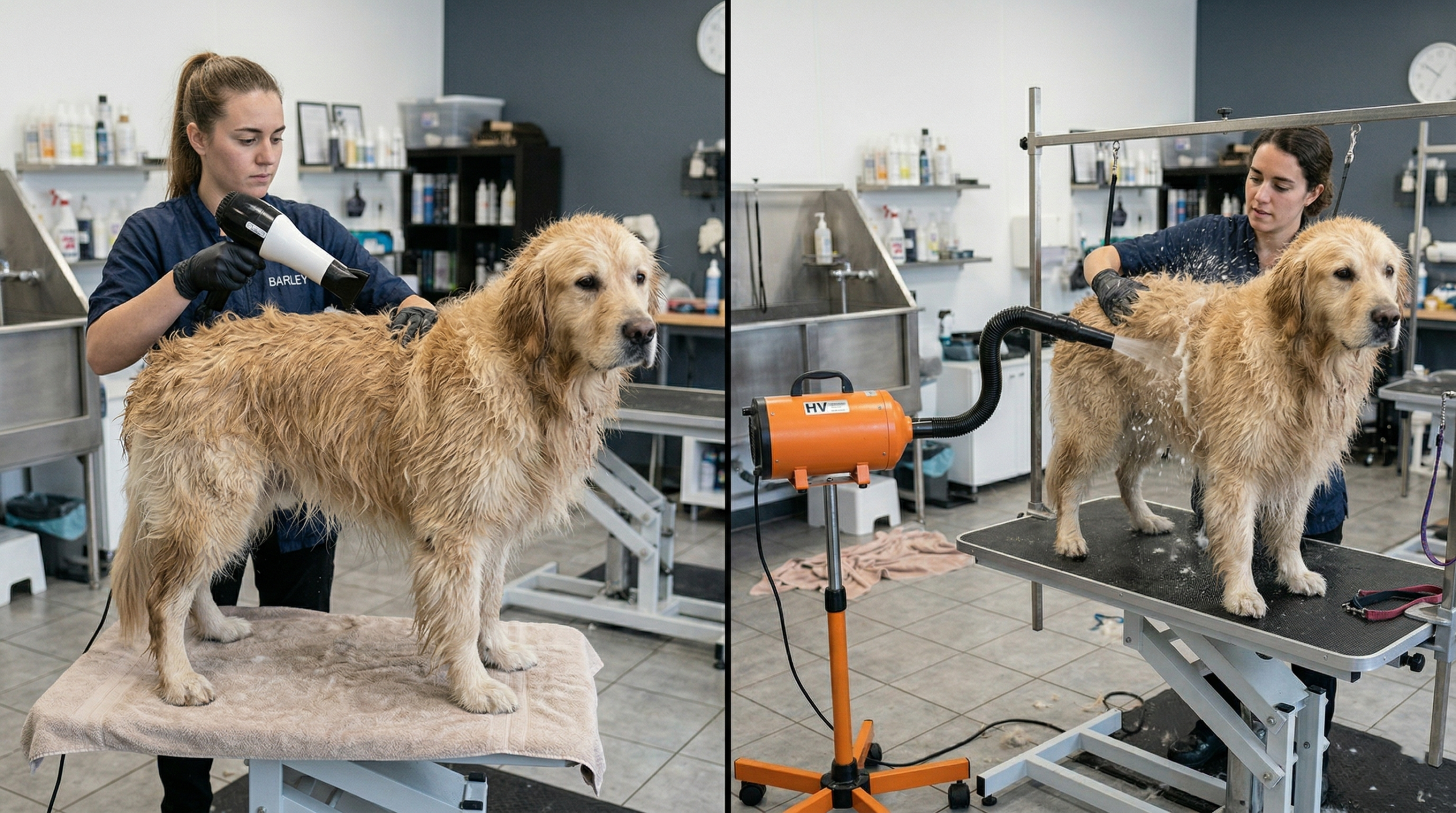
- Cuts drying time dramatically
- Essential for grooming businesses handling multiple dogs daily
Improved Coat Health
Proper drying isn’t just cosmetic—it’s critical for health:
- Prevents fungal infections and hotspots
- Reduces matting
- Enhances coat fluff and finish
Energy Efficiency and Cost Savings
Because these dryers rely less on heat:
- Lower electricity usage
- Reduced long-term operating costs
- Higher return on investment for professionals
Versatility Across Dog Breeds
Adjustable airflow makes them suitable for:
- Thick-coated breeds (Husky, Golden Retriever)
- Short-haired dogs (Beagle, Doberman)
- Sensitive or small dogs (with lower settings)
Types of High Velocity Dog Dryers
Portable vs. Stationary Units
Portable Dryers
- Lightweight and compact
- Ideal for home use or mobile groomers
Stationary Dryers
- More powerful
- Designed for continuous professional use
Single Motor vs. Dual Motor Systems
Single Motor
- Lower cost
- Suitable for occasional use
Dual Motor
- Higher airflow output
- Better for thick coats and heavy workloads
Heated vs. Non-Heated Models
- Non-heated dryers are safer and more common
- Heated versions may help in colder climates
- Excess heat should always be avoided for animal safety
How to Choose the Right High Velocity Dog Dryer
Key Technical Specifications to Evaluate
1. Airflow (CFM)
- Minimum for home use: ~100 CFM
- Professional use: 200+ CFM
2. Motor Power
- Measured in horsepower or watts
- Higher power = stronger airflow
3. Noise Levels
- Measured in decibels (dB)
- Look for noise reduction features
4. Build Quality
- Metal housing lasts longer
- Check hose durability and attachments
Matching the Dryer to Your Needs
| User Type | Recommended Features |
|---|---|
| Pet Owner | Portable, low noise |
| Groomer | High CFM, dual motor |
| Veterinary Use | Quiet, precise control |
Safety Features to Look For
- Overheat protection
- Variable speed control
- Insulated housing
- Flexible hose for safe handling
Budget vs. Performance Trade-offs
- Entry-level: Affordable, limited power
- Mid-range: Balanced performance
- Premium: High durability + maximum efficiency
Step-by-Step Guide: How to Use a High Velocity Dog Dryer Safely
Pre-Drying Preparation
- Remove excess water with a towel
- Brush out tangles
- Calm the dog before starting
Proper Drying Technique
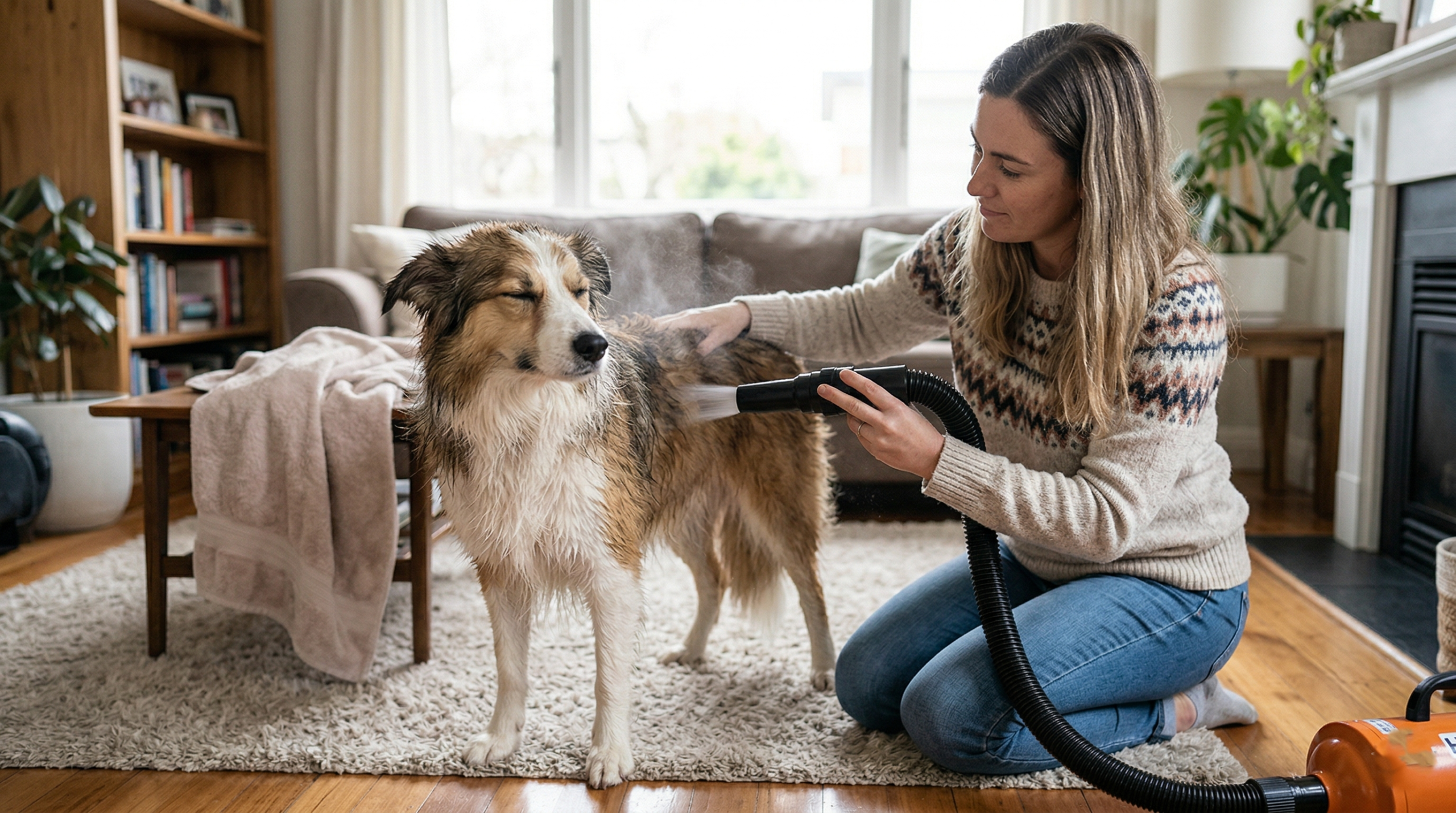
- Start with low speed
- Maintain a safe distance (6–12 inches)
- Use a sweeping motion
- Dry in sections (back → sides → legs → head)
Safety Best Practices
- Avoid direct airflow into ears and eyes
- Monitor stress signals
- Take breaks if needed
Common Mistakes to Avoid
- Starting at maximum power immediately
- Holding the nozzle too close
- Ignoring noise sensitivity
- Skipping routine maintenance
Maintenance and Longevity Tips
Cleaning Filters and Air Intake
- Prevent airflow restriction
- Clean weekly for optimal performance
Motor Care and Storage
- Store in a dry environment
- Avoid overuse without cooling intervals
Troubleshooting Common Issues
| Problem | Possible Cause | Solution |
|---|---|---|
| Weak airflow | Clogged filter | Clean filter |
| Overheating | Blocked intake | Check vents |
| Loud noise | Loose components | Inspect unit |
Real-World Applications and Case Studies
Professional Grooming Salons
- Handle 10–20 dogs daily
- Require high-efficiency drying
Veterinary Clinics
- Used post-surgery or bathing
- Focus on gentle, controlled airflow
Home Users
- Ideal for owners of heavy-shedding breeds
Expert Insights: Why Engineers Prefer High Velocity Systems
From an engineering standpoint, high velocity dryers are superior because they:
- Maximize mechanical efficiency
- Minimize energy waste through heat
- Utilize optimized airflow dynamics
Future innovations may include:
- Noise reduction via aerodynamic redesign
- Smart airflow control systems
- Energy-efficient motor technologies
Frequently Asked Questions (FAQs)
Are high velocity dog dryers safe for all dogs?
Yes, when used correctly with proper distance and speed control.
Can they replace traditional dryers completely?
In most cases, yes—especially for professional use.
How loud are they, and can noise be reduced?
They are loud, but adjustable speed and training help reduce stress.
What is the ideal CFM for home use?
Around 100–150 CFM is sufficient.
Do they consume a lot of electricity?
No, they are generally more energy-efficient than heat-based dryers.
Final Thoughts: Is a High Velocity Dog Dryer Worth It?
A high velocity dog dryer is not just a grooming tool—it’s a precision-engineered solution that dramatically improves efficiency, safety, and results.
If you:
- Value time efficiency
- Want better coat health outcomes
- Need professional-grade performance
Then investing in one is absolutely worth it.
From a mechanical engineering perspective, it represents a smart application of airflow dynamics to solve a practical problem—and that’s exactly what great engineering is all about.