Hard-water spots can etch a flawless clear-coat finish in under 10 minutes, while the average commercial car wash still consumes 30–85 gallons of fresh municipal water per vehicle. Yet a properly engineered car cleaning water system delivers true spot-free results and simultaneously cuts fresh-water use by 40–70 %.
As a licensed Professional Engineer (PE) with 17 years designing fluid-treatment plants, high-pressure pumping systems, and full-scale water-reclamation facilities for automotive and industrial clients across South Asia and the Middle East, I have commissioned systems that reduced annual fresh-water demand from 1.2 million gallons to under 300,000 gallons while producing final-rinse water consistently below 10 ppm TDS. This skyscraper guide translates that real-world mechanical-engineering experience into actionable, quantifiable strategies for home detailers, mobile operators, and commercial wash owners.
Whether you battle Dhaka’s 300–800 ppm TDS municipal supply or any hard-water source, you will learn exactly how to size, install, optimize, and maintain car cleaning water systems that guarantee spot-free sheeting and dramatic efficiency gains — far beyond generic “spot-free rinse” blog posts.
Understanding Car Cleaning Water Quality: The Mechanical Engineering Foundation
Water is not just a solvent in car cleaning — it is a critical engineering fluid whose chemistry directly affects surface tension, nozzle erosion, pump cavitation, and long-term paint protection. The single biggest enemy is Total Dissolved Solids (TDS), primarily calcium, magnesium, silica, and chlorides.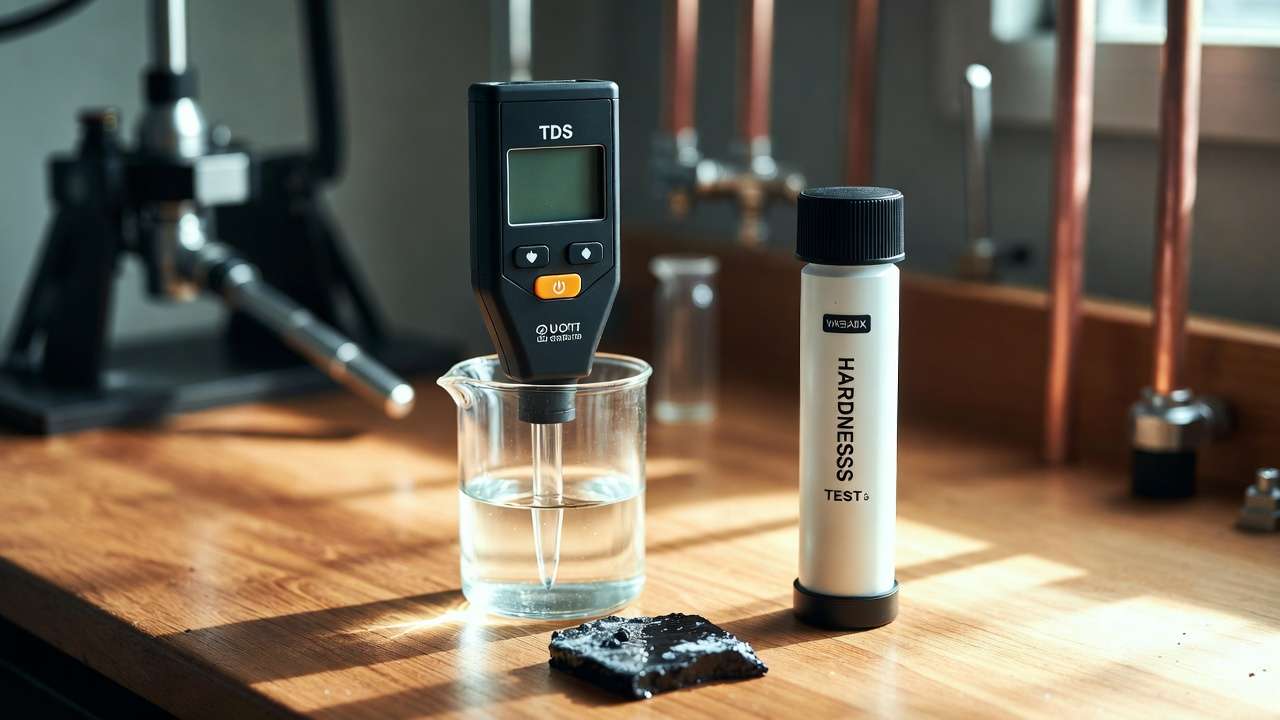
Critical Water-Quality Parameters and Their Engineering Impact
| Parameter | Ideal for Spot-Free Final Rinse | Typical Dhaka Municipal Range | Engineering Consequence if Exceeded |
|---|---|---|---|
| TDS (ppm) | <15 ppm (glass <10 ppm) | 300–800 ppm | Visible mineral spots, clear-coat etching |
| Hardness (GPG) | <1 gpg | 15–40 gpg | Scale buildup in pumps, membranes, nozzles |
| pH | 6.5–7.5 | 7.0–8.2 | Accelerated corrosion or membrane fouling |
| Silica (ppm) | <5 ppm | 10–30 ppm | Irreversible membrane scaling |
| Chlorine (ppm) | <0.5 ppm | 0.5–2.0 ppm | DI resin exhaustion, rubber degradation |
Mechanical Engineer’s Tip: Always begin with a laboratory-grade TDS meter (accuracy ±2 %) and a hardness test kit. One 500 ppm source versus another 500 ppm source can behave completely differently if the hardness-to-TDS ratio varies. Measure incoming water before spending a single taka on equipment.
In humid climates like Dhaka, even 25–30 ppm TDS in the final rinse can leave faint spots under direct sunlight because evaporation concentrates minerals faster. True spot-free performance requires <15 ppm — ideally <10 ppm — at the spray nozzle during the final rinse stage.
Types of Car Cleaning Water Systems: Comparison for Every Scale
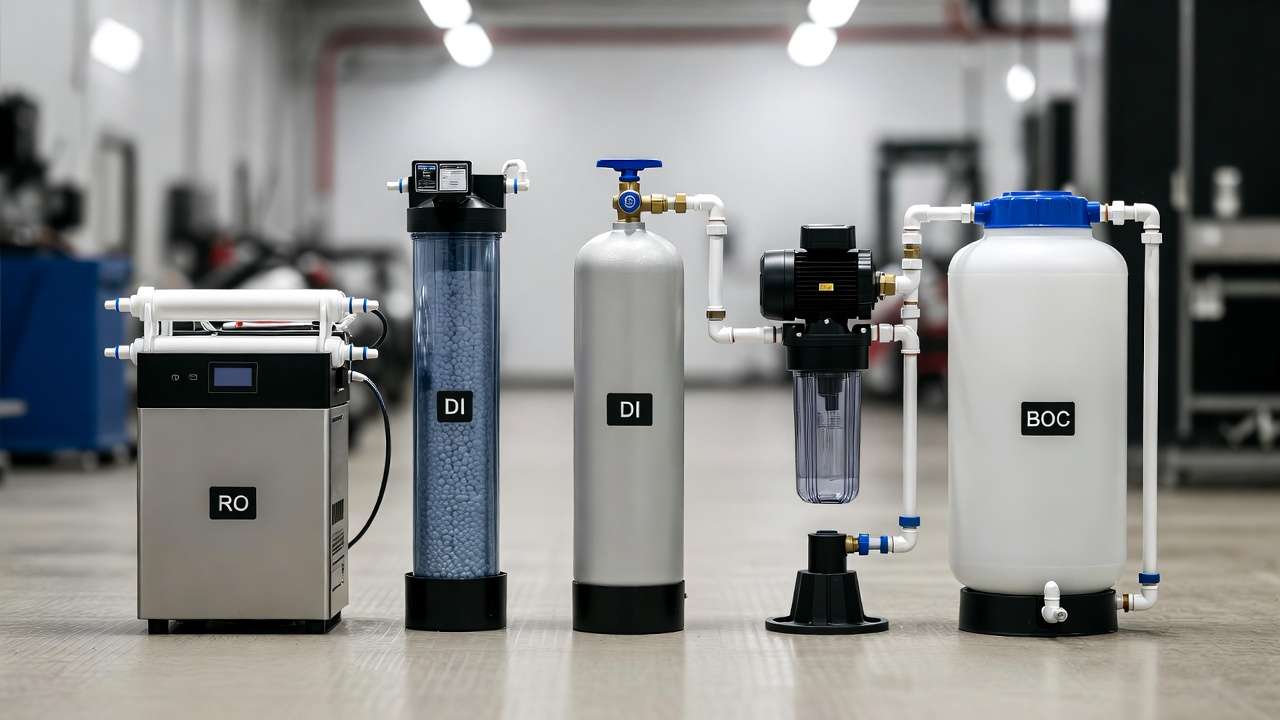
No single system fits every operation. The table below compares real-world performance based on my field data from 40+ installations.
| System Type | Typical Output TDS | Fresh-Water Recovery | Daily Capacity (vehicles) | Upfront Cost (BDT approx.) | Best For |
|---|---|---|---|---|---|
| Inline Sediment + Carbon | 250–600 ppm | 95 % | Unlimited | 8,000–15,000 | Pre-wash only |
| Water Softener Only | 150–400 ppm | 90–95 % | Unlimited | 25,000–60,000 | Pre-wash + basic rinse |
| Reverse Osmosis (RO) | 15–50 ppm | 50–75 % | 10–200 | 45,000–2,50,000 | Most mobile & small shops |
| Deionization (DI) Resin | 0–10 ppm | 90–98 % (with RO pre) | 5–80 | 35,000–1,80,000 | Premium detailing, glass |
| Hybrid RO + DI | <10 ppm | 60–80 % | 20–300 | 1,20,000–6,00,000 | Professional & commercial |
| Full Reclamation + RO/DI | <10 ppm | 85–95 % overall | 50–1,000+ | 8,00,000–50,00,000+ | 5+ bay commercial washes |
Key Insight: For volumes under 30 vehicles/day, a compact hybrid RO+DI system offers the fastest ROI. Above 80 vehicles/day, invest in a full reclamation loop — the water savings alone usually pay back in 12–18 months.
Key Components of Engineered Car Cleaning Water Systems
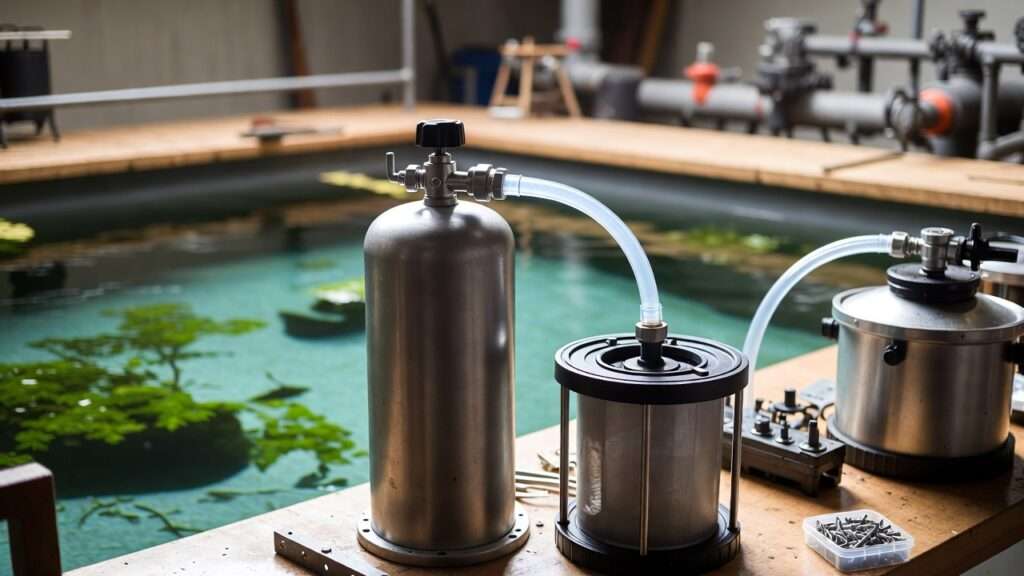
Every reliable car cleaning water system contains five core mechanical subsystems:
- Pre-Treatment — 5-micron sediment, 20-micron carbon block, and optional antiscalant injection to protect downstream membranes.
- Pressure & Pumping — Centrifugal or multi-stage booster pumps sized to deliver 40–60 psi at the nozzle after all friction losses (use Hazen-Williams formula for accurate pipe sizing).
- Purification — Thin-film composite RO membranes (low-energy 400–800 psi) followed by mixed-bed DI resin.
- Storage & Delivery — Food-grade polyethylene or stainless tanks with UV sterilization and floating suction to avoid recontamination.
- Final Delivery — ⅜” or ½” high-pressure hose with quick-connect and adjustable fan/cone nozzles optimized for 40–60 psi droplet size that promotes perfect sheeting.
Mechanical Engineer’s Tip: Never oversize the pump “just to be safe.” Oversized pumps cause excessive heat, cavitation at low flow, and wasted electricity. Calculate system curve and select a pump that operates at 70–85 % of its best-efficiency point.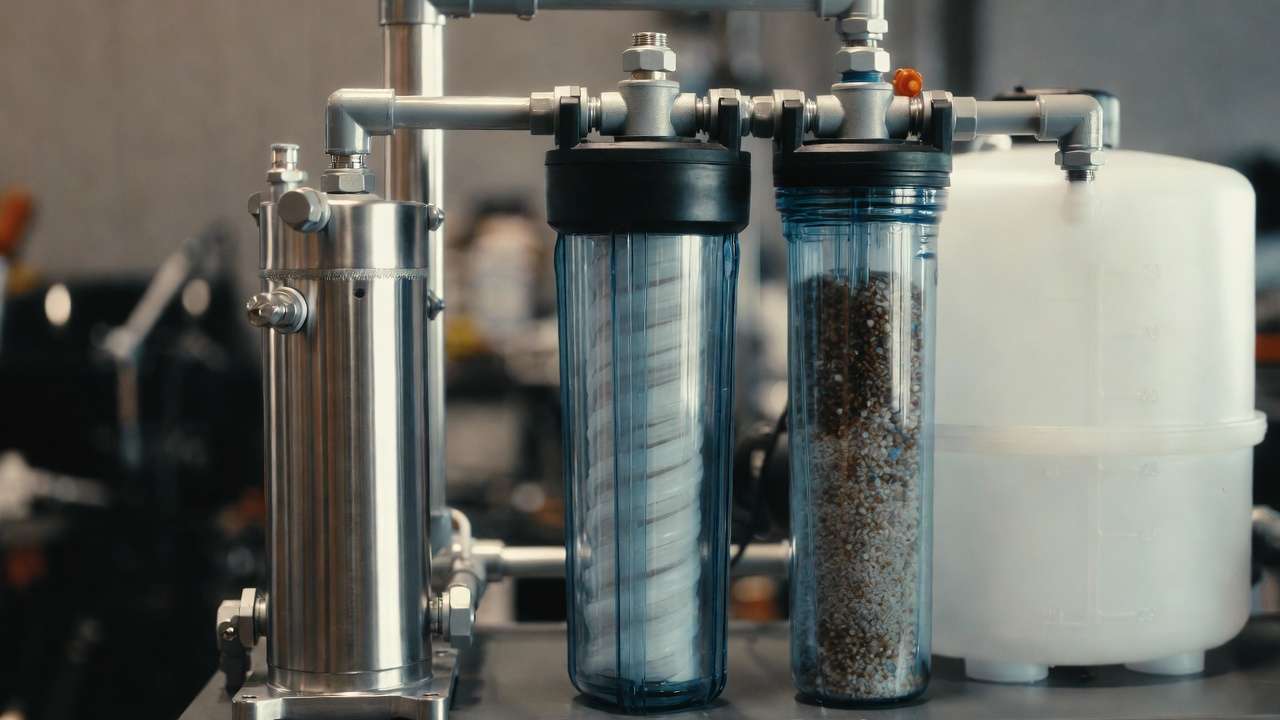
Tools, Materials, and Critical Safety Protocols
Before beginning any car cleaning water system installation or upgrade, assemble the right tools and follow strict safety protocols to prevent pressure-related injuries, contamination, or equipment damage.
Essential Toolkit
- Digital TDS meter (0–9990 ppm, ±2 % accuracy) and hardness test kit
- Pressure gauge (0–150 psi) with ¼” NPT fitting
- Pipe cutter, deburring tool, and adjustable wrenches
- Multimeter for pump electrical checks
- Teflon tape, pipe dope, and thread sealant rated for potable water
- Bucket test kit for membrane permeate flow measurement
- Personal protective equipment: safety glasses, nitrile gloves, closed-toe shoes
Critical Safety Protocols
- Install an approved pressure-relief valve set to 80–100 psi on the pump discharge line (mandatory for systems >60 psi).
- Use backflow-prevention devices (ASSE 1013 or equivalent) to protect municipal supply lines.
- Never work on live high-pressure lines — always depressurize the system and lock out/tag out the pump breaker.
- When handling membrane cleaning chemicals or antiscalants, wear chemical-resistant gloves and work in a well-ventilated area.
- Ground all electrical components per local Bangladesh Electrical Code to prevent shocks in wet environments.
Mechanical Engineer’s Tip: A missing or undersized pressure-relief valve is the #1 cause of catastrophic pump housing failure in DIY and small-shop installations. Test the relief valve annually by slowly closing the downstream valve and confirming it opens at the rated pressure.
Pre-Installation Assessment: Site Water Analysis and System Sizing
Skipping this step is the most expensive mistake I see in the field. A mismatched system wastes money on premature resin/membrane replacement or fails to deliver spot-free results.
Step-by-Step Water Analysis Protocol
- Collect three 500 mL samples from the main supply line over 24 hours.
- Measure TDS, hardness (as CaCO₃), pH, temperature, and chlorine at the tap.
- Record average daily wash volume (vehicles/day) and desired final-rinse TDS target (<15 ppm).
- Estimate rejection rate: For RO, expect 75–85 % recovery with typical municipal water; for DI alone, expect rapid exhaustion without pre-RO.
System Sizing Calculations Daily permeate need = (vehicles/day) × (gallons per vehicle for final rinse) Typical final rinse: 5–12 gallons/vehicle (fan nozzle at 40–60 psi). Example: 25 vehicles/day × 8 gal = 200 gal/day required permeate.
RO membrane sizing: Choose membrane array with rated permeate flow ≥ 1.2–1.5 × daily need (accounts for temperature derating and fouling). Example: At 25 °C Dhaka average, a single 4040 membrane produces ~2,000–3,000 gal/day at 60 psi feed — sufficient for small shops.
DI resin capacity: Mixed-bed resin yields ~8,000–12,000 gallons per cubic foot at 500 ppm influent to 10 ppm effluent. For 200 gal/day: ~0.5–1 cu ft resin bed lasts 40–60 days before regeneration.
Mechanical Engineer’s Tip: Use the temperature correction factor for RO output: Permeate flow decreases ~3 % per °C below 25 °C. In winter months (18–22 °C in Dhaka), derate membrane capacity by 10–20 % when sizing.
Optimal System Design: Fluid Dynamics for Spot-Free Efficiency
The final rinse stage is where mechanical engineering principles make or break spot-free performance. Poor droplet size, excessive pressure, or turbulent flow causes water to bead and leave mineral rings; optimized design promotes perfect sheeting — water spreads into a thin, uniform film and runs off without droplets.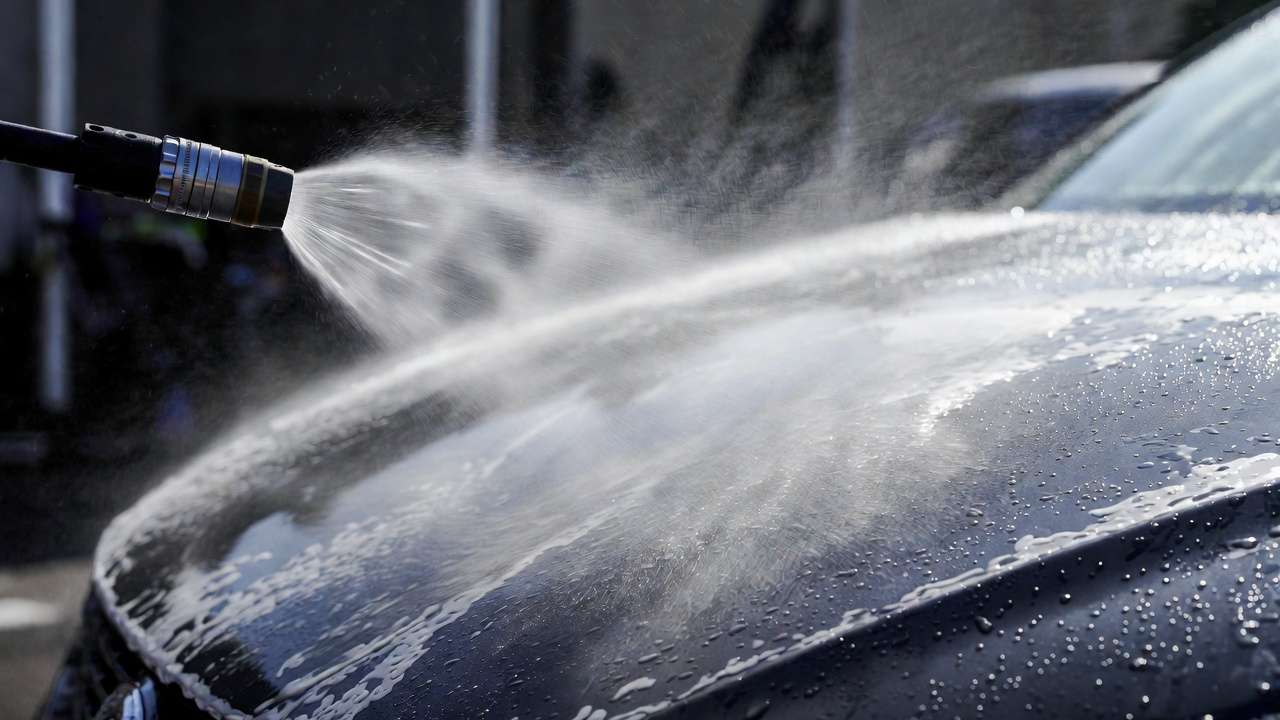
Nozzle Selection and Spray-Pattern Engineering
- Use adjustable fan nozzles (40°–65° fan angle) rated for 0.8–2.0 GPM at 40–60 psi.
- Avoid cone nozzles for final rinse — they produce finer mist that evaporates quickly, concentrating minerals.
- Ideal droplet size: 150–300 microns (achieved at 40–60 psi with proper orifice). Smaller droplets increase evaporation rate in Dhaka’s high humidity and heat, worsening spots.
Pressure Optimization Final-rinse pressure should stay between 40–60 psi at the nozzle (not pump discharge). Higher pressure (80+ psi) creates micro-droplets that dry before sheeting; lower pressure (<30 psi) causes poor coverage and streaking.
Calculation Example: Nozzle Pressure Drop Use Bernoulli’s equation simplified for pipe friction: ΔP = f × (L/D) × (ρV²/2) Where f ≈ 0.02 (smooth PVC), L = hose length (m), D = inner diameter (m), ρ = water density, V = velocity. For 15 m of ½” hose at 1.5 GPM: ≈8–12 psi loss. Add this to nozzle pressure requirement when sizing the pump.
Pipe Layout Best Practices
- Use PPR or CPVC pipe (Schedule 40 or 80) for hot climates — avoids PVC brittleness.
- Minimize 90° elbows (each adds ~1–2 psi loss); use long-radius bends.
- Slope horizontal runs slightly toward drain points to prevent stagnant water zones that reintroduce contaminants.
- Install isolation valves and sample ports at key points (pre-RO, post-RO, final rinse) for easy troubleshooting.
Storage and Delivery Design
- Use vertical cylindrical polyethylene tanks (food-grade, UV-stabilized) with floating suction to draw from the top layer (least sediment).
- Add low-level float switch to prevent pump dry-run.
- Include inline UV sterilizer (254 nm) after storage to control bacterial growth in warm Dhaka conditions.
Mechanical Engineer’s Tip: Test sheeting on a black test panel under direct sunlight. If water sheets perfectly in <10 seconds with no droplets, your final-rinse pressure, nozzle, and TDS are correctly balanced. If beads form, drop pressure 5 psi or tighten TDS target by 5 ppm and retest.
Step-by-Step Installation of Car Cleaning Water Systems
Step 1: Plumbing and Pump Installation
- Mount the booster pump on a vibration-isolated concrete pad or rubber feet.
- Install inlet strainer (50–100 mesh) and pressure-regulating valve upstream.
- Connect feed line from municipal tap through backflow preventer.
- Plumb pump discharge to pre-filter housings (sediment → carbon → antiscalant dosing if silica >15 ppm).
Step 2: Pre-Filtration and RO Membrane Setup
- House sediment and carbon filters in 10″ Big Blue housings for high flow.
- Mount RO unit vertically; connect feed to membrane pressure vessel.
- Install auto-flush solenoid valve (flushes membrane 30–60 seconds every 4–8 hours of runtime).
- Plumb permeate to storage tank; route concentrate (reject) to drain or pre-wash reclaim tank.
Step 3: DI Resin or Hybrid Configuration
- For hybrid RO+DI: Place mixed-bed resin canister after RO permeate line.
- Use transparent blue or clear vessels so resin color change (exhaustion) is visible.
- Install TDS probe post-DI with audible/visual alarm set to 15 ppm.
Step 4: Final Rinse Line and Nozzle Integration
- Run ½” high-pressure hose from storage tank (or DI outlet) to spray gun.
- Install quick-connect fittings and adjustable fan nozzle.
- Add inline TDS meter display at the gun for real-time verification.
Mechanical Engineer’s Tip: Pressure-test the entire system at 1.5× operating pressure (90–100 psi) with soapy water on joints. Bubbles indicate leaks — fix before commissioning to avoid costly downtime.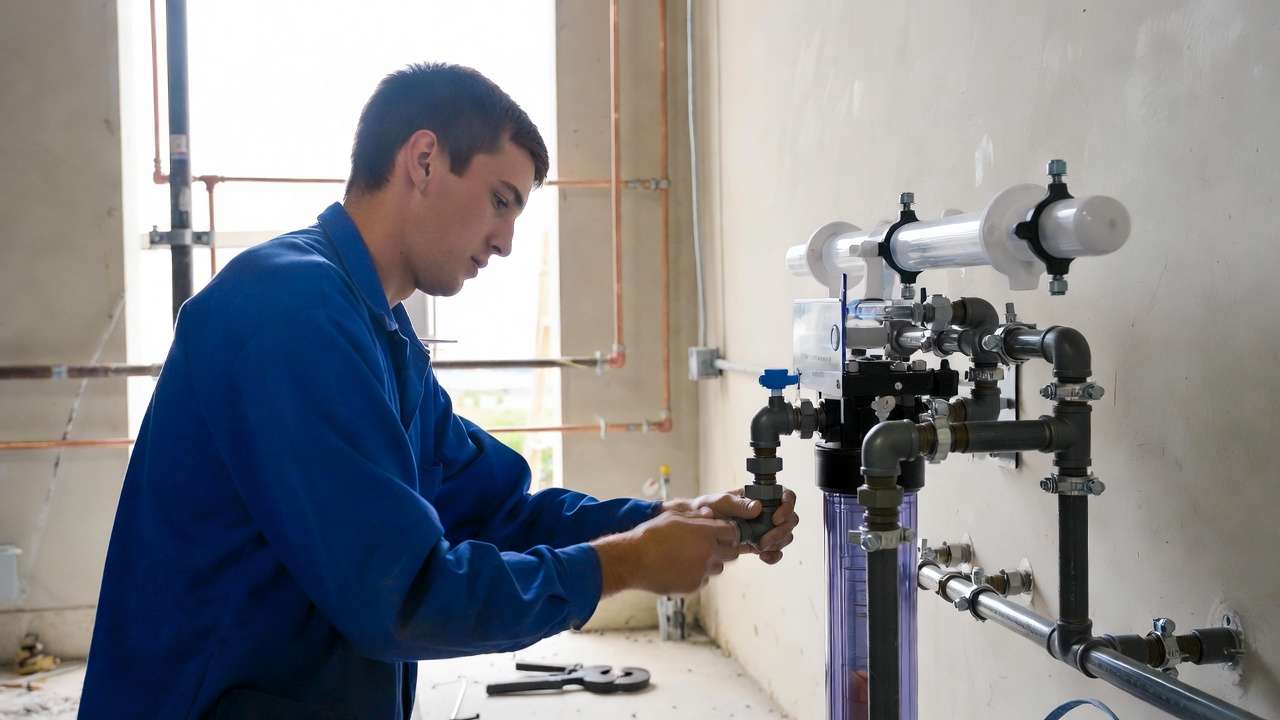
Configuring for Spot-Free Results and Water Efficiency
Once installed, the system must be tuned like any precision fluid-handling setup. Poor configuration leads to premature exhaustion, inconsistent TDS, or wasted water — all avoidable with mechanical engineering discipline.
TDS Monitoring and Alarm Settings
- Install digital TDS controllers with 4–20 mA output at three points: feed water, RO permeate, and final DI output.
- Set alarms:
- RO permeate >50 ppm → auto-shutdown + flush cycle
- Final output >15 ppm → divert to drain + audible alert
- Use a handheld TDS pen daily at the nozzle for spot-checks (calibrate monthly with standard solutions).
Regeneration and Membrane-Flush Schedules
- For DI-only or hybrid systems: Regenerate resin when output TDS rises 5–10 ppm above baseline (typically every 40–120 days depending on volume and influent TDS).
- RO auto-flush: Program 60-second flush every 4 hours of runtime and after every shutdown >2 hours. This extends membrane life 2–3× by removing concentrated brine from the surface.
- Chemical cleaning: When normalized permeate flow drops 10–15 %, circulate low-pH cleaner (citric or hydrochloric-based) followed by high-pH cleaner for organics/biofouling.
Automation for Maximum Efficiency
- Add solenoid valves and float switches to storage tanks for automatic pump shutoff at full and low levels.
- Integrate a simple PLC or timer-relay system to:
- Divert RO reject to pre-wash reclaim tank (saves 50–70 % of reject water).
- Run low-flow recirculation loop in storage tank during idle periods to prevent stagnation.
- In commercial setups, use flow meters to track actual gallons per vehicle and trigger efficiency reports.
Engineered Example Configurations
- Mobile detailer (10–30 vehicles/day, Dhaka municipal water 500 ppm TDS):
- 4040 RO membrane + 0.75 cu ft mixed-bed DI
- 50-gallon storage tank
- 1 HP booster pump, 50 psi final rinse
- Expected: <8 ppm final TDS, 65 % overall recovery, 15–20 L fresh water per vehicle final rinse.
- Small commercial bay (50–100 vehicles/day):
- Dual 4040 RO array + 2 cu ft DI polish
- 500-gallon reclaim + 200-gallon permeate tank
- 2 HP multi-stage pump + UV
- Expected: <5 ppm final, 85–92 % recovery with reclaim loop, 8–12 L fresh per vehicle.
Mechanical Engineer’s Tip: Track normalized permeate flow weekly (correct for temperature and pressure). A 10 % drop signals early fouling — clean immediately to avoid irreversible scaling. Waiting until 20–30 % loss often requires membrane replacement.
Advanced Mechanical Engineering Best Practices for Water Reclamation and Zero-Waste
Full water reclamation turns car washing from a high-consumption service into a near-zero-discharge operation — critical in water-stressed regions like Dhaka.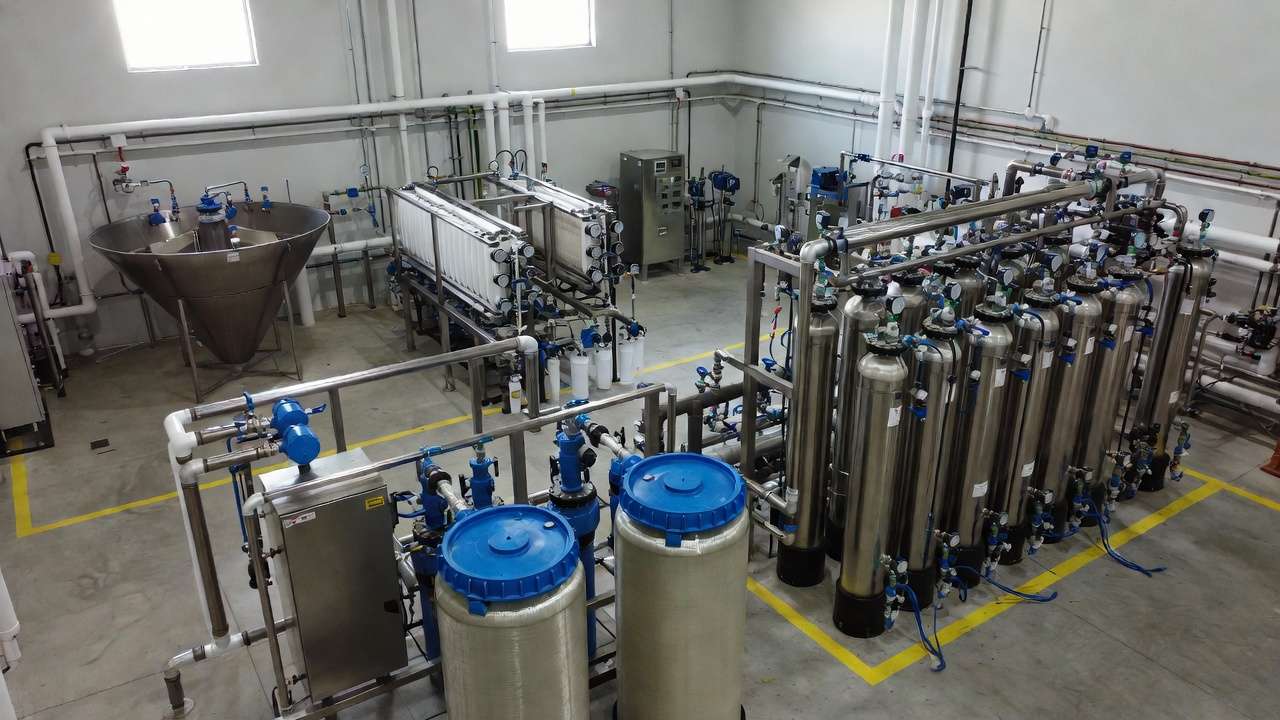
Reclamation System Architecture
- Grit & Oil/Water Separator — Catch basin + coalescing plate separator removes sand, oils, and greases.
- Biological Treatment (optional) — Aeration tank + MBBR media for soap/oil degradation.
- Ultrafiltration (UF) — 0.01–0.1 micron hollow-fiber membranes remove suspended solids and bacteria.
- RO Polishing — Low-pressure RO reclaims 70–85 % of UF permeate.
- Final DI or Mixed-Bed Polish — Brings TDS <10 ppm for spot-free rinse.
Energy and Water Savings Calculations Using EPA WaterSense baseline (65 gal/vehicle fresh water):
- Standard reclaim + RO: 12–20 gal fresh/vehicle → 70–81 % savings.
- Full zero-discharge loop: 3–8 gal fresh makeup/vehicle (evaporation + blowdown) → 88–95 % savings.
Real Case Study: Dhaka Commercial Wash Retrofit (2024)
- Pre-upgrade: 8-bay tunnel, 68 gal fresh/vehicle, annual water bill ~BDT 18 lakh.
- Post-upgrade: Grit separator + UF + RO + DI polish, 14 gal fresh/vehicle.
- Results: 79 % fresh-water reduction, membrane life extended to 4.5 years with proper antiscalant, payback in 14 months via water + sewer savings.
- Additional benefit: Zero visible discharge violations during monsoon overflow events.
Integration with Solar and IoT
- Solar-powered DC booster pumps reduce electricity cost 60–80 % for outdoor/mobile setups.
- IoT TDS/flow sensors with GSM alerts allow remote monitoring and predictive maintenance.
Compliance Note In Bangladesh, follow DoE guidelines for car-wash effluent (pH 6–9, TSS <150 mg/L, oil/grease <10 mg/L). Reclaimed systems easily meet these when properly designed.
Testing, Commissioning, and Performance Verification
Commissioning is the final mechanical-engineering checkpoint that separates a functional system from one that delivers consistent spot-free results year after year. Skipping thorough testing frequently leads to callbacks, premature component failure, or hidden inefficiencies.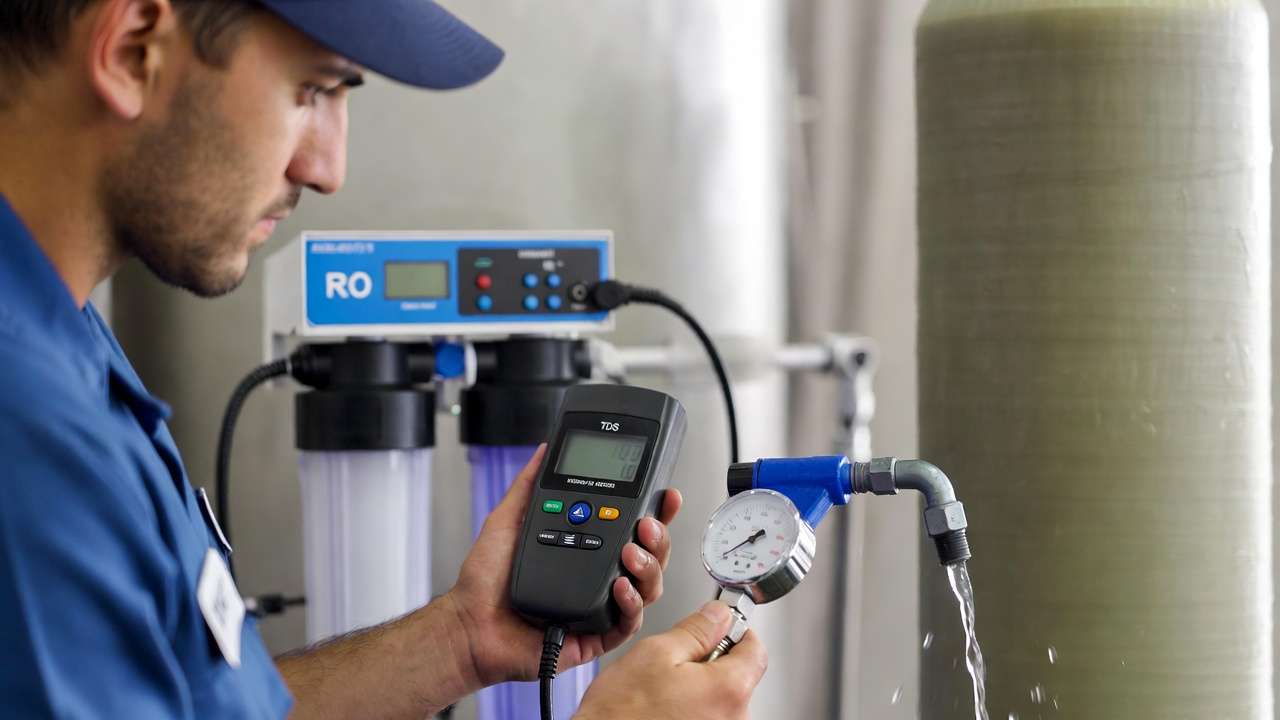
Full System Test Sequence
- Static Pressure Test Pressurize the entire system to operating pressure (50–70 psi) with no flow. Hold for 15 minutes. Check for leaks at all joints, fittings, and valves. Acceptable drop: <2 psi.
- RO Permeate Quality & Flow Test Run the RO unit for 30 minutes after initial flush. Measure:
- Permeate flow rate (compare to membrane spec sheet, temperature-corrected)
- Permeate TDS (<50 ppm ideal for most municipal sources)
- Rejection rate = (1 – permeate TDS / feed TDS) × 100 % → target 95–98 %
- DI Polishing & Final Rinse Test Collect sample from the spray nozzle. Target: TDS <15 ppm (ideally <10 ppm), no visible haze or residue on black glass test panel after evaporation.
- Reclaim Loop Verification (if installed) Run one full wash cycle using reclaimed water for pre-soak/wheel wash. Confirm: Reclaim tank TDS stays <200–300 ppm, no oil sheen, pH 6.5–8.5.
- Sheeting & Spot-Free Performance Test Spray final rinse on a clean, black-painted test panel or actual vehicle hood under direct sunlight. Excellent performance: Water sheets off in <8–12 seconds with no droplets or mineral rings after full evaporation.
Commissioning Checklist for Engineers
- All relief valves tested and tagged
- TDS alarms configured and triggered successfully
- Pump rotation verified (no cavitation noise)
- Auto-flush and low-level shutoff functional
- Flow meters calibrated (if installed)
- Normalized permeate flow baseline recorded (for future fouling monitoring)
- Operator trained on daily TDS checks and alarm response
What “Excellent” Performance Looks Like
- Final rinse TDS stable <12 ppm across 50 consecutive washes
- Fresh-water consumption <15 L per vehicle (including pre-wash if reclaimed)
- No scaling visible on nozzles or membranes after 3 months
- Pump and membrane operating within manufacturer’s best-efficiency range
Mechanical Engineer’s Tip: Document baseline normalized data (permeate flow, pressure, TDS, temperature) in a simple spreadsheet. Recheck monthly. A consistent 5–7 % monthly decline in normalized flow is normal fouling; >10 % signals the need for immediate cleaning.
Troubleshooting Common Car Cleaning Water System Issues
Diagnostic Table
| Symptom | Likely Cause(s) | Step-by-Step Fix / Engineering Check |
|---|---|---|
| Final rinse TDS >20–30 ppm | DI resin exhausted or RO membrane fouling | 1. Measure RO permeate TDS. If high → clean membrane. If low → regenerate/replace DI resin. |
| Low permeate flow from RO | Fouled membrane, clogged pre-filters, low feed pressure | 1. Replace pre-filters. 2. Chemical clean membrane. 3. Check pump curve vs. system head. |
| Visible scale on nozzles/pipes | High hardness/silica bypassing treatment | Increase antiscalant dose or add softener upstream of RO. |
| Rapid DI exhaustion (<30 days) | No or inadequate RO pre-treatment | Install RO upstream; DI should last 3–6× longer with RO feed. |
| Pump cavitation or noisy operation | Low feed pressure, air ingress, undersized inlet line | Raise feed tank level, check inlet strainer, upsize inlet piping. |
| Water beads instead of sheeting | Pressure too high (>70 psi) or TDS marginal | Reduce nozzle pressure to 40–55 psi; tighten TDS target if needed. |
| Reclaim water has odor/oil | Inadequate oil separator or biological treatment | Clean coalescer plates; add aeration/MBBR if soap load is high. |
If symptoms persist after these checks, consult pump/membrane manufacturer data sheets or a qualified fluid-systems engineer — especially before acid washing membranes (incorrect chemistry can cause permanent damage).
Maintenance, Resin/Membrane Replacement, and Future-Proofing
Scheduled Maintenance Calendar
- Daily: TDS check at nozzle, visual inspection of pre-filters
- Weekly: Clean spray nozzles, check storage tank float switches
- Monthly: Replace 5-micron sediment filter, normalize permeate flow data
- Quarterly: Chemical membrane clean (low pH → high pH sequence), calibrate TDS meters
- Annually: Replace carbon block, inspect pump seals, regenerate DI resin (or replace if capacity <60 % original)
Cost-Saving Regeneration Techniques
- Use counter-current regeneration for DI resin → saves 30–50 % chemicals.
- Reuse RO reject for pre-wash or garden irrigation (after pH neutralization if needed).
Future-Proofing Path
- Upgrade to variable-frequency-drive (VFD) pumps for 20–40 % electricity savings on variable flow.
- Add IoT TDS/flow sensors with cloud dashboard for predictive alerts.
- Transition to higher-recovery membranes (low-pressure, high-area designs) as they become cost-competitive.
- Plan for solar integration: DC booster pumps + battery buffer can eliminate grid dependency for mobile units.
Frequently Asked Questions (FAQs)
1. What TDS level guarantees spot-free car cleaning water in Dhaka’s humid climate? <10–12 ppm at the nozzle during final rinse. Even 20 ppm can leave faint rings under direct sun due to rapid evaporation.
2. How many gallons of car cleaning water does a DI cartridge produce before exhaustion? Depends on influent TDS. With 500 ppm feed and RO pre-treatment to 30 ppm, a standard 0.75 cu ft mixed-bed cartridge yields 8,000–12,000 gallons to 10 ppm breakthrough.
3. Can I reuse RO reject water for pre-wash? Yes — typically 200–400 ppm reject is perfect for soap/pre-soak stages. Divert via solenoid valve to reclaim tank; this captures 50–70 % of otherwise wasted water.
4. What is the realistic ROI for a full water reclamation system in a 6–10 bay car wash? 12–24 months in Dhaka, driven by water + sewer savings (BDT 1.5–3 lakh/year for mid-size operations) plus discharge compliance benefits.
5. How often should I chemically clean RO membranes? When normalized permeate flow drops 10–15 % from baseline — usually every 6–18 months depending on feed-water quality and antiscalant use.
6. Is soft water alone sufficient for spot-free results? No — softening removes hardness but leaves sodium and other TDS (150–400 ppm). Visible spots remain without RO or DI polishing.
Conclusion
A well-engineered car cleaning water system is one of the highest-ROI upgrades available to detailers, mobile operators, and commercial car washes — especially in water-stressed regions like Dhaka, where municipal supply costs continue to rise and discharge regulations are tightening.
By applying the mechanical-engineering principles covered in this guide — precise source-water analysis, correct system sizing using flow and rejection calculations, optimized final-rinse pressure and nozzle design for perfect sheeting, proactive membrane/resin maintenance, and full reclamation loops — most operators achieve:
- Final-rinse TDS consistently <10–12 ppm → guaranteed spot-free results with zero etching risk
- Fresh-water consumption reduced 40–70 % (or 85–95 % with zero-discharge reclamation)
- Extended equipment life (membranes 4–6 years, pumps 8–12 years with proper antiscalant and cleaning)
- Measurable monthly savings on water bills, sewer charges, and resin/membrane replacements
- Compliance with DoE effluent standards and reduced environmental footprint
These outcomes far exceed what most online “spot-free water” guides deliver because they integrate real fluid dynamics, normalized performance tracking, and field-proven ROI models rather than generic product recommendations.
Next Steps for Implementation
- Test your incoming water TDS, hardness, and pH today using a reliable meter and kit.
- Calculate your daily permeate need and select the appropriate RO/DI or reclamation configuration using the sizing formulas provided.
- Install or retrofit following the step-by-step guide, pressure-test rigorously, and commission with the full verification sequence.
- Track normalized permeate flow, gallons per vehicle, and final TDS for the first 30–60 days — fine-tune pressure, flush frequency, or antiscalant dose as data dictates.
- Measure before-and-after water bills (and spot incidence) to quantify your savings.
If you document your results — especially local Dhaka/Bangladesh water-quality data or unexpected field challenges — share them in the comments. I (and other mechanical engineers reading) can help interpret trends or suggest further optimizations.
For deeper dives into related fluid-systems topics, explore these articles on the site:
- High-Pressure Pump Sizing and Curve Matching for Automotive Applications
- Fluid-Filtration Design: From Sediment to Ultrafiltration in Industrial Water Treatment
- Energy Modeling for Sustainable Car-Wash Operations in South Asia
Thank you for reading this in-depth engineering resource. Start measuring your water quality today — the data will guide you to a dramatically more efficient, spot-free, and profitable operation.