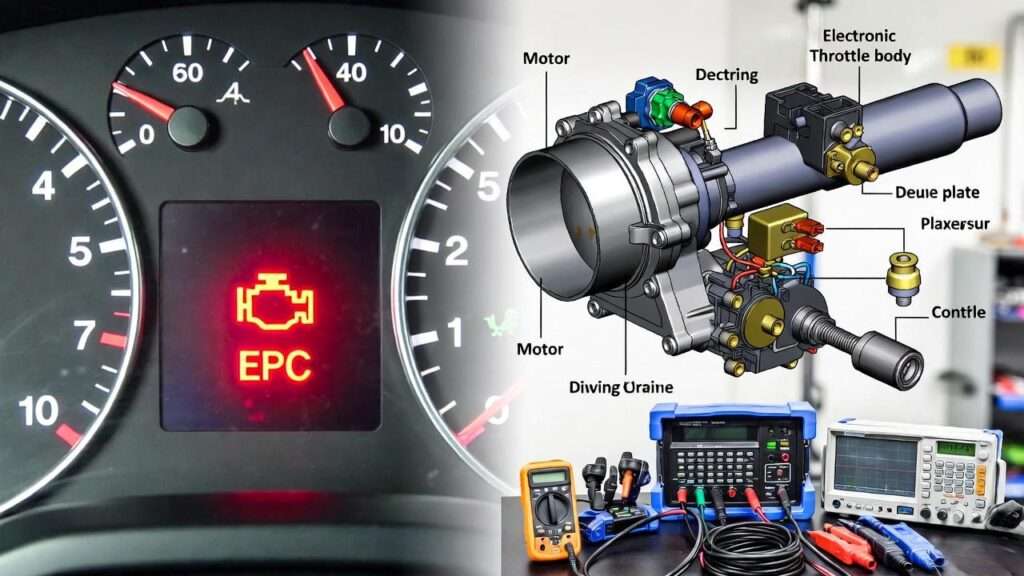
You’re driving along when suddenly the EPC light illuminates on your dashboard, accompanied by a noticeable loss of power—the engine hesitates, acceleration feels sluggish, and the vehicle may enter limp mode, capping speed at 30-40 mph to prevent further damage. This scenario is all too common in Volkswagen Group vehicles (VW, Audi, Skoda, Seat), where the Electronic Power Control (EPC) warning indicates a fault in the sophisticated drive-by-wire throttle system or related mechatronic components.
As a mechanical engineer specializing in automotive control systems, I’ve diagnosed countless EPC faults, from sensor drift in accelerator pedal modules to carbon buildup in electronic throttle bodies. The EPC light serves as a critical fail-safe in modern engines, protecting against uncontrolled throttle operation while alerting drivers to underlying issues in the engine management system.
This comprehensive guide goes beyond surface-level advice: we’ll dissect the EPC system as an integrated control loop, explore common failure modes with engineering analysis, provide step-by-step diagnostic procedures using professional tools, and outline reliable repairs. Whether you’re a technician, DIY enthusiast, or engineer interested in mechatronics, you’ll gain actionable insights to resolve EPC warnings safely and effectively.
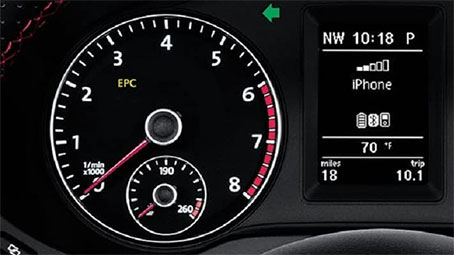
Volkswagen dashboard showing illuminated EPC warning light.

Close-up of EPC light on VW/Audi instrument cluster.
What Is the Electronic Power Control (EPC) System?
Evolution from Mechanical to Drive-by-Wire Throttle
Traditional throttle systems used a physical cable linking the accelerator pedal to the throttle valve—simple, reliable, but limited in precision and integration with modern safety features like traction control and cruise control.
Since the late 1990s, Volkswagen Group adopted drive-by-wire (DBW) technology, eliminating the cable in favor of electronic control. The accelerator pedal position is sensed electrically, processed by the engine control unit (ECU), and translated into precise motor actuation of the throttle plate. This enables seamless integration with ABS, ESP (electronic stability program), and transmission control for optimized performance, fuel efficiency, and emissions.

Schematic of drive-by-wire throttle system: accelerator pedal sensors → ECU → electronic throttle body.
Key Components and Control Architecture
The EPC system forms a closed-loop mechatronic assembly:
- Accelerator Pedal Module (APPS): Contains dual potentiometers or Hall-effect sensors for redundancy—detecting pedal position with cross-checking to prevent erroneous signals.
- Engine Control Unit (ECU): Processes inputs, calculates desired throttle opening, and commands the actuator while monitoring for discrepancies.
- Electronic Throttle Body (ETB): Integrated DC motor, gearbox, dual throttle position sensors (TPS), and return springs for fail-safe closure.
- Interconnected Modules: Brake pedal switch, wheel speed sensors, crankshaft/camshaft sensors—all influence throttle behavior.
In fault conditions, the ECU triggers limp mode: throttle limited to idle or minimal opening, protecting the engine.
Detailed diagram of electronic throttle body with motor, sensors, and throttle plate.
EPC Light vs. Check Engine Light
The EPC warning is specific to throttle control and power delivery faults, often causing immediate drivability issues. The Check Engine Light (CEL/MIL) covers broader emissions-related codes but frequently accompanies EPC illumination when faults overlap.
Symptoms of EPC Faults
Common Driver-Observed Issues
When the EPC light activates:
- Reduced engine power and acceleration (limp mode).
- Rough or unstable idle, potential stalling.
- No-start conditions in severe cases.
- Traction control or ABS warnings may appear simultaneously.
Safety Implications
Limp mode intentionally restricts performance to allow safe limping to a workshop, but sudden power loss in traffic demands immediate caution—pull over when safe and avoid high-speed driving until diagnosed.
Common Causes of the EPC Light
Throttle Body and Actuator Failures
Carbon deposits from PCV and EGR systems accumulate on the throttle plate, restricting movement or causing position sensor errors. Motor wear or gearbox failure in high-mileage vehicles (common in 2.0 TSI engines) leads to erratic actuation.

Severe carbon buildup on electronic throttle body throttle plate.
Accelerator Pedal Position Sensor (APPS) Issues
Dual sensors must correlate within tight tolerances; corrosion, wear, or wiring damage causes mismatch faults.

Accelerator pedal module with integrated position sensors.
Sensor and Wiring Faults
- Brake light switch failure (prevents throttle override during braking).
- ABS wheel speed sensor or tone ring damage (affects ESP integration).
- Crankshaft or camshaft position sensor issues disrupting timing reference.
Other Contributors
Low battery voltage (<11V) corrupts ECU logic; software glitches trigger false positives (addressed via TSBs).
| Cause | Likelihood | Typical Models Affected | Common DTCs |
|---|---|---|---|
| Throttle body carbon/motor | High | 2008–2015 2.0 TSI/TFSI | P0638, P2101 |
| APPS fault | Medium | All DBW models | P0221, P0121 |
| Brake switch | High | Older MK5/MK6 | P0571 |
| Wiring harness corrosion | Medium | High-mileage | Intermittent |
| ABS/wheel speed sensor | Medium | AWD models | C101xxx |
Diagnostic Procedures: Step-by-Step Engineering Approach
Initial Safety Checks
Park safely, inspect battery terminals and voltage (should >12.6V static), check for loose connectors under hood/pedal area.
Reading Fault Codes
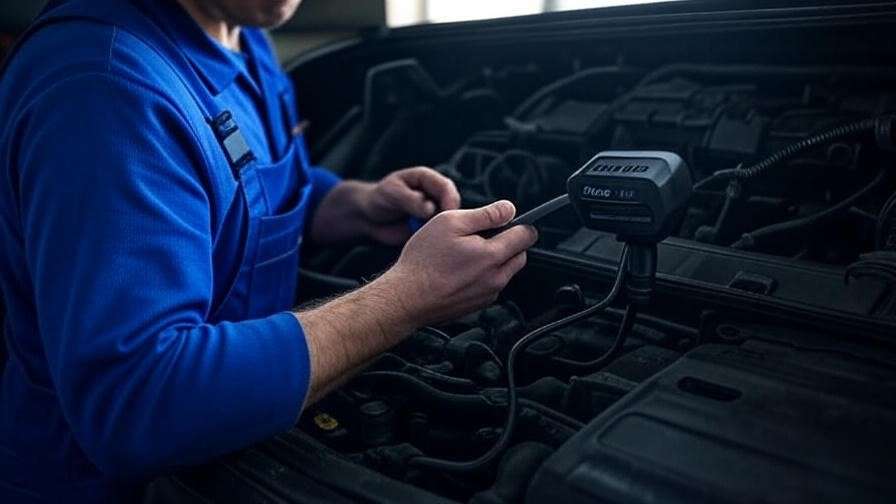
Generic OBD-II scanners reveal basic codes, but VAG-specific tools like VCDS (VAG-COM) or OBDeleven provide detailed module interrogation and live data.

VCDS scan showing throttle-related fault codes on Volkswagen.
Common codes:
- P0121/P0221: TPS/APPS range/performance.
- P0638: Throttle actuator control range.
- P2101: Throttle actuator performance.
Live Data Analysis
Monitor:
- Accelerator pedal positions 1 & 2 (must track identically).
- Throttle plate angle vs. requested.
- Adaptation values post-cleaning/replacement.
Component Testing
Use multimeter for sensor resistance sweeps; oscilloscope for clean signal waveforms vs. noisy faults.

Diagnostic flowchart example for EPC system troubleshooting.
Component Testing (continued)
Waveform analysis is particularly valuable: A healthy throttle position sensor produces smooth, linear voltage ramps as the plate opens. Faulty units show dropouts, noise, or hysteresis—clear indicators of internal wear or poor contacts.
Perform throttle body adaptation after cleaning or replacement using VCDS/OBDeleven: Basic settings → Throttle adaptation → Confirm closure and full sweep.
Repair and Resolution Strategies
DIY-Friendly Fixes
Many EPC faults resolve without major expense:
- Throttle Body Cleaning: Remove ETB (4-6 bolts), clean plate and bore with dedicated throttle cleaner (avoid carb cleaner on sensors). Re-adapt via scan tool.
- Brake Light Switch Replacement: Common on MK5/MK6 platforms—faulty switch prevents ECU from detecting braking, triggering EPC. Part costs ~$15-30; 10-minute swap at pedal cluster.
- Battery and Connection Check: Clean terminals, load-test battery; low voltage often causes intermittent faults.
Professional Repairs
- Throttle Body Replacement: OEM units (~$300-600) preferred for reliability; aftermarket can suffer early motor failure. Requires adaptation and sometimes ECU coding.
- Accelerator Pedal Module: ~$200-400; ensure correct part number for model/year.
- Wiring Harness Repair: Corrosion at connectors (common near firewall) needs soldering or splice kits.
- ECU Reflash: Dealer or specialist for known software campaigns addressing false positives.
| Repair | Typical Cost (USD) | DIY Difficulty | Expected Lifespan |
|---|---|---|---|
| Clean throttle body | $0-50 | Easy | 50k miles |
| Brake switch | $20-80 | Easy | 100k+ miles |
| Throttle body replace | $400-900 | Moderate | 150k+ miles |
| APPS module | $300-600 | Moderate | 150k+ miles |
| Wiring repair | $150-500 | Advanced | Permanent |
Expert Insight: Always clear codes and road-test after repair—monitor live data for 20-30 minutes to confirm stability.
Prevention and Long-Term Reliability
Preventive maintenance extends EPC system life:
- Regular throttle body cleaning every 60-80k miles.
- Battery replacement every 4-5 years; maintain >12.6V.
- Address CEL promptly—many emissions faults cascade to EPC.
- Use quality fuel and change oil regularly to minimize carbon buildup.
Newer platforms (MQB, MLB Evo) feature improved sensor sealing and software logic, reducing false triggers.
Conclusion
The EPC light, while alarming, represents sophisticated engineering at work: a redundant, fail-safe mechatronic system designed to protect both driver and powertrain. Understanding its architecture—from dual-sensor redundancy to closed-loop control—allows precise diagnosis and reliable repair.
Approach EPC faults systematically: scan codes, analyze live data, test components, and verify repairs. While many fixes are DIY-accessible, complex wiring or ECU issues warrant professional attention for safety.
These principles—sensor integration, fault-tolerant design, and real-time monitoring—extend beyond automotive to any modern control system. Apply them confidently in your diagnostic work or engineering projects.
Frequently Asked Questions (FAQs)
What does the EPC light mean on VW/Audi vehicles?
The Electronic Power Control warning indicates a fault in the drive-by-wire throttle system or related modules, triggering power reduction (limp mode) as a safety measure.
Is it safe to drive with the EPC light on?
Limited driving to reach a safe location or workshop is acceptable, but avoid highways or heavy traffic due to reduced acceleration. Immediate diagnosis is recommended.
How do I reset the EPC light?
Disconnecting the battery for 10-15 minutes may clear temporary faults, but underlying issues will return. Proper resolution requires scanning, repairing the root cause, and clearing codes with a diagnostic tool.
EPC light vs. check engine light: What’s the difference?
EPC is specific to throttle/power control and often causes drivability loss. The check engine light covers broader engine/emissions faults but commonly illuminates alongside EPC when issues overlap.
What are common EPC fault codes and their fixes?
- P0638/P2101: Throttle actuator—clean or replace throttle body.
- P0121/P0221: Pedal sensor range—inspect wiring or replace APPS.
- P0571: Brake switch malfunction—replace switch.
- Intermittent codes: Check battery voltage and grounds.
Can a bad battery cause the EPC light?
Yes—low voltage (<11V during cranking) corrupts ECU logic, triggering false EPC warnings. Load-test and replace aging batteries.
Why does my EPC light come on intermittently?
Common in wiring corrosion, loose connectors, or carbon buildup causing marginal sensor readings. Thorough inspection of harness routing (especially engine bay) often reveals chafing.
Does cleaning the throttle body really fix EPC issues?
In 40-50% of cases involving carbon fouling, yes—combined with proper adaptation. Severe motor or sensor failure requires replacement.
Electronic throttle body before and after professional cleaning.
VCDS live data screenshot showing healthy throttle adaptation values post-repair.