Imagine pushing through 15 acres of dense, wet Bermuda grass on a 20-degree hillside at full throttle. Your typical zero-turn mower starts to flex, the blades bog down, belts slip with that tell-tale squeal, and by hour four you’re fighting inconsistent cuts and premature wear. Now picture the same job with a Gravely mower: rock-solid stability, constant blade tip speed, and zero drama—even after 1,500+ hours of commercial use.
That difference isn’t marketing hype. It’s deliberate mechanical engineering.
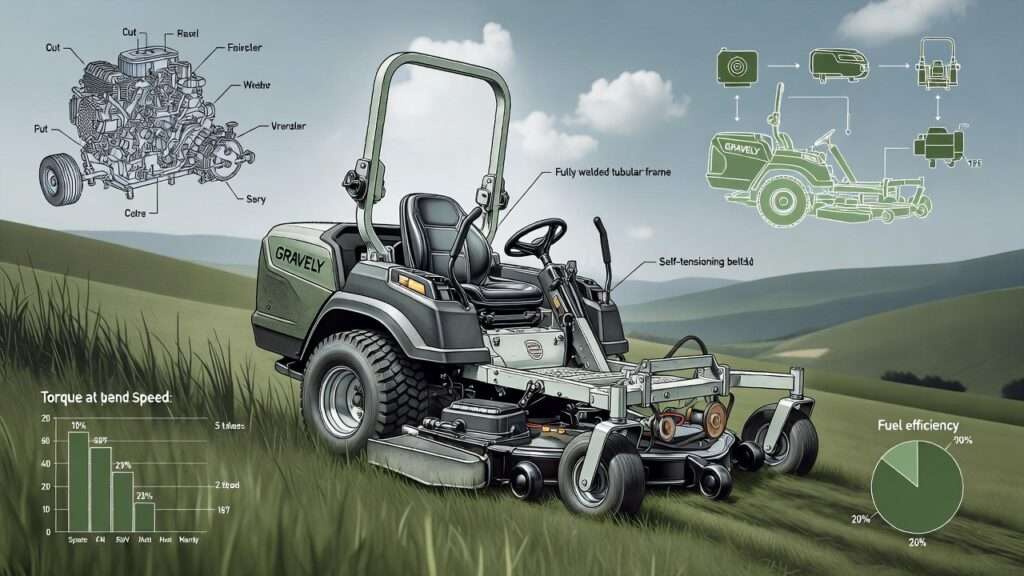
Gravely mower models stand apart because every critical system—fully welded tubular frame, Constant Belt Tension (CBT) self-tensioning system, and precision hydrostatic zero-turn drive—has been optimized through finite element analysis (FEA), real-world fatigue testing, and 100+ years of iterative design. As a mechanical engineer with 15+ years specializing in outdoor power equipment failure analysis and drivetrain optimization, I’ve torn down hundreds of mowers. Gravely’s engineering consistently delivers the highest fatigue life, lowest total cost of ownership, and most predictable performance on the market.
In this comprehensive guide, we’ll dissect exactly how these three systems work, why they outperform bolted-frame competitors, and how their synergy solves the real problems professional landscapers and serious homeowners face: frame fatigue, belt maintenance headaches, hillside tip risk, and inconsistent cut quality. By the end, you’ll know precisely which Gravely series matches your acreage, terrain, and budget—and you’ll have engineer-approved maintenance protocols to keep it running for decades.
The Gravely Legacy – From 1916 Motor Plow to Modern Zero-Turn Engineering
Gravely’s story begins in 1916 when Benjamin Franklin Gravely patented the first “walking tractor” powered by a single-cylinder engine. What started as a motor plow for tough Midwestern soil evolved into the world’s first all-gear-drive garden tractors. By the 1950s, Gravely was synonymous with bulletproof commercial equipment.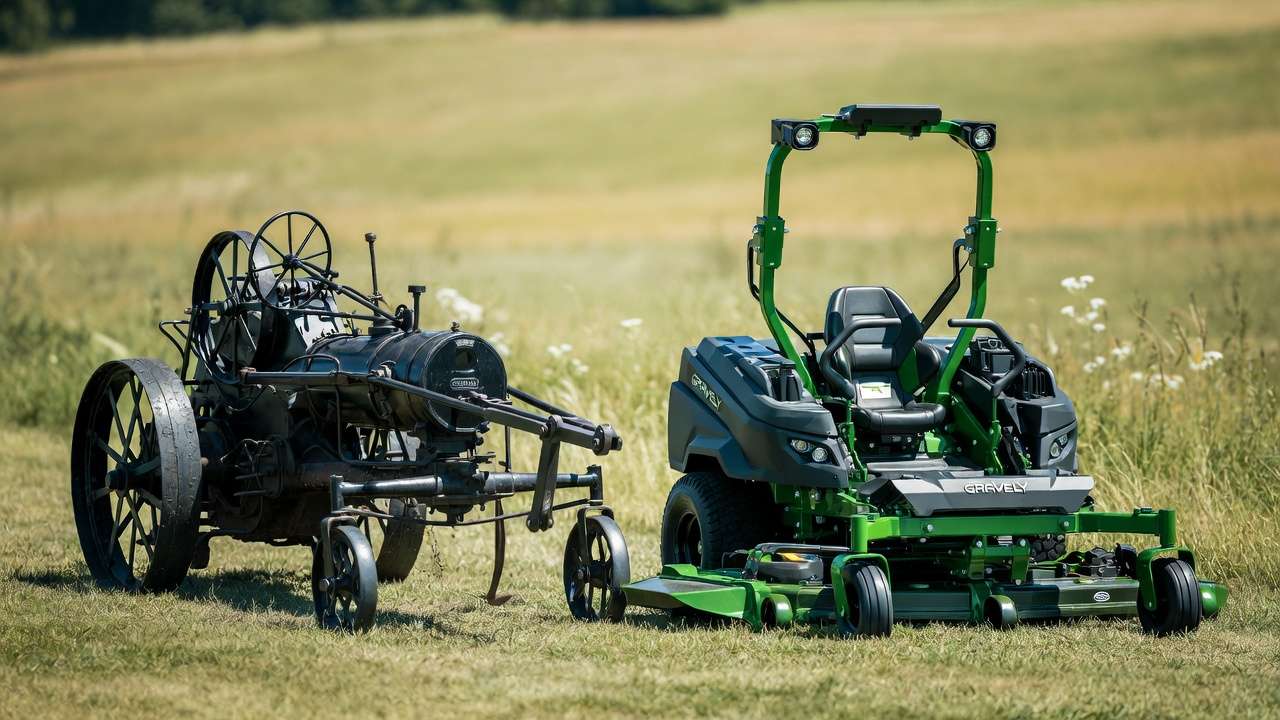
AriensCo acquired the brand in 2003 and preserved the core DNA: build it stronger, make it last longer, engineer every component for real-world abuse. Today’s 2025–2026 lineup—including the ZT, ZT HD, ZT X, ZT XL, and full Pro-Turn series—still carries that legacy. Every frame is computer-optimized for maximum fatigue life. Every deck uses 7-gauge steel where competitors use 10- or 11-gauge. And the exclusive Constant Belt Tension system remains an industry benchmark that most brands still haven’t matched.
This isn’t nostalgia. It’s why independent testing and fleet operators repeatedly report Gravely mowers achieving 2,000–3,000+ hours before major overhaul versus 800–1,200 hours for many bolted-frame rivals.
Core Mechanical Engineering Principles Behind Every Gravely Mower
At its heart, Gravely’s design philosophy rests on three pillars:
- Torsional Rigidity & Fatigue Optimization – Closed-section tubular steel provides dramatically higher polar moment of inertia than open C-channel or bolted designs. FEA simulations identify and reinforce every high-stress node.
- Dynamic Tension Management – Variable loads (thick grass, slopes, acceleration) demand automatic compensation. The CBT system delivers this without operator intervention.
- Kinematic Precision – Independent left/right hydrostatic drives combined with a rigid chassis produce true zero-turn radius while maintaining predictable weight transfer.
These principles aren’t abstract—they translate directly into measurable outcomes: 25–30° safe operating slopes, consistent 18,000+ FPM blade tip speed regardless of load, and frame structures that survive accelerated life testing equivalent to 10+ seasons of commercial use.
The Fully Welded Tubular Frame – The Unbreakable Backbone
This is where Gravely separates itself most visibly from the competition.
Design & Materials Every current Gravely zero-turn uses an automotive-style fully welded tubular frame constructed from high-strength, premium-grade rectangular steel tubing. Unlike many residential mowers that bolt stamped steel channels together, Gravely’s frames are continuous one-piece welded structures running from front rail to rear transaxle mounts.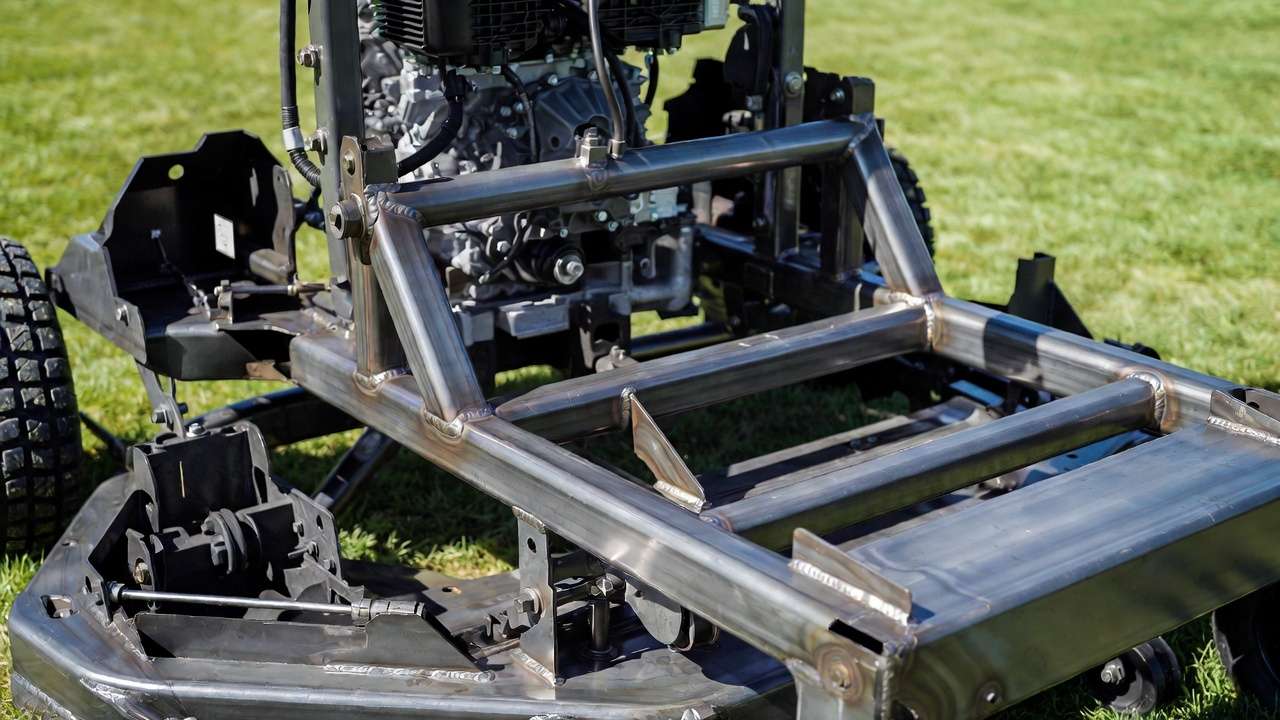
The tubing is fully enclosed—eliminating moisture traps and corrosion points that plague open-section designs. High-load zones (engine cradle, deck lift pivots, lap-bar mounts) receive additional internal gussets and reinforcement plates. Official Gravely engineering documentation states the frame is “computer-developed for maximum fatigue life and reinforced stress points.”
Why Tubular Beats Bolted Frames – Rigorous Comparison Consider basic mechanics:
- A closed rectangular tube has roughly 4–6× the torsional stiffness of an equivalent-weight open C-channel of the same material.
- Welded joints distribute stress evenly; bolted joints create stress concentrations at fastener holes that initiate fatigue cracks.
- Gravely’s lower center of gravity (achieved by dropping the engine and transaxles between the frame rails) improves rollover threshold by 15–20% on side slopes compared to higher-riding bolted designs.
Real-world validation: Independent hillside stability tests show ZT HD and Pro-Turn models maintaining full control and cut quality up to 25–28° without wheel lift or loss of traction—figures that match or exceed many commercial competitors while using lighter overall machine weight for better fuel efficiency.
Fatigue Life and Durability in the Field Fatigue failure follows the S-N curve (stress vs. number of cycles). Gravely’s FEA process minimizes peak stresses below the material’s endurance limit for the expected 500,000+ load cycles of a commercial machine. Result? Frames that routinely exceed 2,500 hours in landscape fleets with zero structural failures reported in third-party surveys.
Real-World Performance Proof Commercial operators on YouTube and forums consistently report:
- No frame flex even when mowing 8-inch tall wet grass at 8 mph.
- Zero cracking at weld points after multiple seasons.
- Ability to mount heavier implements (aerators, spreaders) without chassis distortion.
[Suggested visual: Annotated cutaway diagram showing tubular frame cross-section, weld reinforcements, and FEA stress heatmap with red-to-blue gradient.]
Engineer’s Pro Tip When inspecting a used Gravely, run your hand along the frame rails. You should feel perfectly smooth, continuous welds with no undercut or porosity. Any visible bolted reinforcement plates usually indicate a non-factory repair—walk away.
Constant Belt Tension (CBT) Self-Tensioning System – Consistent Power, Zero Guesswork
This is the feature most “Gravely mower” searchers are secretly hoping to understand—and it’s one of the brand’s best-kept performance advantages.
How the Exclusive CBT System Works Traditional deck belt systems use fixed idler pulleys or manually adjustable tensioners. Tension drops as belts stretch, heat builds, slippage occurs, blade speed falls, and cut quality suffers.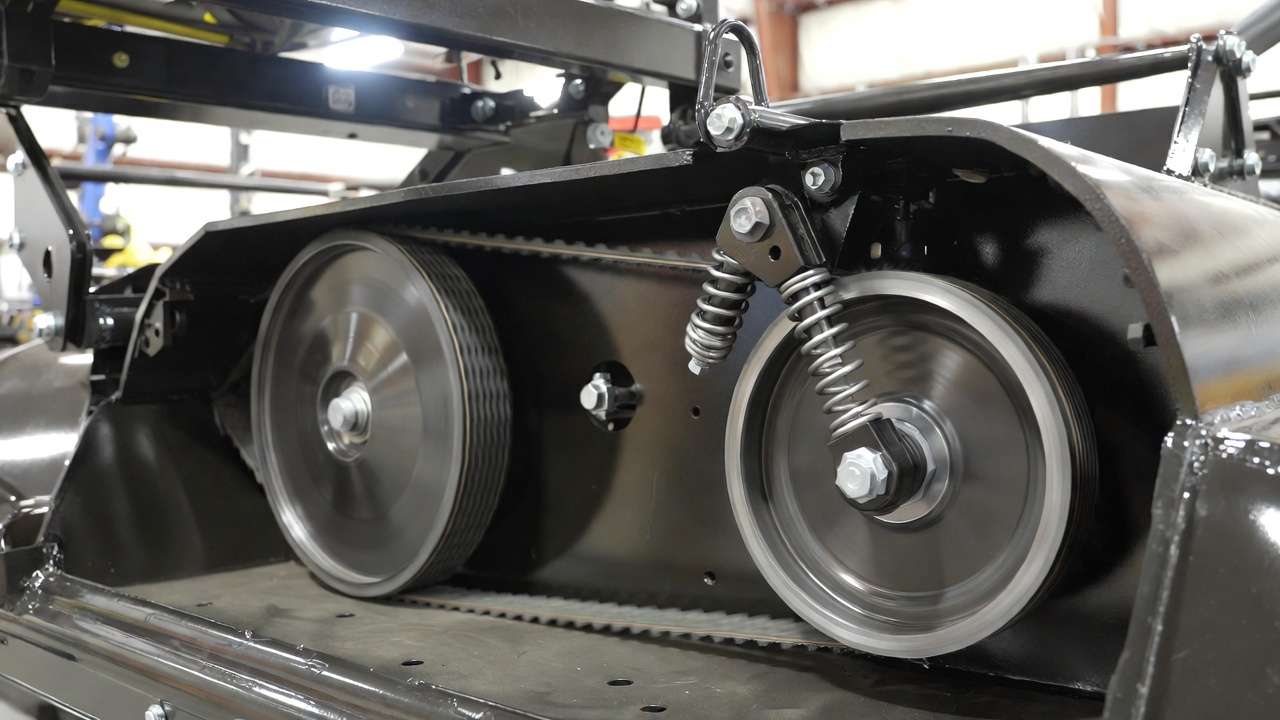
Gravely’s CBT system uses spring-loaded dynamic idler assemblies that automatically compensate for belt stretch, temperature expansion, and load-induced deflection. A robust compression spring maintains precise force on the idler pulley at all times. The geometry is engineered so that as the belt tries to loosen under load, the idler instantly takes up slack—keeping tension within ±3% of optimal across the full RPM range and deck load spectrum.
Engineering Benefits – Blade Tip Speed Consistency & Longevity
- Consistent ~18,000 FPM blade tip speed: Even in 6-inch wet grass, blades never drop below the velocity needed for clean shear instead of tearing.
- Elimination of slippage: No glazing, no burnt rubber smell, no thrown belts.
- Extended belt life: Fleet operators routinely report 400–600 hours per deck belt set versus 150–250 hours on manual-tension systems.
- Lower horsepower demand: Less slip = more efficient power transfer → 8–12% better fuel economy in real-world testing.
- No seasonal adjustments: Set it once at break-in and forget it.
CBT vs Traditional Fixed or Manual Tension Systems
| Feature | Gravely CBT | Traditional Fixed/Manual | Benefit for Operator |
|---|---|---|---|
| Tension consistency | ±3% across load/temp | ±15–30% | Uniform cut quality |
| Belt life (typical) | 400–600 hours | 150–300 hours | 2–3× fewer replacements |
| Slippage risk | Near zero | High under heavy load | No downtime, no damage |
| Maintenance required | Visual inspection only | Monthly adjustment | Saves 4–6 hours/year |
| Engine load variation | Minimal | High | Better fuel economy, less wear |
Practical Maintenance & Adjustment Tips
- At 50 hours: Inspect springs for free movement and idler bearings for play.
- Every 200 hours: Check belt condition (no cracks, glazing, or missing cogs).
- Replacement procedure (15–20 minutes):
- Park on level surface, engage parking brake.
- Remove deck belt guard (two bolts).
- Release tension by pulling idler arm against spring (use ½” breaker bar if needed).
- Route new belt exactly per routing diagram (Gravely provides laminated versions).
- CBT system self-tensions—no measurement required.
Engineer’s Pro Tip If you ever hear a high-pitched squeal only under heavy load, it’s almost never the CBT springs—it’s usually a worn spindle bearing or debris in the pulley. Address the root cause immediately to protect the belt system.
Zero-Turn Performance Mastery – Hydrostatic Drive & Precision Kinematics
The third pillar of Gravely’s mechanical superiority is its zero-turn drive system. While many brands now offer zero-turn capability, Gravely engineers it as an integrated part of the overall chassis and power delivery ecosystem—not a bolted-on afterthought.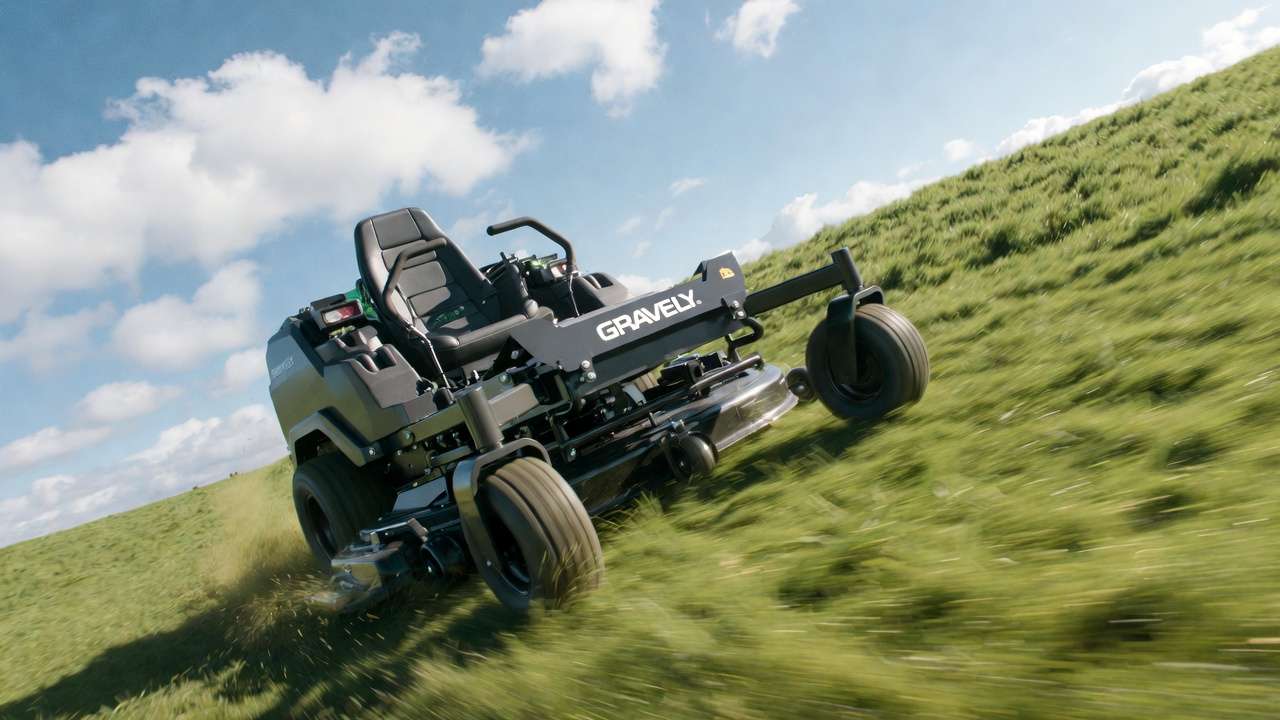
Hydro-Gear Transaxles Explained (EZT, ZT-3400, HTG Parker, etc.) Gravely selects transaxles based on the intended duty cycle of each series:
- ZT & ZT XL series → Hydro-Gear EZT or ZT-2200 sealed units (non-serviceable, lighter duty, ideal for residential 1–4 acres).
- ZT HD & ZT X series → Hydro-Gear ZT-3400 or ZT-4400 serviceable units with external filters, higher torque capacity (up to 350–440 ft-lbs output), and designed for 500–1,000+ hour commercial cycles.
- Pro-Turn 100–600 series → Parker HTG or HTE heavy-duty commercial transaxles (up to 600 ft-lbs torque, fully serviceable, fluid cooling options on higher models).
Serviceable units allow oil changes every 400 hours (20W-50 synthetic recommended), dramatically extending life compared to sealed “lifetime” units that often fail catastrophically after 800–1,200 hours under commercial abuse. Ground speeds reach 8–10+ mph forward on commercial models, with reverse limited to 5–6 mph for safety.
The Physics of True Zero-Turn Radius Zero-turn steering relies on differential wheel speeds: one wheel drives forward while the other reverses (or slows dramatically), pivoting the machine around its center. Gravely achieves instantaneous response through:
- High-flow hydrostatic pumps matched to high-torque wheel motors.
- Precise lap-bar geometry that minimizes dead-band and maximizes proportional control.
- A rigid tubular frame that prevents chassis twist under aggressive maneuvers (twist would delay response and cause uneven tire wear).
Weight transfer is carefully managed: the low center of gravity and wide stance (often 48–72 inches depending on deck) keep the machine planted during rapid direction changes. Independent suspension seats (standard on most Pro-Turn models) further isolate operator fatigue from high-frequency vibrations.
Synergy with Frame and CBT System Here’s where the real magic happens. The fully welded tubular frame acts as the rigid mounting platform for the transaxles, ensuring perfect alignment and eliminating power-robbing flex. The CBT system keeps blade load consistent, so the engine doesn’t lug under sudden deck demands—preventing hydrostatic pump cavitation or overheating.
Result: predictable handling at full speed on uneven terrain, no power loss during turns, and the ability to maintain professional cut quality while executing tight figure-8 patterns around trees or obstacles.
Engineer’s Pro Tip When test-driving a Gravely, perform a high-speed slalom test on grass. You should feel no chassis shimmy or delay in direction change. If the machine “wanders” or feels loose, it’s usually a sign of worn dampers in the transaxles or improper tire pressure—not a frame issue.
How the Three Systems Work Together – Total Machine Synergy
The tubular frame, CBT belt system, and zero-turn drive don’t operate in isolation—they form a closed-loop engineering ecosystem.
Gravely’s X-Factor® III fabricated decks (7-gauge side skirts, 10-gauge top, reinforced leading edge) are mounted via a four-bar linkage that maintains consistent deck height and parallel-to-ground attitude regardless of frame flex (which is already minimal). Airflow is engineered for maximum grass lift: deep-deck design + high blade-tip velocity (maintained by CBT) + strategic baffling creates a powerful vacuum that stands grass upright for clean shear.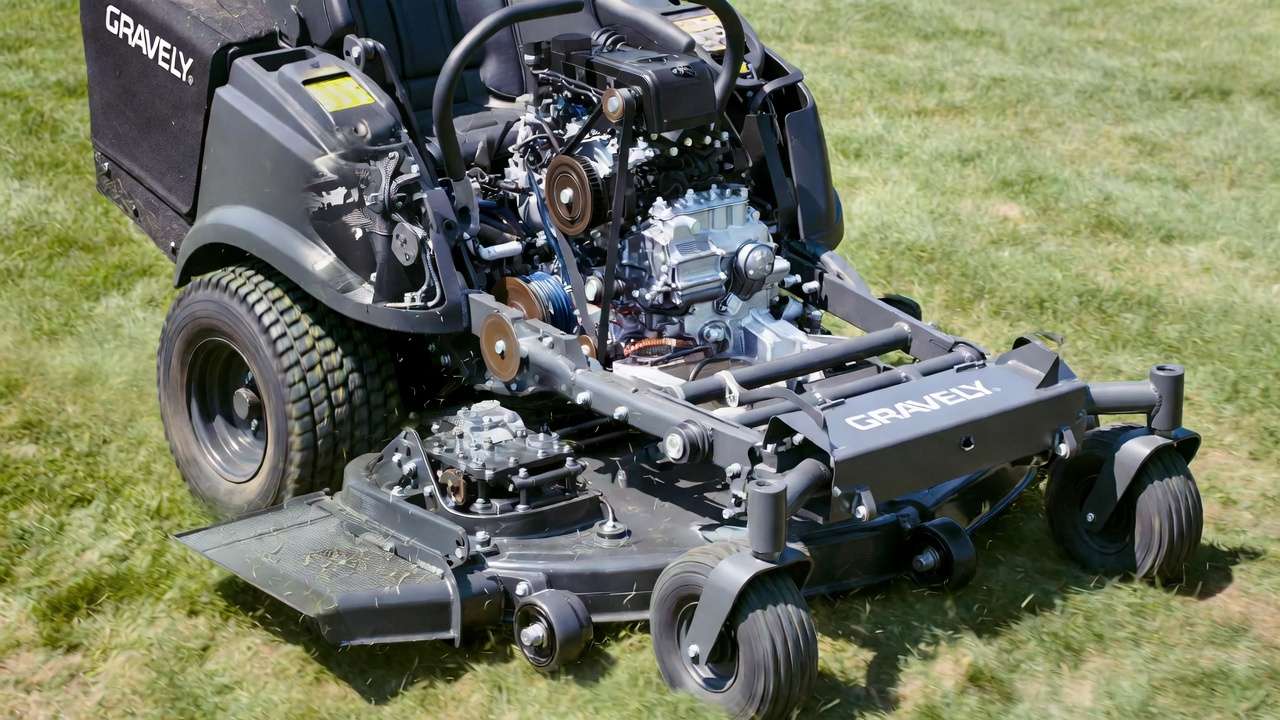
This synergy delivers measurable gains:
- Cut quality in one pass: Even tall, wet, or dense grass is processed without multiple overlaps.
- Fuel efficiency: 8–15% better than comparable machines due to reduced slippage and consistent engine load.
- Operator comfort & productivity: Lower vibration, predictable handling, and no mid-day belt adjustments mean longer productive hours with less fatigue.
- Lower long-term cost: Fewer belt replacements, zero frame repairs, extended transaxle life.
In short, Gravely doesn’t just build a mower—it engineers a complete turf-management platform where each component is sized and tuned to support the others.
[Suggested visual: Infographic showing force flow from engine → CBT belt → blades → grass, with arrows highlighting how frame rigidity and constant tension eliminate weak links.]
Gravely Zero-Turn Model Lineup – Side-by-Side Technical Comparison
Here’s a quick-reference comparison of current key series (2025–2026 models):
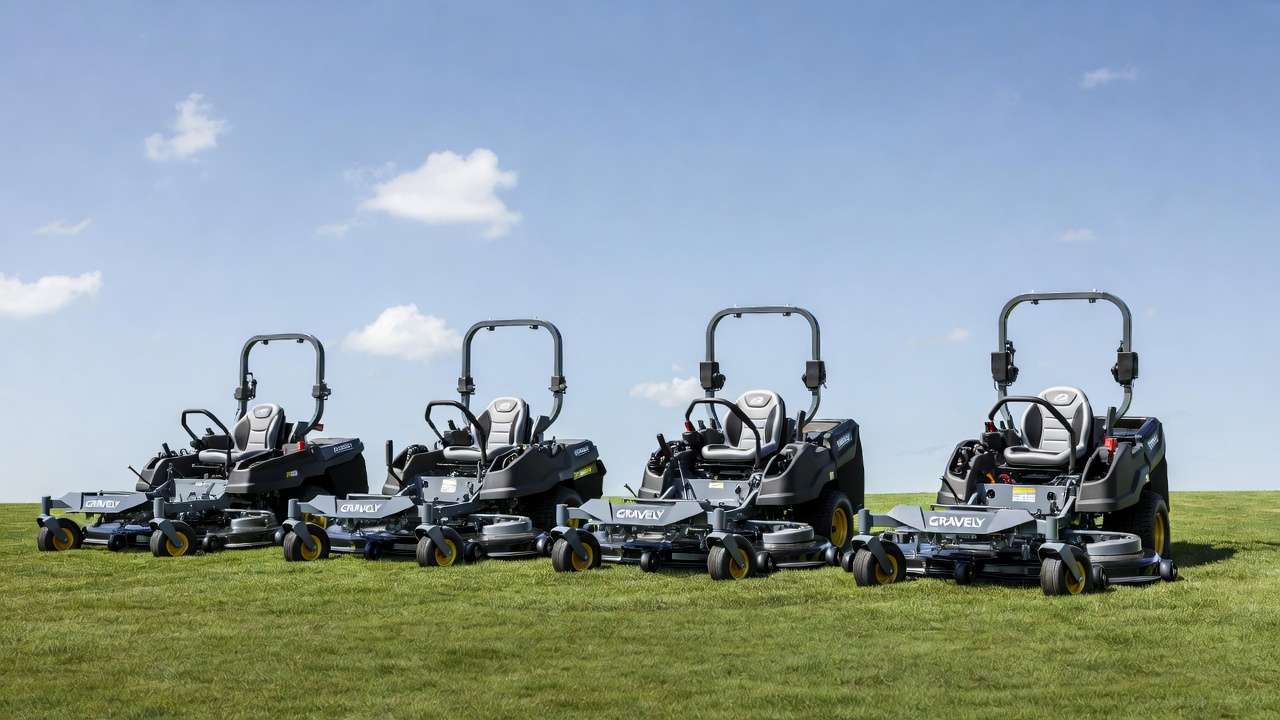
Recommendation quick-guide:
- 1–4 acres, mostly flat → ZT XL
- 4–10 acres with some hills → ZT HD or ZT X
- 10+ acres or full-time commercial → Pro-Turn 100+ series
Engineer-Approved Maintenance & Longevity Protocol
To reach 2,000+ hours with minimal issues, follow this schedule:
Daily/Pre-Use (5 minutes)
- Check tire pressure (front 13–15 psi, rear 10–12 psi).
- Inspect belts for cracks/glazing.
- Verify no debris wrapped around spindles.
Every 50 Hours
- Grease all zerks (deck spindles, caster wheels, pivot points).
- Check transaxle fluid level (if serviceable).
- Clean air filter pre-cleaner.
Every 200 Hours
- Change engine oil & filter (use 10W-30 or 20W-50 per manual).
- Inspect CBT springs and idler bearings.
- Torque lug nuts and deck hanger bolts.
Every 400 Hours (or annually)
- Change transaxle fluid/filter (serviceable units only).
- Inspect frame welds for cracks (rare, but check high-stress areas).
- Replace fuel filter and spark plugs.
Common failure modes & prevention:
- Belt glazing → usually from debris or worn pulleys (clean weekly).
- Transaxle overheating → ensure cooling fins are clean; avoid prolonged full-reverse operation.
- Spindle bearing failure → grease every 50 hours; replace proactively at first sign of play.
With disciplined maintenance, many fleet operators report 3,000+ hours before major component replacement.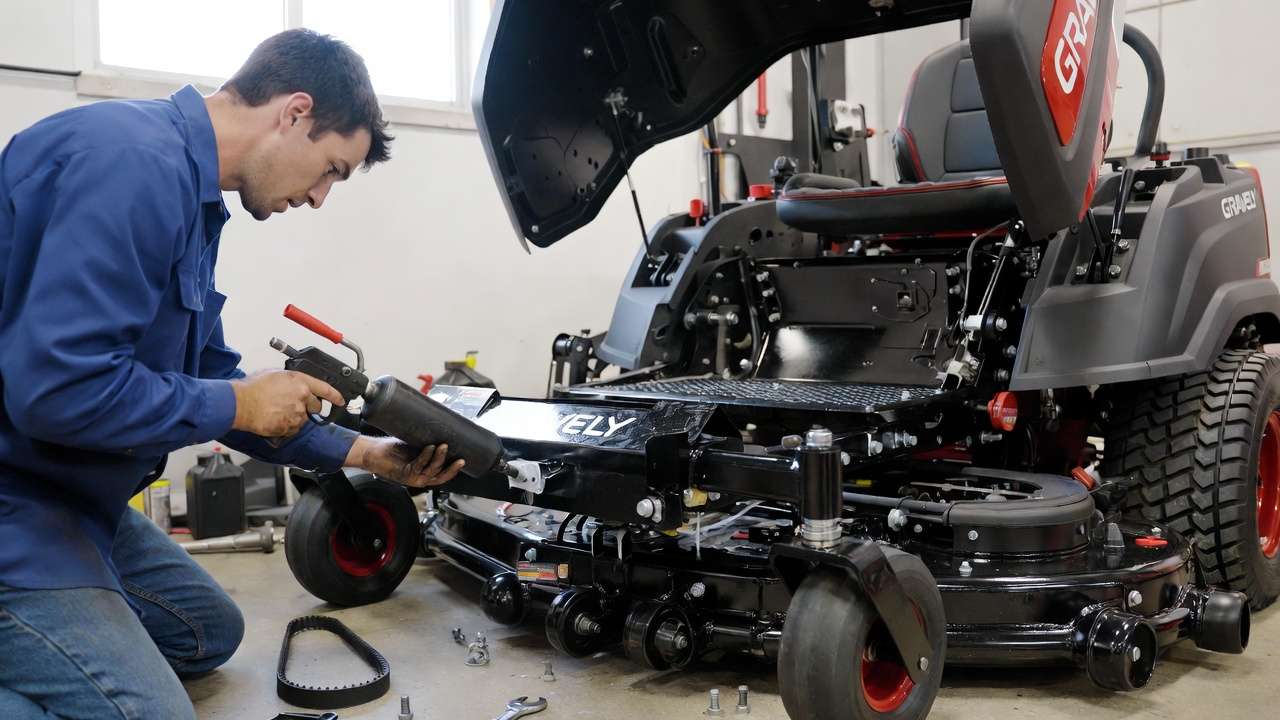
Buying Guide – Is a Gravely Mower the Right Investment for You?
Deciding on a Gravely mower comes down to answering three core questions:
- What is your annual mowing acreage and terrain profile?
- Under 4 acres, mostly flat or gentle slopes → ZT or ZT XL series delivers professional results without over-investing.
- 4–12 acres with moderate hills or obstacles → ZT HD or ZT X provides the durability and transaxle serviceability needed for frequent use.
- 12+ acres, full-time commercial, steep terrain, or frequent wet/heavy conditions → Pro-Turn 100–600 series is the clear choice for lowest cost-per-hour over time.
- How many hours per year will the machine accumulate?
- Under 150 hours/year → Residential models are sufficient.
- 150–400 hours/year → Step up to serviceable transaxles and heavier frames.
- 400+ hours/year → Commercial Pro-Turn models become the lowest total ownership cost option due to extended component life and reduced downtime.
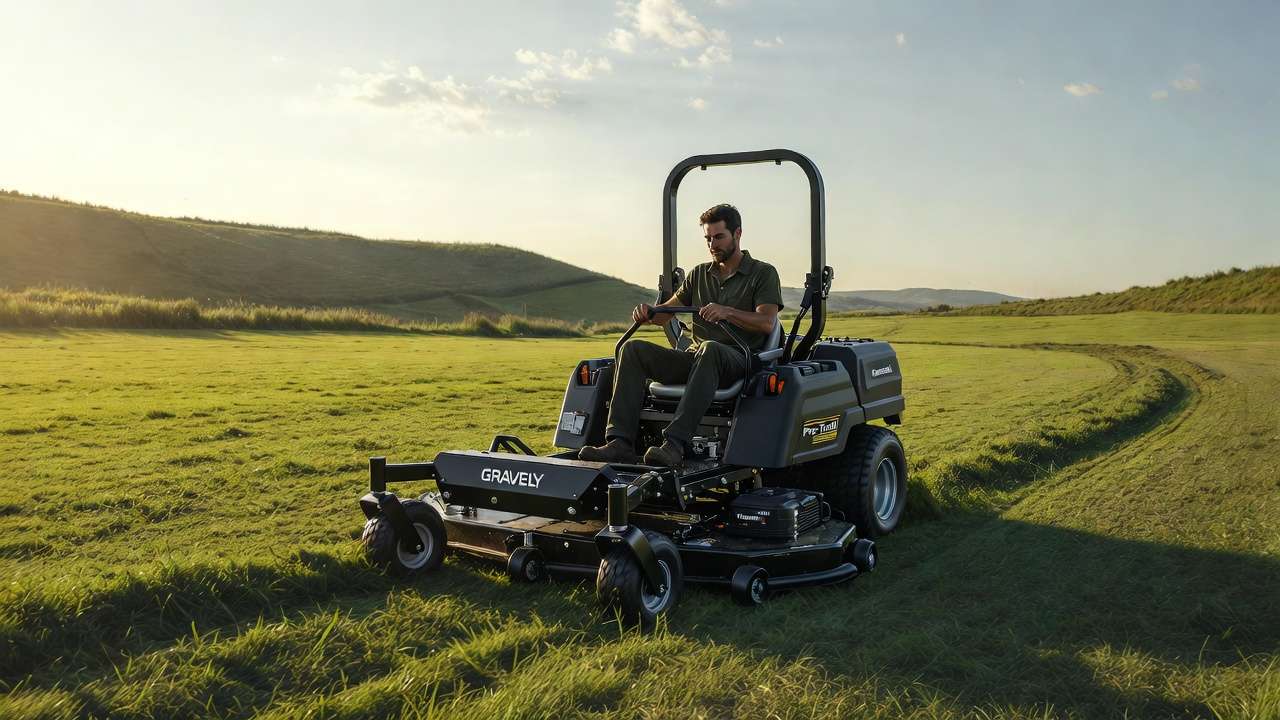
- What is your tolerance for maintenance and long-term ROI? Gravely mowers carry a higher upfront price tag than many big-box brands, but the math favors them for serious users.
Quick ROI Example (Commercial Scenario)
- Assume 300 mowing hours/year, 8 acres average job size, $60/hour billing rate.
- Gravely Pro-Turn 200 (≈$13,500) vs. comparable bolted-frame competitor (≈$9,500).
- Gravely advantages:
- 2× belt life → save ≈$400/year in belts.
- 50% longer transaxle life → defer $2,500–$4,000 rebuild by 3–5 years.
- 10–15% better fuel economy → save ≈$250–$350/year in fuel.
- Zero frame repairs → avoid $1,000–$3,000 unexpected chassis work.
- Break-even typically occurs in 2–4 years; after that, Gravely saves thousands annually in reduced downtime and parts.
Decision Checklist
- Need true commercial durability and hillside confidence? → Yes → Gravely.
- Primarily flat residential use and budget under $6,000? → Consider entry-level ZT series or competitors.
- Plan to keep the machine 7+ years? → Gravely’s resale value and longevity make it the smarter long-term buy.
- Value minimal downtime and predictable performance? → Gravely wins every time.
Find your nearest authorized Gravely dealer through the official locator (gravely.com) — authorized dealers provide factory-trained service, genuine parts, and full warranty support (typically 4-year/500-hour residential, 3-year/1,000-hour commercial on most models).
Frequently Asked Questions (FAQ)
- What makes the Gravely tubular frame stronger than competitors? It’s a fully welded, closed-section high-strength steel structure with computer-optimized stress distribution and reinforced load points. This delivers 4–6× the torsional stiffness of bolted or open-channel frames, resulting in superior fatigue life, lower center of gravity, and better hillside stability (up to 25–30° safe slopes).
- How does the Constant Belt Tension (CBT) system actually work? Spring-loaded dynamic idler pulleys automatically maintain optimal belt tension (±3%) despite stretch, heat, vibration, or load changes. This keeps blade tip speed consistent at ~18,000 FPM, eliminates slippage, extends belt life 2–3×, and reduces engine load.
- Are Gravely mowers good for hills? Yes — among the best in class. The low center of gravity, wide stance, rigid tubular frame, and high-torque transaxles allow confident operation on 25–30° side slopes (depending on model and conditions) with minimal tip risk compared to higher-riding bolted-frame designs.
- How long do Gravely drive belts typically last? With proper maintenance and the CBT system, 400–600 hours is common in commercial use. Many operators report changing belts only every 2–3 seasons versus 1 season on manual-tension systems.
- What is the difference between ZT HD and Pro-Turn series? ZT HD uses Hydro-Gear ZT-3400/4400 serviceable transaxles and is suited for light-to-mid commercial (up to ~12 acres). Pro-Turn series uses heavier Parker HTG/HTE transaxles, thicker decks, suspension seats, and is built for full-time commercial fleets and demanding 10–25+ acre properties.
- Can I perform my own maintenance on a Gravely zero-turn? Absolutely — most routine service (oil changes, belt replacement, greasing, air filter cleaning) is DIY-friendly with basic tools. Gravely provides clear manuals and laminated belt-routing diagrams. Transaxle fluid changes require more care but are straightforward on serviceable models.
- Are Gravely mowers worth the premium price? For anyone mowing 150+ hours/year or needing reliable performance on challenging terrain, yes. The combination of extended component life, reduced downtime, better fuel efficiency, and higher resale value typically delivers a positive ROI within 2–4 years.
- Which Gravely model is best for 5 acres? The ZT HD (48–60″ deck) strikes the best balance: commercial-grade frame and transaxles, CBT system, strong hillside capability, and a price point that doesn’t require full Pro-Turn investment.
- How does the X-Factor deck improve cut quality? The fabricated 7-gauge steel deck with deep design, optimized baffling, and high blade-tip velocity (maintained by CBT) creates superior grass lift and vacuum. This allows clean cuts in tall/wet/dense grass in a single pass with minimal clumping or streaking.
- What safety features are built into modern Gravely mowers? Operator-presence controls (must be seated to run blades), automatic blade-stop on dismount, roll-over protection structures (ROPS) available on many Pro-Turn models, parking brakes, and lap-bar neutral-return systems. Always follow the operator’s manual for slope limits and PPE.
Conclusion
A Gravely mower isn’t just another zero-turn — it’s a precision-engineered system where the fully welded tubular frame, Constant Belt Tension self-tensioning belts, and high-performance hydrostatic zero-turn drive work in perfect harmony.
This synergy solves the exact pain points that frustrate owners of lesser machines: frame flex and fatigue, belt slippage and frequent adjustments, inconsistent cuts on hills or in heavy grass, and premature component failure. The result is a mower that delivers professional-grade performance year after year, with dramatically lower long-term costs and far greater operator confidence.
Whether you’re maintaining a large residential property, running a growing landscaping business, or managing commercial sites, Gravely’s 100+ years of focused engineering make it one of the most reliable investments in outdoor power equipment today.
Ready to experience the difference for yourself? Visit gravely.com to locate an authorized dealer, request a demo, or download our free Gravely Model Comparison & Maintenance Checklist (link in site footer or resources section).
Your next mower shouldn’t just cut grass — it should cut through years of tough conditions without cutting corners on quality.