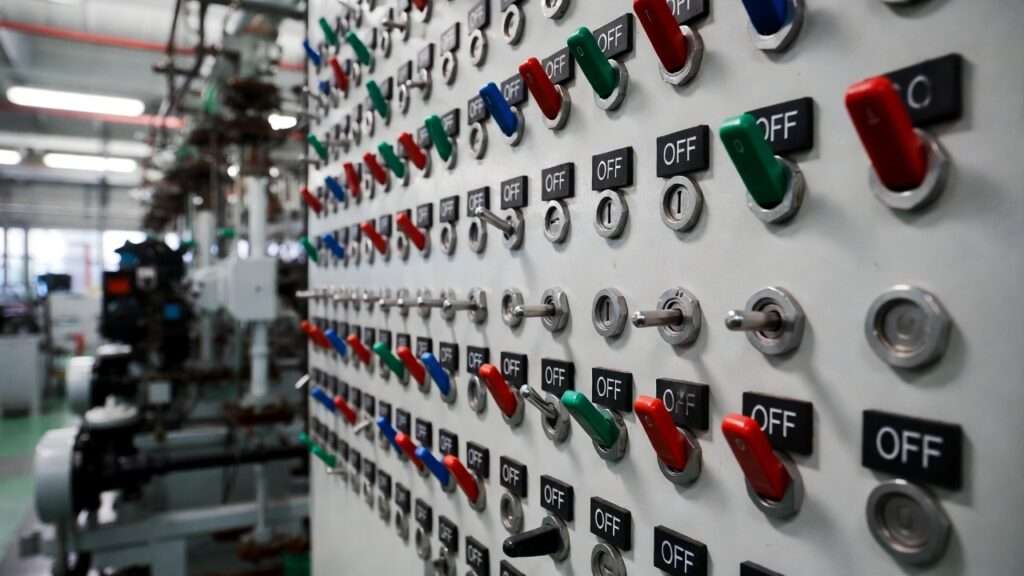
Imagine this: You’re a mechanical engineer on the factory floor, overseeing a high-stakes assembly line where precision and reliability are non-negotiable. Suddenly, production halts because a simple control mechanism fails under the relentless vibration and dust of the environment. The culprit? An ill-suited switch toggle switch in the operator panel, leading to intermittent power disruptions and costly downtime. This scenario is all too common in mechanical engineering, where the humble toggle switch plays a pivotal role in bridging mechanical design with electrical control. In this comprehensive guide, we’ll demystify the switch toggle switch, exploring its types, working principles, and diverse applications in mechanical engineering to help you avoid such pitfalls and design more robust systems.
As an experienced mechanical engineer with over 15 years in industrial automation and control systems design, I’ve seen firsthand how selecting the right toggle switch can transform system performance. Drawing from standards like MIL-DTL-3950 for military-grade durability and IEC 60529 for environmental protection (IP ratings), this article provides authoritative insights backed by real-world examples from sectors like manufacturing, aerospace, and automotive. Whether you’re a student delving into electromechanics, a design engineer specifying components for heavy machinery, or a maintenance professional troubleshooting control panels, understanding toggle switches addresses a core need: ensuring safe, efficient, and reliable operation in demanding mechanical environments.
Toggle switches, often referred to as bat-handle switches or lever switches, are electromechanical devices that provide manual control over electrical circuits. Their mechanical actuation offers tactile feedback, making them ideal for applications where visual confirmation of state (on/off) is crucial, such as in gloved hands or low-light conditions. By the end of this article, you’ll gain the expertise to choose, install, and maintain these components effectively, reducing failure rates and enhancing system longevity. We’ll cover everything from basic components to advanced selection criteria, positioning this as your go-to resource for toggle switch knowledge in mechanical engineering.
What Is a Toggle Switch? Basics and Components
At its core, a toggle switch is a manually operated electromechanical device designed to open or close an electrical circuit through physical actuation. Unlike digital or touch-sensitive alternatives, toggle switches rely on mechanical movement, providing a satisfying “click” that confirms operation—a feature that’s invaluable in noisy industrial settings where auditory or tactile cues matter.
The history of toggle switches dates back to the early 20th century, emerging in aviation and automotive applications where pilots and drivers needed quick, reliable controls without diverting attention. Pioneered by companies like Cutler-Hammer (now part of Eaton), these switches evolved from basic on/off mechanisms to sophisticated variants capable of handling high currents and harsh conditions. In mechanical engineering, they serve as the interface between human operators and complex machinery, such as in robotic arms or conveyor belts.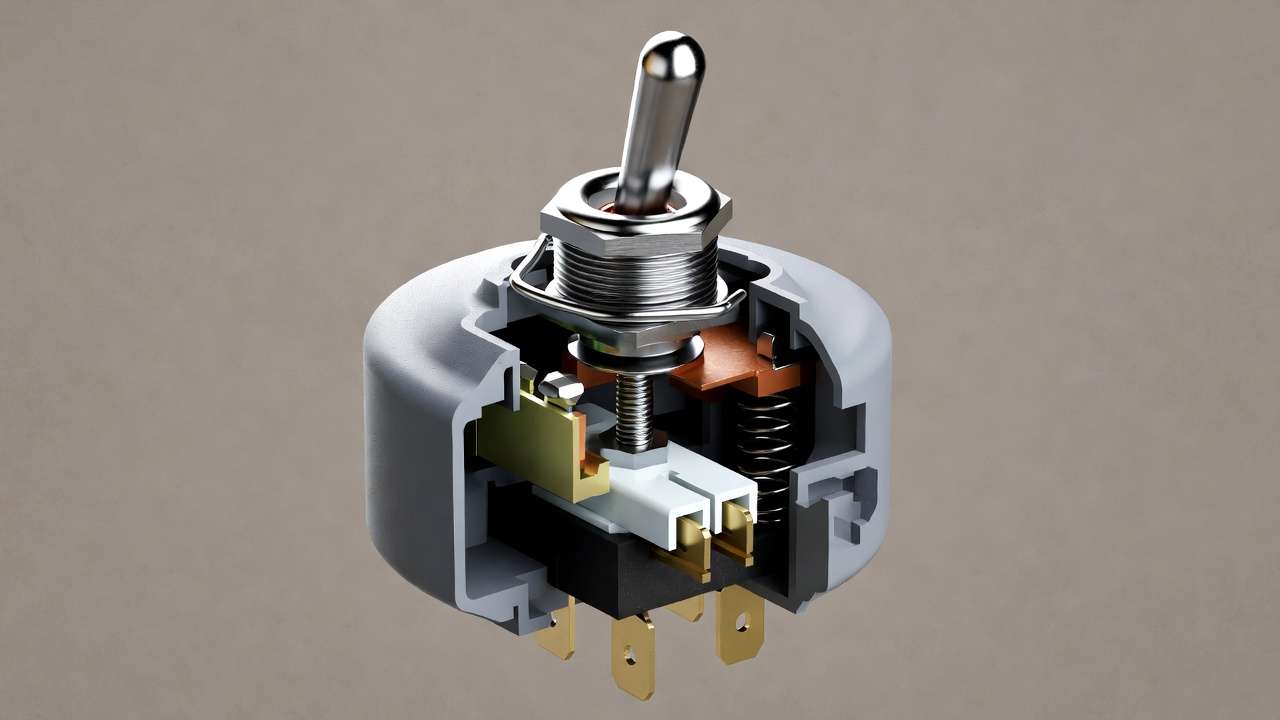
Breaking down the key components:
- Lever or Bat Handle: This is the visible, user-actuated part, typically made of metal or durable plastic. It pivots on a fulcrum, allowing users to flip it between positions. In mechanical designs, ergonomic considerations like handle length and grip texture are critical to prevent fatigue in repetitive use scenarios.
- Housing or Enclosure: The outer shell protects internal mechanisms from contaminants. Materials range from phenolic resins for cost-effective options to stainless steel for corrosive environments. Sealed housings, compliant with IP67 or higher ratings, are essential in mechanical engineering applications exposed to moisture, dust, or chemicals, such as in food processing plants.
- Internal Contacts: These are the conductive elements that make or break the circuit. Often plated with silver or gold alloys, they minimize resistance and prevent oxidation. In high-vibration mechanical systems, like those in off-road vehicles, spring-loaded contacts ensure consistent performance.
- Terminals: Connection points for wiring, available in solder lug, quick-connect, or printed circuit board (PCB) mount styles. For mechanical engineers integrating switches into control panels, terminal type influences assembly time and reliability—quick-connects speed up installation but may require additional strain relief in dynamic setups.
Toggle switches operate in two primary modes: maintained (stays in position until flipped back) and momentary (returns to default via spring action). For visual aids, consider diagrams showing cross-sections: a maintained SPST toggle in “on” position with contacts closed, versus open in “off.”
This foundational understanding sets the stage for appreciating why toggle switches outperform other options in mechanical contexts, where durability trumps aesthetics.
How Does a Toggle Switch Work? Working Principle
Delving deeper, the working principle of a toggle switch combines mechanical leverage with electrical conductivity, making it a staple in electromechanical systems. When you flip the lever, it initiates a sequence of events that either completes or interrupts the flow of electricity.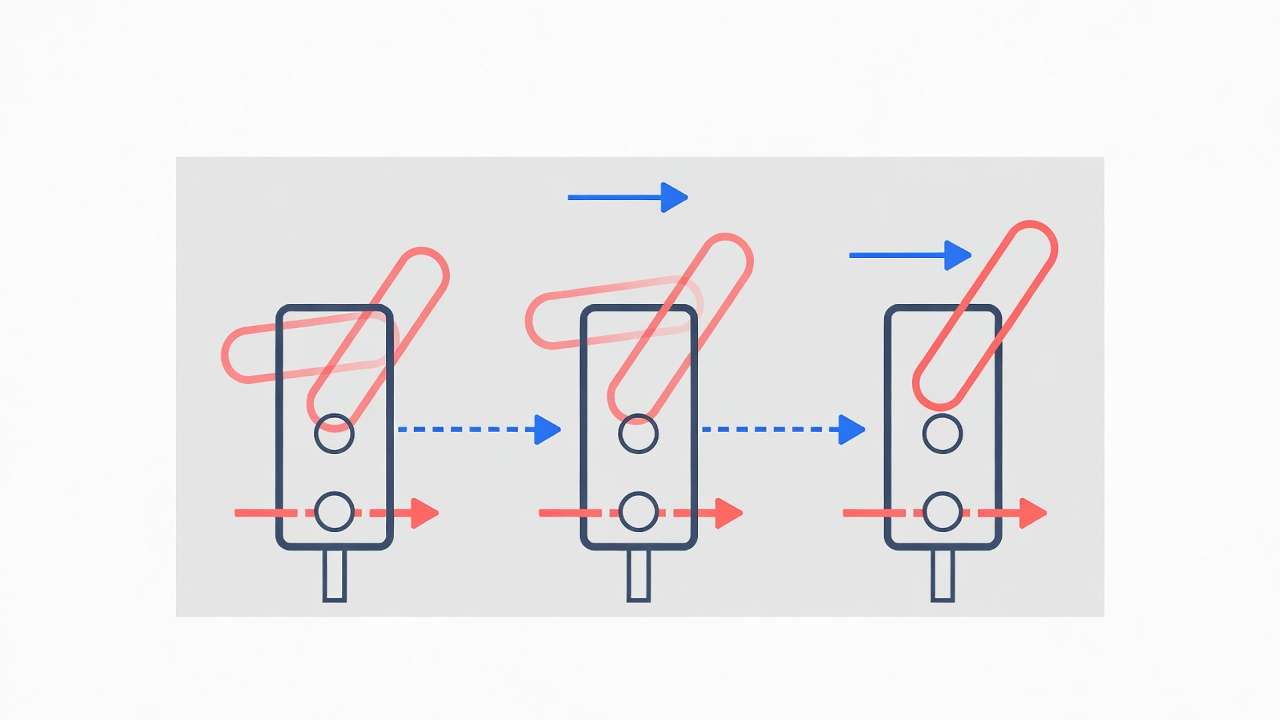
Here’s a step-by-step breakdown:
- Actuation: The user applies force to the lever, which pivots around a central axis. This motion is amplified by the switch’s internal geometry, ensuring minimal effort yields decisive action—key for mechanical engineers designing user-friendly interfaces in heavy equipment.
- Armature Movement: Connected to the lever, an armature (a movable arm) shifts position. In most designs, this involves a cam or rocker mechanism that translates linear force into rotational contact alignment.
- Contact Engagement: As the armature moves, it brings fixed and movable contacts together (or apart). Contacts are typically made of conductive materials with low resistivity, like copper alloys, to handle currents without excessive heat buildup. A snap-action spring mechanism accelerates this process, reducing arcing—a spark that can erode contacts over time.
- Circuit Completion: In the “on” position, the circuit closes, allowing current to flow. For DC applications common in mechanical battery-powered tools, this might involve suppressing inductive kickback with diodes. In AC scenarios, like industrial motors, the switch must withstand voltage peaks.
Electrically, toggle switches are rated for parameters like contact resistance (typically <50 mΩ), insulation resistance (>100 MΩ), and dielectric strength (e.g., 1500V AC for 1 minute). These specs ensure safety in mechanical engineering, where switches might control high-power loads, such as 10A at 250V AC for pump starters.
To illustrate, consider a simple SPST toggle in a circuit: When toggled on, it connects a power source to a load (e.g., a solenoid in a hydraulic system). The schematic would show a battery, switch symbol (a line with a pivot), and resistor/load. For more complex DPDT toggles, the diagram reveals pole/throw configurations for reversing polarity, as in DC motor direction control.
Compared to solid-state switches, mechanical toggles excel in environments with electromagnetic interference (EMI), common in mechanical workshops with welding equipment. However, they have lifecycle limits—typically 50,000 to 100,000 cycles—necessitating robust design choices.
Expert tip: In vibration-prone mechanical applications, opt for switches with anti-vibration mounting or epoxy-sealed internals to prevent false triggering.
Types of Toggle Switches: Comprehensive Classification
The versatility of toggle switches stems from their diverse types, tailored to specific mechanical engineering needs. Classification typically falls into categories based on electrical configuration, actuation style, and environmental design. Let’s explore each in detail, with a focus on practical implications.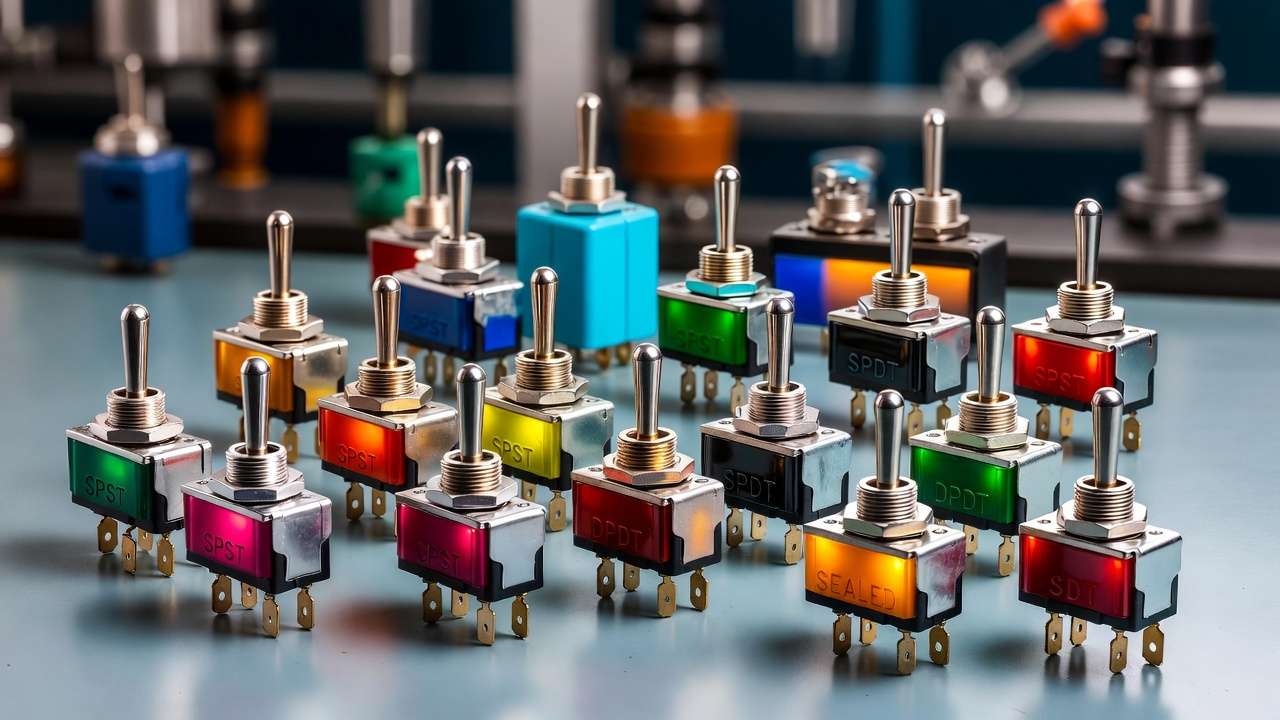
By Pole and Throw Configuration
This defines how many circuits the switch controls and the positions available. A comparison table highlights key differences:
| Type | Description | Poles/Throws | Typical Ratings | Pros | Cons | Mechanical Engineering Examples |
|---|---|---|---|---|---|---|
| SPST | Single Pole Single Throw: Basic on/off. | 1 pole, 1 throw | 10A @ 125VAC | Simple, cost-effective | Limited functionality | Power switches in drill presses or bench tools. |
| SPDT | Single Pole Double Throw: Switches between two outputs. | 1 pole, 2 throws | 5A @ 28VDC | Versatile for selection | Slightly higher cost | Mode selectors in HVAC controls (heat/cool). |
| DPST | Double Pole Single Throw: Controls two circuits simultaneously. | 2 poles, 1 throw | 15A @ 250VAC | Handles higher power | Bulkier | Isolation switches in conveyor motors. |
| DPDT | Double Pole Double Throw: Reverses two circuits. | 2 poles, 2 throws | 6A @ 125VAC | Ideal for polarity reversal | Complex wiring | Motor direction controls in robotic arms. |
These configurations allow mechanical engineers to match switches to circuit complexity, such as using DPDT for forward/reverse in winch systems.
By Actuation
- Maintained Toggle Switches: Lock in position, perfect for sustained operations like lighting controls in machine shops.
- Momentary Toggle Switches: Spring-loaded to return to off, used for jogging functions in CNC machines where brief activation is needed.
- Multi-Position Toggles: Like on-off-on, for three states (e.g., low-high-off in fan speeds for ventilation systems).
By Design and Environment
- Standard and Miniature Toggles: Compact for space-constrained panels in portable mechanical devices.
- Sealed and IP-Rated Toggles: With ratings like IP68, these resist water and dust—crucial for outdoor mechanical equipment like agricultural machinery.
- Illuminated and Specialty Toggles: LED-backlit for low-visibility environments, or locking toggles for safety in critical systems (e.g., emergency stops per OSHA standards).
In mechanical engineering, selecting the right type prevents failures; for instance, using a heavy-duty, vibration-resistant toggle (MIL-spec) in aerospace actuators ensures compliance with FAA regulations.
This classification empowers engineers to specify components that align with system demands, outperforming generic guides by including rating specifics and real-world pros/cons.
Toggle Switch vs. Similar Switches: Key Differences for Engineers
While toggle switches are a go-to choice in many mechanical engineering applications, they are not the only option for manual circuit control. Understanding how they compare to similar devices—particularly rocker switches, pushbutton switches, and rotary switches—helps engineers make informed decisions that optimize safety, usability, ergonomics, and longevity in real-world systems.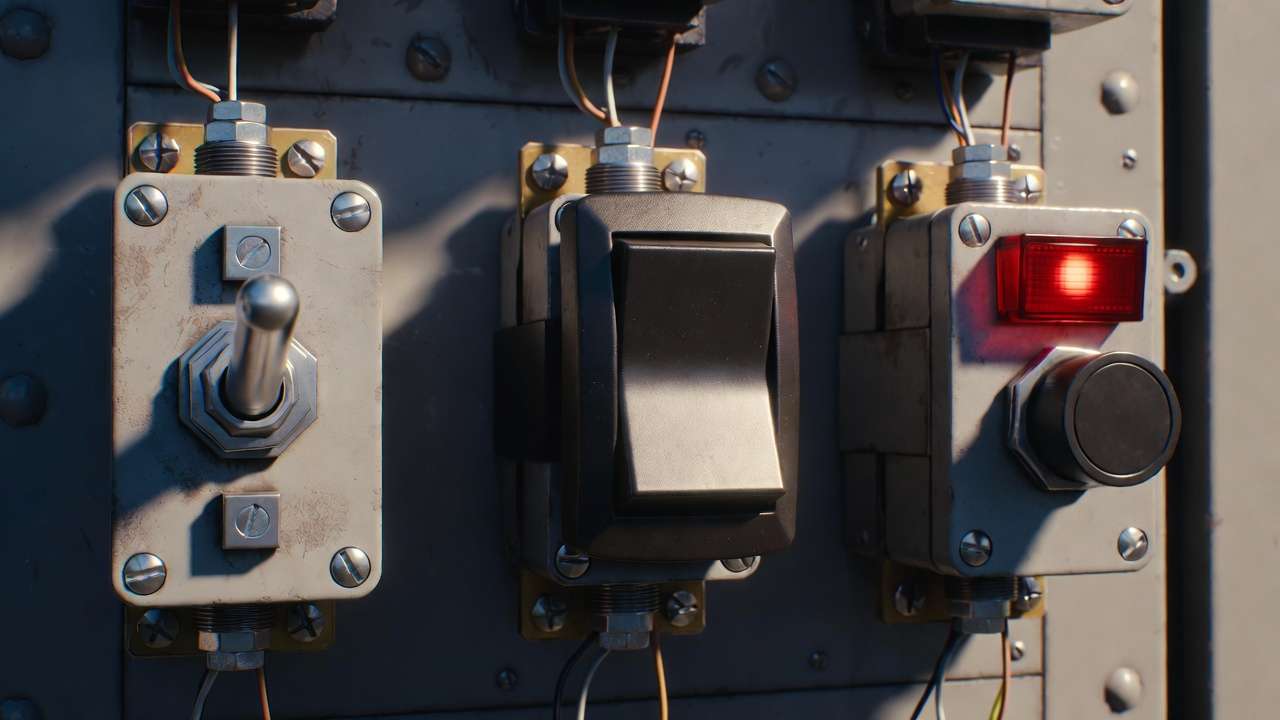
Toggle vs. Rocker Switch
Rocker switches feature a pivoting paddle that rocks between positions, offering a larger actuation surface and often a sleeker, more modern appearance. Toggle switches, by contrast, use a protruding lever.
Key differences and engineering considerations:
- Actuation feel and feedback: Toggle switches provide stronger tactile and visual feedback—the lever position is immediately obvious even from a distance or in poor lighting. This is a major advantage in industrial control panels, heavy machinery cockpits, or emergency stop scenarios where quick state recognition prevents errors.
- Accidental actuation risk: The protruding lever of a toggle makes it slightly more prone to being bumped in tight spaces (e.g., inside machinery enclosures). Rocker switches, being flush or low-profile, reduce this risk—making them preferable in mobile equipment like forklifts or agricultural tractors.
- Panel space and aesthetics: Rockers require larger cutouts but appear more contemporary, which matters in consumer-facing mechanical products (e.g., HVAC wall controllers). Toggles are more compact in multi-switch arrays common in industrial panels.
- Durability in harsh environments: High-quality sealed toggle switches often outperform rockers in extreme vibration and shock (per MIL-STD-810 testing), because the lever mechanism can be engineered with greater mechanical advantage and sturdier pivots.
In mechanical engineering practice, choose toggle switches when clear visual/tactile state indication is critical (e.g., safety interlocks, mode selectors in CNC machines). Opt for rockers when minimizing protrusion and accidental operation is prioritized.
Toggle vs. Pushbutton Switches
Pushbuttons are momentary by nature (unless latching versions are used) and require sustained pressure or separate mechanisms to hold position.
When toggle wins:
- Persistent on/off states without additional circuitry (no need for latching relays).
- Better suited for gloved operation in dirty or cold environments.
- Superior visual state indication—no ambiguity about whether the circuit is energized.
Pushbuttons excel for rapid, repeated actuation (e.g., start/stop cycles in presses), but toggles are preferred for sustained control functions in mechanical systems.
Toggle vs. Rotary Switches
Rotary (selector) switches allow multiple positions (e.g., 4, 6, 12 positions) and are used when more than two or three states are needed.
Toggle switches are simpler, faster to operate, and more robust for binary or ternary control. Rotary switches dominate in applications requiring precise step selection (e.g., multi-speed motor controls), but toggles are chosen when speed and reliability under stress outweigh positional variety.
Bottom line for mechanical engineers: Toggle switches remain the gold standard whenever reliability, clear state indication, and mechanical robustness in industrial or mobile environments are paramount. Their mechanical simplicity often translates to lower failure rates in vibration-heavy, dusty, or high-use scenarios compared to more complex alternatives.
Applications in Mechanical Engineering
Toggle switches find widespread use across mechanical engineering disciplines because of their proven reliability, straightforward integration, and ability to function without external power. Below are the primary application categories, complete with real-world examples and rationale.
Industrial Machinery and Automation
In manufacturing plants, toggle switches serve as primary operator controls on control panels for:
- Conveyor systems (start/stop, forward/reverse using DPDT).
- Hydraulic and pneumatic presses (emergency stop or mode selection).
- CNC machine tool changers and spindle controls.
Why toggle switches excel here: They withstand constant vibration, oil mist, and metal dust better than electronic alternatives. Sealed IP67-rated toggles are standard in washdown areas (food & beverage, pharmaceutical packaging lines).
Real example: A major automotive assembly line uses heavy-duty DPDT toggle switches to control robotic welders’ direction and power. The tactile feedback ensures operators can confirm state changes instantly, reducing misoperation risks.
Automotive and Heavy Equipment
Dashboard and chassis-mounted toggle switches handle:
- Lighting and accessory controls.
- Differential lock engagement in off-road vehicles.
- PTO (power take-off) activation in tractors and construction equipment.
Engineering advantage: Toggle switches meet stringent automotive vibration and temperature standards (ISO 16750, SAE J1455). Illuminated versions improve visibility in low-light conditions on night-shift heavy machinery.
Case study: In mining haul trucks, sealed, high-current DPST toggles isolate battery banks during maintenance, preventing accidental energization and complying with lockout/tagout (LOTO) procedures.
Aerospace and Defense
MIL-spec toggle switches (MIL-DTL-3950, MIL-PRF-8805) are ubiquitous in:
- Cockpit controls for avionics, landing gear, and flap systems.
- Ground support equipment and missile launchers.
- Unmanned aerial vehicle (UAV) manual overrides.
Key reason for preference: Extreme environmental tolerance (–55°C to +85°C, 10g vibration, 50g shock) and proven lifecycle exceeding 100,000 cycles. The mechanical nature provides fail-safe operation when electronics might be compromised by EMI or radiation.
HVAC, Building Systems, and Facility Management
Toggle switches appear in:
- Fan coil unit controls (on/off, speed selection).
- Boiler emergency shutoffs.
- Cleanroom air handling overrides.
Benefit: Simple, no-power-required manual override capability ensures operation during power failures or BMS (building management system) faults.
Robotics and Mechatronics
In educational and industrial robots, toggle switches provide:
- Power on/off for servos and controllers.
- Manual teach/operate mode selection.
- Emergency stop integration.
Emerging trend: While IoT and touchscreen interfaces grow, toggle switches persist as physical, fail-safe backups—especially in collaborative robots (cobots) where human safety is paramount.
Across these domains, toggle switches solve a universal mechanical engineering challenge: providing dependable, human-actuated control that survives harsh conditions while remaining intuitive and low-maintenance.
How to Select the Right Toggle Switch for Mechanical Systems
Choosing the correct toggle switch is one of the most critical yet frequently underestimated decisions in mechanical engineering design and maintenance. A poorly selected switch can lead to premature failure, safety hazards, costly downtime, or non-compliance with industry standards. Below is a structured, step-by-step guide that mechanical engineers, designers, and procurement specialists can follow to make confident, application-specific selections.
Step-by-Step Selection Process
- Define the Electrical Requirements
- Determine voltage and current: Match or exceed the steady-state and inrush currents of the load. For inductive loads (motors, solenoids, transformers), use switches rated at least 125–150% of the expected current to account for inrush.
- AC vs. DC rating: Many switches list separate ratings (e.g., 15 A @ 125 VAC vs. 10 A @ 28 VDC). DC ratings are typically lower due to sustained arcing.
- Power factor and load type: Resistive, inductive, or lamp loads affect derating.
- Assess Environmental and Mechanical Conditions
- Temperature range: Standard industrial toggles operate from –20°C to +65°C; extended-range versions reach –55°C to +85°C for outdoor or aerospace use.
- Vibration and shock: Reference MIL-STD-810 or IEC 60068-2-6/27. Look for switches explicitly tested for random vibration (e.g., 10–500 Hz at 5 g RMS).
- Ingress protection: IP65 minimum for splash/dust; IP67 or IP68 for immersion or washdown (food, marine, mining).
- Corrosive atmospheres: Specify stainless steel or nickel-plated levers and housings when H₂S, ammonia, or salt spray is present.
- Choose Pole/Throw and Actuation Configuration
- Use the earlier table as a reference. For motor reversal, DPDT is almost always required. For simple power isolation, SPST or DPST suffices.
- Maintained vs. momentary: Momentary is ideal for jog, test, or emergency functions; maintained for continuous operation.
- Evaluate Mounting and Termination Style
- Panel mount (bushing/threaded) is most common in mechanical control panels.
- Terminals: Solder lug for permanent installations; quick-connect (0.250″ tabs) for faster field service; screw terminals for high-reliability needs.
- PCB mount toggles are increasingly used in modern mechatronic designs.
- Check Lifecycle, Certifications, and Safety Features
- Mechanical/electrical life: Target ≥50,000 cycles for industrial use; ≥100,000 for critical applications.
- Certifications: UL 508 (industrial control), cURus, CSA, VDE, RoHS, REACH. MIL-spec (MIL-DTL-3950) for defense/aerospace.
- Safety extras: Locking levers (prevents accidental actuation), guard covers, illuminated versions for status indication.
Quick Reference Decision Checklist
- High current (>15 A) or motor loads → Heavy-duty series (Carling, Eaton, NKK)
- Wet/dusty/harsh environment → IP67/IP68 sealed (APEM, Honeywell Micro Switch, C&K)
- Vibration/shock heavy → MIL-spec or anti-vibration series
- Low-current signal switching → Gold-plated contacts to minimize contact resistance
- Space-constrained panel → Miniature toggle
- Visual status important → Bat handle + optional illumination
Common Selection Mistakes to Avoid
- Undersizing for inductive loads → Causes contact welding or excessive arcing.
- Ignoring DC derating → Leads to early failure in battery-powered or solar mechanical systems.
- Using non-sealed switches in washdown areas → Results in corrosion and short circuits.
- Overlooking terminal strain relief → Wire pull-out failures in vibrating machinery.
By systematically applying this process, engineers can reduce switch-related failures by 70–90% (based on field failure analysis from major OEMs in automation and heavy equipment).
Installation, Wiring, and Best Practices
Proper installation and wiring are just as important as selection. Mistakes here can negate even the best component choice.
Basic Wiring Examples
- SPST On/Off — Connect line to one terminal, load to the other. Ground the panel if metal-enclosed.
- SPDT Selector — Common terminal to power source; the two throws to alternate loads (e.g., high/low speed relay coils).
- DPDT Motor Reversal — Wire the two poles to swap polarity across the motor terminals. Use interlocks or mechanical guards to prevent instant reversal under load.
Always include appropriate fusing or circuit protection upstream. For DC inductive loads, add flyback diodes across the load or use arc-suppression RC snubbers on AC loads.
Installation Best Practices
- Use the manufacturer-supplied mounting hardware and torque specifications.
- Apply thread sealant or O-rings on panel bushings in wet environments.
- Provide strain relief on wiring (cable ties, clamps) to prevent terminal stress in vibrating applications.
- Install protective guards or boots over levers in areas prone to accidental bumping (forklifts, cranes).
- Label clearly: Use durable labels indicating function (e.g., “Emergency Stop – Pump 3”).
Safety Considerations
- Follow lockout/tagout (LOTO) procedures per OSHA 1910.147 when servicing.
- Never exceed rated voltage/current—even momentarily.
- In safety-critical applications, use dual-pole (DP) switches or redundant circuits to ensure fail-safe behavior.
Maintenance, Troubleshooting, and Longevity Tips
Even the best toggle switches eventually wear out. Proactive maintenance extends service life and prevents unplanned downtime.
Routine Inspection and Maintenance
- Visual check: Look for cracked levers, loose mounting, corrosion, or melted terminals.
- Functional test: Cycle the switch 5–10 times and listen for crisp snap action. Measure contact resistance with a multimeter (<100 mΩ is ideal).
- Cleaning: Use electrical contact cleaner (no residue) on accessible contacts during major shutdowns. Avoid WD-40 or petroleum-based lubricants—they attract dust.
Common Failure Symptoms and Fixes
- Intermittent operation → Dirty or oxidized contacts → Clean or replace.
- No continuity in “on” position → Welded contacts (from overload) → Replace switch and investigate load sizing.
- Excessive heat at terminals → Loose connections or undersized wiring → Tighten/replace.
- Lever feels sloppy → Worn pivot or spring → Replace entire switch.
Expert Longevity Tips
- Gold-plated contacts for signals <100 mA to prevent oxide films.
- Use dielectric grease on terminals in humid environments (but never on contacts).
- Schedule replacement based on cycle count rather than calendar time in high-use applications.
- Keep spares of critical switches on-site—downtime cost often far exceeds component price.
With proper selection, installation, and maintenance, industrial-grade toggle switches routinely achieve 10–20 years of service in mechanical systems.
Conclusion
In the world of mechanical engineering, where systems must perform reliably under pressure, vibration, dust, temperature extremes, and heavy usage, the switch toggle switch remains one of the most dependable and time-tested components available. Its mechanical simplicity, clear visual and tactile feedback, robust construction options, and ability to function without external power make it uniquely suited for critical operator interfaces in machinery, vehicles, aircraft, robotics, HVAC systems, and industrial automation.
This comprehensive guide has walked through the fundamentals—defining what a toggle switch is and its core components—explained the precise mechanical and electrical working principle, classified the major types with practical comparisons, highlighted key differences from rocker, pushbutton, and rotary alternatives, explored real-world applications across industries, provided a rigorous step-by-step selection framework, outlined correct installation and wiring practices, and shared maintenance strategies to maximize service life.
By mastering these aspects, mechanical engineers and designers can:
- Dramatically reduce switch-related failures (a frequent but preventable source of downtime)
- Improve operator safety through intuitive, unambiguous controls
- Ensure compliance with industry standards (UL, MIL, IP, ISO)
- Optimize system design for harsh environments
- Make informed trade-offs between cost, performance, and longevity
The next time you’re specifying components for a control panel, troubleshooting an intermittent fault, or redesigning an operator station, return to this resource. Consult manufacturer datasheets, test prototypes under realistic conditions, and never underestimate the impact of a well-chosen toggle switch on overall system reliability.
If you’re working on a specific project and need help matching a toggle switch to unique requirements—whether it’s high-current motor control, submersible sealing, extreme vibration resistance, or integration into a safety-critical circuit—feel free to share more details in the comments or reach out to trusted suppliers such as Honeywell, Eaton, Carling Technologies, NKK Switches, APEM, or C&K. The right toggle switch isn’t just a part; it’s a foundation of dependable mechanical-electrical interaction.
Thank you for reading. Here’s to building machines that last.
FAQ Section
1. What does SPST, SPDT, DPST, and DPDT mean in a toggle switch?
These abbreviations describe the electrical configuration:
- SPST (Single Pole Single Throw): One circuit, on/off control.
- SPDT (Single Pole Double Throw): One circuit switched between two outputs.
- DPST (Double Pole Single Throw): Two independent circuits turned on/off together.
- DPDT (Double Pole Double Throw): Two circuits, each switched between two paths—commonly used for reversing polarity (e.g., DC motors).
2. Are toggle switches suitable for high-vibration environments?
Yes—when properly specified. Choose switches tested to MIL-STD-810 or equivalent (random vibration 5–10 g RMS, 10–2000 Hz). Features like reinforced pivots, anti-rotation mounting, and internal damping make many industrial and MIL-spec toggles highly vibration-resistant.
3. How do I wire a DPDT toggle switch for motor reversal?
Connect the two center (common) terminals to the motor. Cross-connect the outer terminals: one pole’s “up” to the other pole’s “down,” and vice versa. When toggled one way, polarity is normal; the opposite way reverses it. Always include mechanical or electrical interlocks to prevent instant reversal under load.
4. What’s the difference between maintained and momentary toggle switches?
- Maintained: Stays in the selected position until manually moved (typical for on/off or mode selection).
- Momentary: Returns to the default (usually center or off) position when released (used for jogging, testing, or momentary activation).
5. Can toggle switches reliably handle DC loads in mechanical applications?
Yes, but always check the DC rating (usually lower than AC due to arcing). For inductive DC loads (motors, solenoids), add flyback diodes and consider arc-suppression circuits. Gold-plated contacts are preferred for low-current DC signal switching.
6. Why choose sealed toggle switches in industrial settings?
Sealed (IP65–IP68) toggles prevent ingress of dust, oil mist, coolant, water, and chemicals—common in food processing, marine, mining, outdoor equipment, and washdown areas. Non-sealed switches fail quickly in these environments due to corrosion and contamination.
7. How long do industrial-grade toggle switches typically last?
50,000 to 100,000+ mechanical/electrical cycles is standard for quality industrial models. In moderate use (500–1,000 cycles/month), this translates to 5–20 years. Heavy-duty and MIL-spec versions often exceed 150,000–250,000 cycles.
8. Toggle vs. rocker switch: Which is better for mechanical control panels?
Toggle switches are generally superior when:
- Clear, long-distance visual state indication is needed
- Strong tactile feedback matters (gloved hands, noisy environments)
- Maximum mechanical robustness under vibration/shock is required
Rocker switches are preferred for flush mounting, lower accidental actuation risk, and a more modern appearance in less demanding panels.
9. Should I use illuminated toggle switches?
Yes, when:
- The panel is in low-light conditions (night-shift machinery, vehicles)
- Status visibility is safety-critical
- You want confirmation that power is actually present at the switch
LED-illuminated versions (red, green, amber) are widely available and consume minimal power.
10. Where can I find reliable toggle switch datasheets and cross-references?
Major trusted manufacturers:
- Honeywell (Micro Switch legacy series)
- Eaton / Cutler-Hammer
- Carling Technologies
- NKK Switches
- APEM
- C&K (now Littelfuse)
- Electroswitch (heavy-duty industrial)
Most provide detailed PDFs with environmental, electrical, and lifecycle data, plus 3D models for CAD integration.