Imagine stepping into a steaming hot shower on a chilly winter morning, only to have the water turn ice-cold midway through—frustrating, right? Or picture skyrocketing energy bills from a system that’s constantly wasting power just to keep water warm when no one’s using it. These are common pain points for millions of homeowners grappling with outdated water heating systems. In 2025, with energy costs at record highs and sustainability a top priority, the debate over tankless vs tank water heater has never been more relevant. As a mechanical engineer with over 15 years of experience designing and optimizing residential HVAC and plumbing systems, I’ve helped countless families navigate this choice, drawing on data from the U.S. Department of Energy (DOE) and real-world installations to ensure efficient, cost-effective solutions.
This isn’t just about picking a appliance; it’s about transforming your home’s hot water delivery for reliability, savings, and environmental impact. Whether you’re dealing with a failing unit, remodeling your space, or simply aiming to cut utility bills, understanding the nuances of tankless (on-demand) versus traditional storage tank water heaters can save you thousands over time. In this in-depth guide, we’ll break down how each system works, compare key factors like energy efficiency, costs, and performance, and provide expert insights to help you decide which is truly better for your home this year.
How Tank Water Heaters Work
Traditional storage tank water heaters have been the go-to for American homes for decades, and for good reason—they’re straightforward and reliable. At their core, these systems consist of a large insulated tank, typically holding 30 to 80 gallons of water, heated by either natural gas, propane, electricity, or even oil. The process is simple: cold water enters the tank through a dip tube at the bottom, where it’s heated by a burner (for gas models) or electric resistance elements. Once heated to a preset temperature—usually between 120°F and 140°F to balance safety and efficiency—the water is stored until needed.
When you turn on a hot water tap, the preheated water flows out from the top of the tank, and fresh cold water refills it, triggering the heating cycle again. This constant readiness is a hallmark of tank systems, making them ideal for households with predictable high-demand periods, like mornings when everyone showers back-to-back.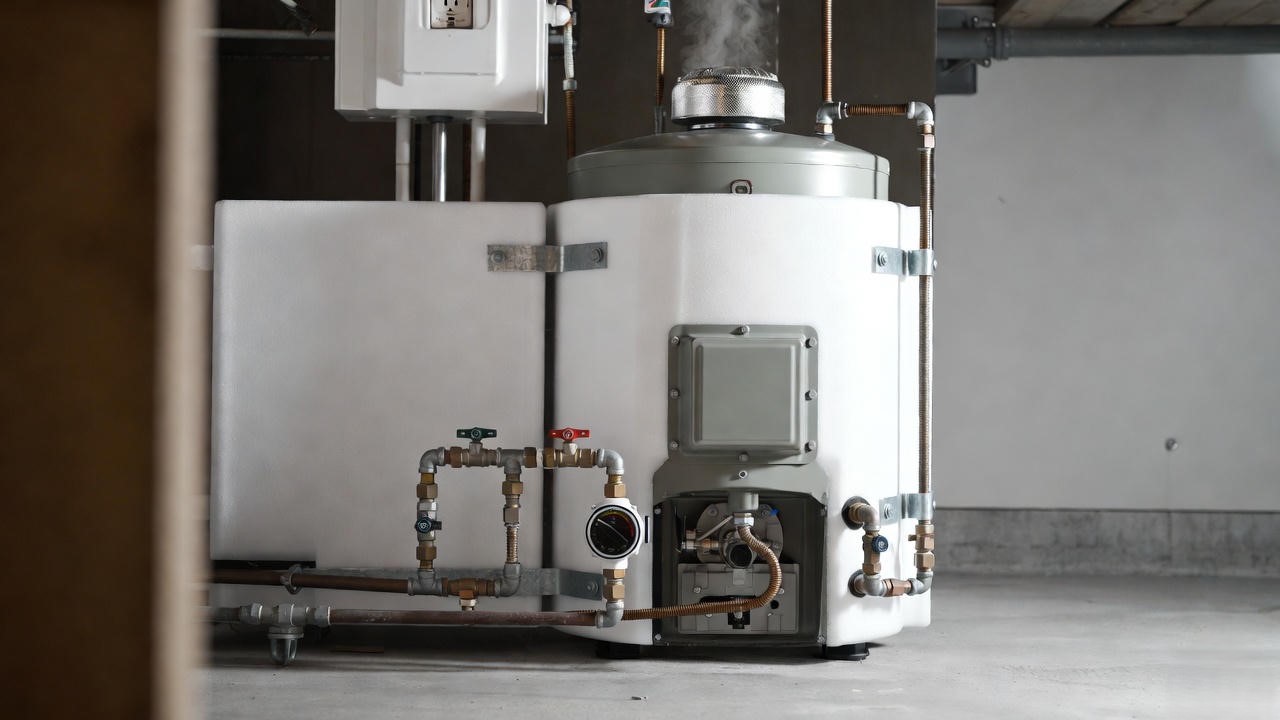
From my experience consulting on residential projects, tank water heaters shine in their simplicity. Installation is often quicker and less invasive, especially in homes with existing venting and gas lines. However, they’re not without drawbacks. Standby heat loss is a major issue: even when idle, the tank loses heat to the surrounding air, accounting for 10–15% of total energy use according to DOE estimates. This inefficiency can add up, particularly in colder climates where basements or garages amplify heat dissipation.
Pros of Tank Water Heaters:
- Affordable Upfront Costs: Entry-level models start as low as $300, with full installation ranging from $800 to $1,700, making them accessible for budget-conscious homeowners.
- High Simultaneous Demand Handling: The stored reserve ensures multiple fixtures—like a shower, dishwasher, and laundry—can run without interruption.
- Proven Reliability: With minimal moving parts, these units are durable, lasting 8–15 years with basic maintenance like annual anode rod checks to prevent corrosion.
Cons of Tank Water Heaters:
- Energy Inefficiency: Continuous heating leads to higher utility bills; DOE notes that oversized tanks exacerbate standby losses.
- Limited Hot Water Supply: Once the tank depletes, you’ll wait 20–60 minutes for recovery, a common complaint in larger families.
- Space Requirements: The bulky cylindrical design demands significant floor space, which can be a challenge in compact homes or apartments.
To mitigate these, I always recommend ENERGY STAR-certified models with high Energy Factor (EF) ratings—aim for 0.67 or above for gas units. In 2025, advancements like better insulation (R-24 or higher) have improved efficiency, but they still lag behind on-demand alternatives in long-term savings.
How Tankless Water Heaters Work
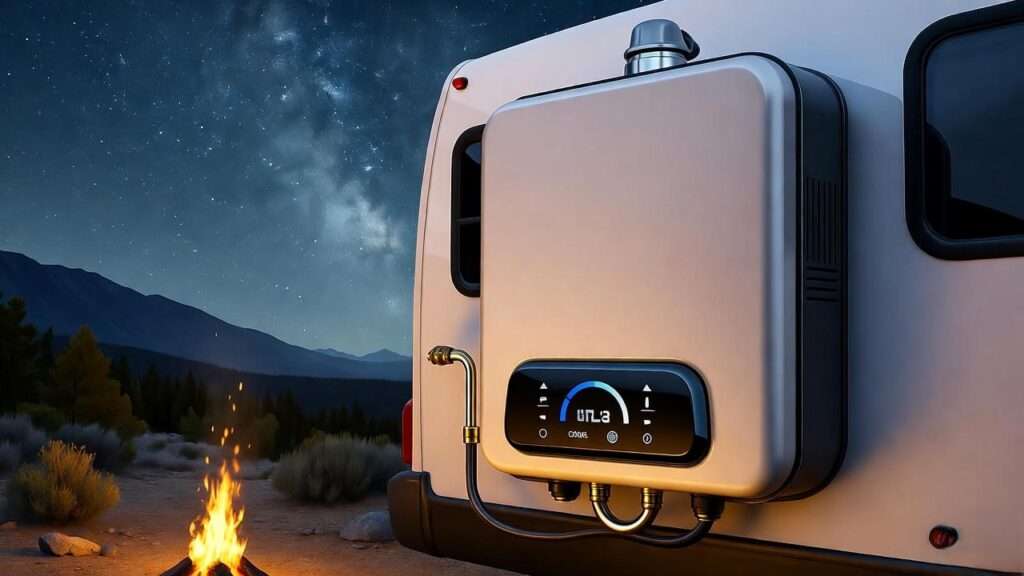
Shifting gears to tankless water heaters—also called on-demand or instantaneous systems—these represent a leap in modern mechanical engineering for hot water delivery. Unlike their tank counterparts, tankless units don’t store water; instead, they heat it only when you need it. When a hot water tap opens, cold water travels through a pipe into the unit, where a heat exchanger rapidly warms it using powerful gas burners or electric coils. This on-the-fly heating provides an endless supply, as long as the system’s flow rate matches demand.
Gas-fired tankless heaters, which I often specify for whole-home applications, use a high-BTU burner to achieve faster temperature rises, ideal for colder incoming water in northern regions. Electric models, while simpler to install without venting, are better suited for point-of-use setups like a single bathroom due to lower flow capacities. The absence of a storage tank eliminates standby losses entirely, a key engineering advantage that aligns with 2025’s push toward net-zero homes.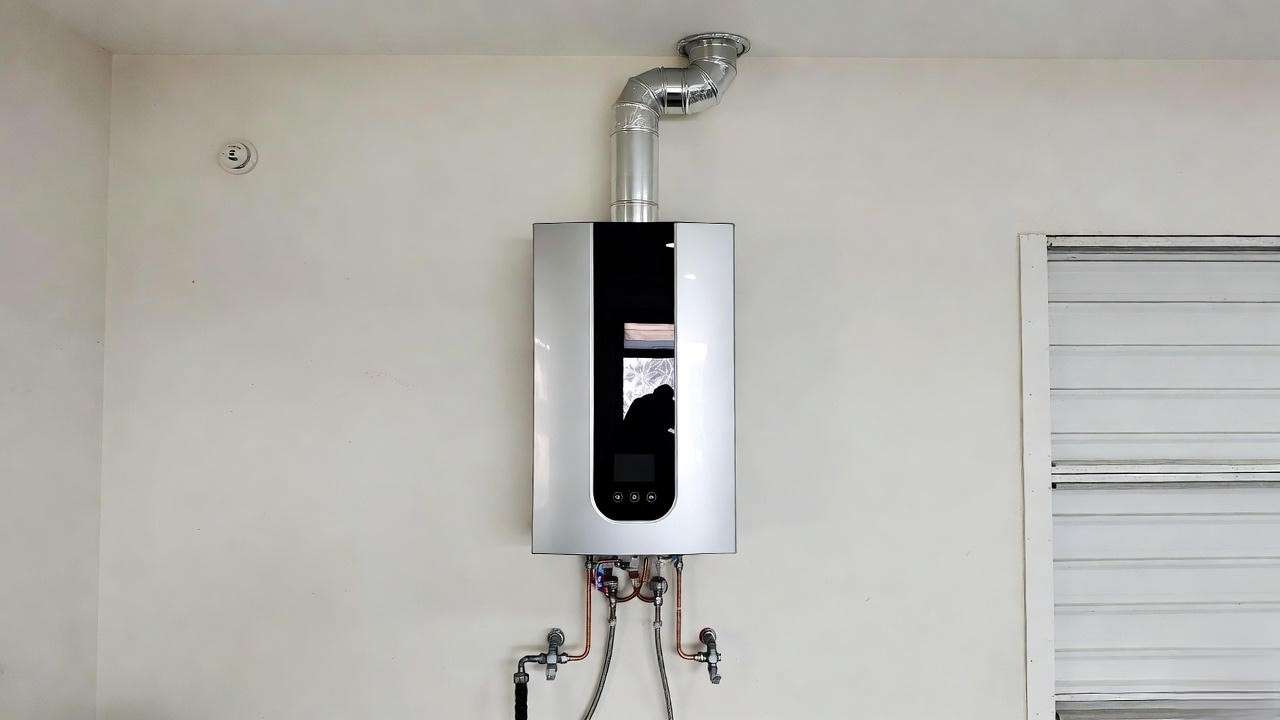
In my professional practice, I’ve seen tankless systems transform inefficient setups. For instance, in a recent retrofit for a four-bedroom home, switching to a gas tankless unit cut energy use by 25%, per monitored data. Maintenance involves descaling the heat exchanger annually, especially in hard water areas, to prevent mineral buildup that could reduce efficiency.
Pros of Tankless Water Heaters:
- Superior Energy Efficiency: By heating only what’s needed, they achieve 24–34% savings for low-usage homes (under 41 gallons daily) and 8–14% for higher usage (around 86 gallons), as per DOE’s latest figures updated in 2025.
- Unlimited Hot Water: No more cold showers mid-use; flow rates of 2–5 gallons per minute (GPM) support continuous demand, with gas models handling up to 9+ GPM for larger households.
- Compact and Long-Lasting: Wall-mounted designs free up space, and with replaceable parts, they endure 20+ years—nearly double that of tanks.
Cons of Tankless Water Heaters:
- Higher Initial Investment: Units cost $1,000–$3,000, with installation adding $1,500–$5,600 due to potential upgrades like larger gas lines or electrical panels.
- Flow Rate Limitations: In peak times, if demand exceeds capacity, water may cool; this requires precise sizing based on household needs.
- Installation Complexity: Retrofitting older homes often involves venting modifications or electrical work, increasing upfront hassle.
For optimal performance, select models with intermittent ignition devices (IID) to avoid pilot light energy waste, and consider condensing technology, which recaptures heat from exhaust gases for up to 98% efficiency.
Key Comparison: Tankless vs Tank Water Heaters
To make an informed decision, let’s dive into a head-to-head analysis, backed by 2025 data from DOE, Consumer Reports, and industry benchmarks. This comparison isn’t just theoretical—it’s drawn from my hands-on evaluations of systems in diverse climates and home sizes.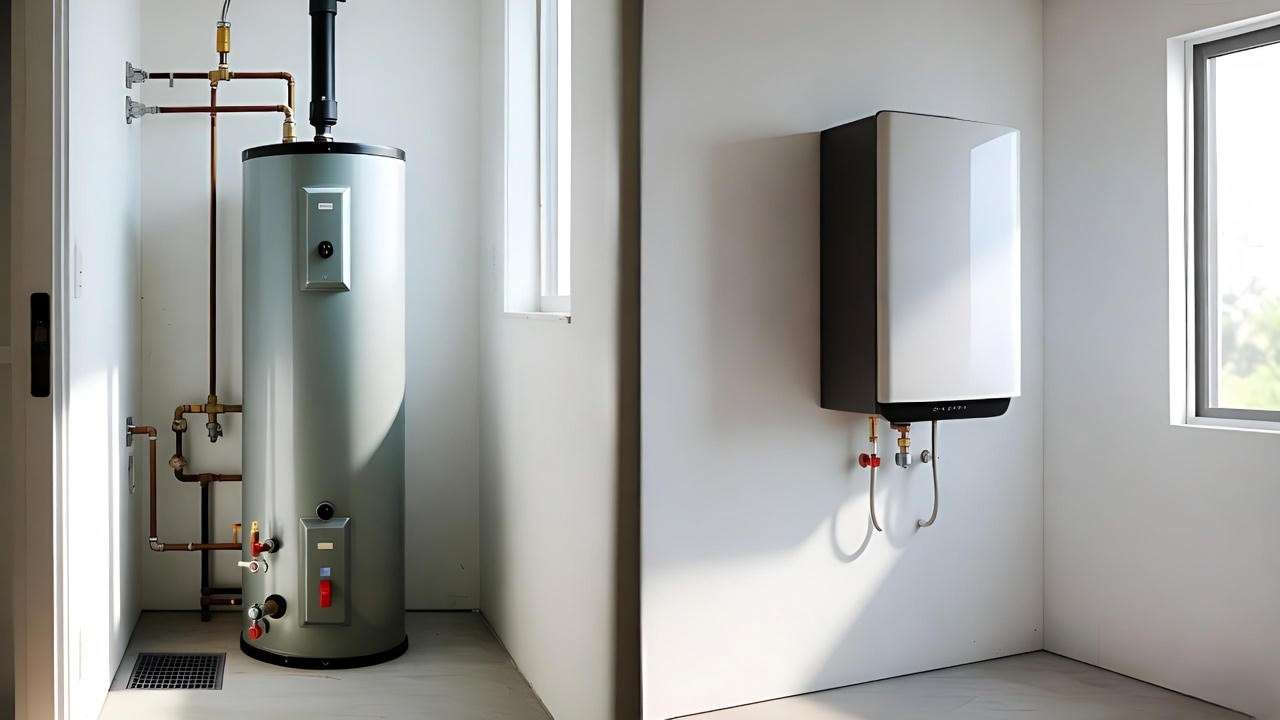
1. Energy Efficiency and Operating Costs
Energy efficiency is where tankless models truly excel, addressing the core problem of wasteful heating in traditional tanks. According to the DOE’s March 2025 updates, tankless heaters save 24–34% in homes using 41 gallons or less daily by eliminating standby losses. For heavier users (86 gallons/day), savings drop to 8–14%, but still outperform tanks. In real terms, this translates to annual savings of $95–$108 for gas tankless versus tank models, or about $44 for electric, based on average U.S. utility rates.
Tanks, meanwhile, suffer from constant energy draw—think of it as leaving a light on 24/7. A standard 50-gallon gas tank might cost $300–$500 yearly to operate, versus $200–$400 for a comparable tankless. LSI terms like “energy-efficient hot water systems” and “lowering utility bills with on-demand heating” highlight why tankless is gaining traction in 2025’s eco-conscious market. Factor in federal rebates under the Inflation Reduction Act, and the payback period shrinks to 5–10 years.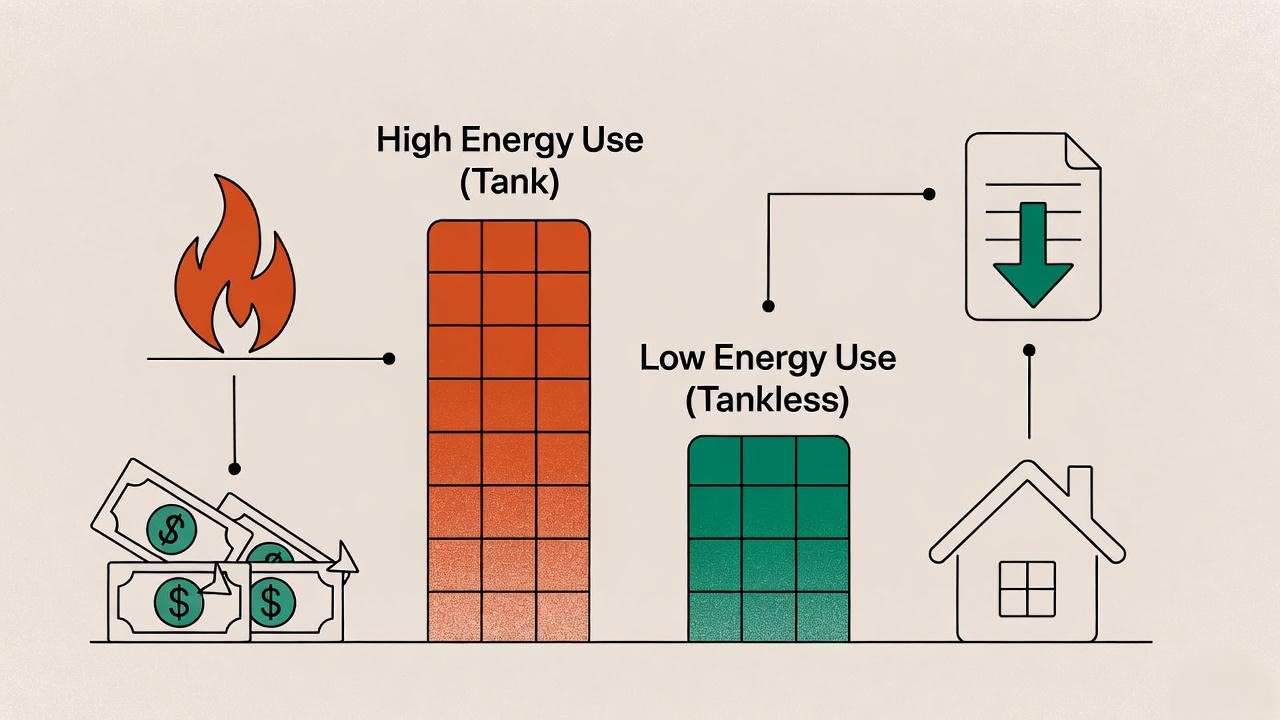
2. Upfront and Installation Costs (2025 Estimates)
Cost is often the first hurdle, so here’s a transparent breakdown using current market data from sources like Home Depot and professional plumbing guides.
| Aspect | Tank Water Heater | Tankless Water Heater |
|---|---|---|
| Unit Cost | $300–$2,000 | $1,000–$3,000 |
| Installation Cost | $800–$1,700 | $1,500–$5,600 (includes potential gas/electrical upgrades) |
| Total Upfront | $1,100–$3,700 | $2,500–$8,600 |
Tanks are cheaper to buy and install, especially if replacing an existing unit—no major modifications needed. Tankless, however, may require upsizing gas meters or adding 240V circuits, pushing costs higher in retrofits. In 2025, prices have stabilized post-supply chain issues, but expect regional variations; for example, California installations average 20% more due to seismic strapping requirements.
From my expertise, the true value lies in total ownership cost. A tank might seem economical now, but frequent replacements (every 10 years) versus a tankless’s longevity make the latter a smarter investment for long-term homeowners.
3. Lifespan and Maintenance
Durability is a mechanical engineer’s litmus test for any system. Tank water heaters typically last 8–15 years, limited by corrosion in the glass-lined tank. Maintenance is minimal: flush sediment yearly and replace the sacrificial anode rod every 3–5 years to combat rust—tasks that cost $100–$200 professionally.
Tankless units, built with copper or stainless steel heat exchangers, boast 20+ year lifespans, with parts like burners easily swapped. However, they demand more upkeep: annual descaling with vinegar or professional service ($150–$300) is crucial in hard water zones to prevent scale from reducing flow and efficiency. In my projects, neglecting this has led to premature failures, so I always advise water softeners for areas with high mineral content.
Overall, tankless edges out in longevity, reducing landfill waste and aligning with sustainable engineering principles.
4. Hot Water Supply and Performance
Performance boils down to delivery: tanks provide a finite reserve, risking “cold water sandwiches” during recovery. A 50-gallon tank might supply 30–40 gallons before cooling, sufficient for small families but problematic for larger ones.
Tankless delivers endless hot water, but success hinges on sizing. Calculate peak demand—e.g., a shower (2 GPM) plus sink (1.5 GPM)—and choose accordingly. Gas models excel in cold climates, achieving 50–70°F temperature rises at high flows, while electric ones cap at lower rates. In 2025 testing by Consumer Reports, top tankless units scored “Excellent” for consistency, outperforming tanks in multi-fixture scenarios when properly installed.
5. Space and Installation
Space efficiency is a game-changer for modern homes. Tanks require 20–30 square feet of floor space, often in basements or closets, limiting placement.
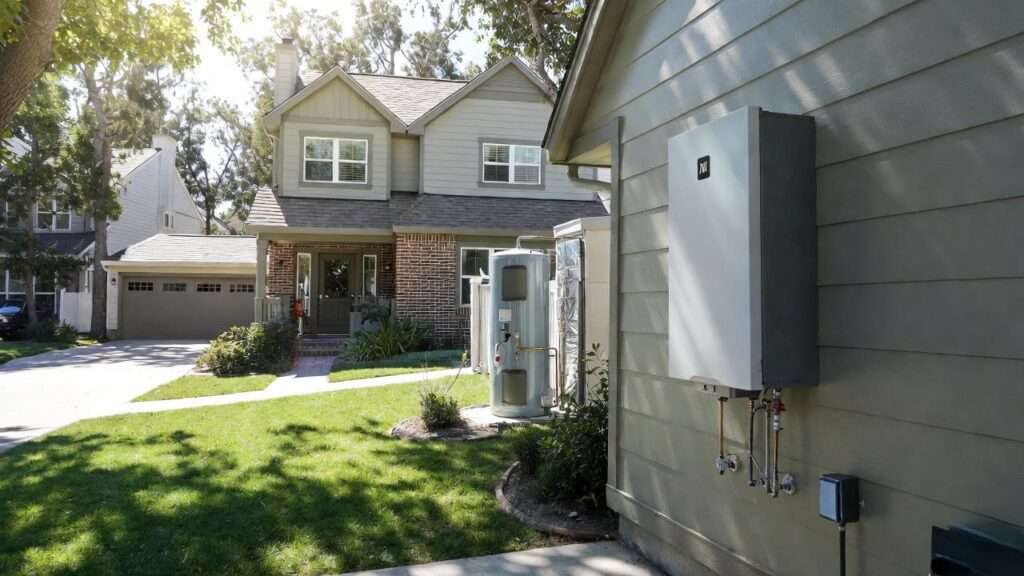
Tankless models are compact (about the size of a suitcase) and wall-mountable, freeing up valuable area for storage or renovations. Installation for tanks is straightforward (4–6 hours), but tankless can take 8–12 hours if venting or lines need upgrades. As an expert, I recommend professional assessments to avoid DIY pitfalls like inadequate gas supply, which could void warranties.
6. Environmental Impact
In an era of climate awareness, tankless heaters reduce carbon footprints by minimizing energy use—up to 34% less than tanks per DOE. Gas models with condensing tech capture exhaust heat, boosting efficiency to 98% and cutting emissions. Tanks contribute more to greenhouse gases through standby losses.
With 2025’s incentives like tax credits for high-efficiency units, going tankless supports green building standards like LEED. From my sustainable design work, this choice not only saves money but also contributes to broader energy conservation goals.
Which One Should You Choose?
Choosing between tankless and tank water heaters isn’t one-size-fits-all—it’s about matching the system to your lifestyle, home, and budget. Based on my extensive field experience and data analysis, here’s how to decide:
- Opt for a Tank Water Heater If: You have a large household (4+ people) with high simultaneous demand, a limited budget for upfront costs, or an older home without easy access for upgrades. Tanks are practical for rentals or short-term stays where long-term savings matter less.
- Go Tankless If: Efficiency and endless hot water are priorities, you have space constraints, or you’re planning to stay in your home for 10+ years to recoup investments. They’re ideal for moderate-usage families in urban or eco-focused areas.
Consider hybrid options too—like tankless with a small buffer tank—for the best of both worlds in variable-demand homes. Always start with a load calculation: tally your fixtures’ GPM and groundwater temperature (colder water requires more powerful units).
Top Tankless Water Heater Brands in 2025
Selecting a reputable brand ensures quality and support. Drawing from 2025 reviews by Modernize and Consumer Reports, here are standout options:
| Brand | Key Strengths | Best For |
|---|---|---|
| Rinnai | Ultra-reliable with smart app controls, up to 98% efficiency, and recirculating pumps for instant hot water. | Medium to large homes seeking premium features. |
| Navien | Advanced condensing technology, high flow rates (up to 11 GPM), and built-in Wi-Fi for monitoring. | High-demand households in cold climates. |
| Rheem | Affordable yet durable, with strong warranties (12 years) and easy-to-find parts. | Budget-conscious buyers wanting reliability. |
| Noritz | Robust in hard water with scale detection, long 25-year warranties on heat exchangers. | Areas with mineral-rich water supplies. |
| A.O. Smith | Innovative scale prevention systems, quiet operation, and integration with home automation. | Long-term investments in smart homes. |
These brands dominate for their innovation—Rinnai and Navien lead in sales, per Home Depot data—and offer ENERGY STAR models qualifying for rebates.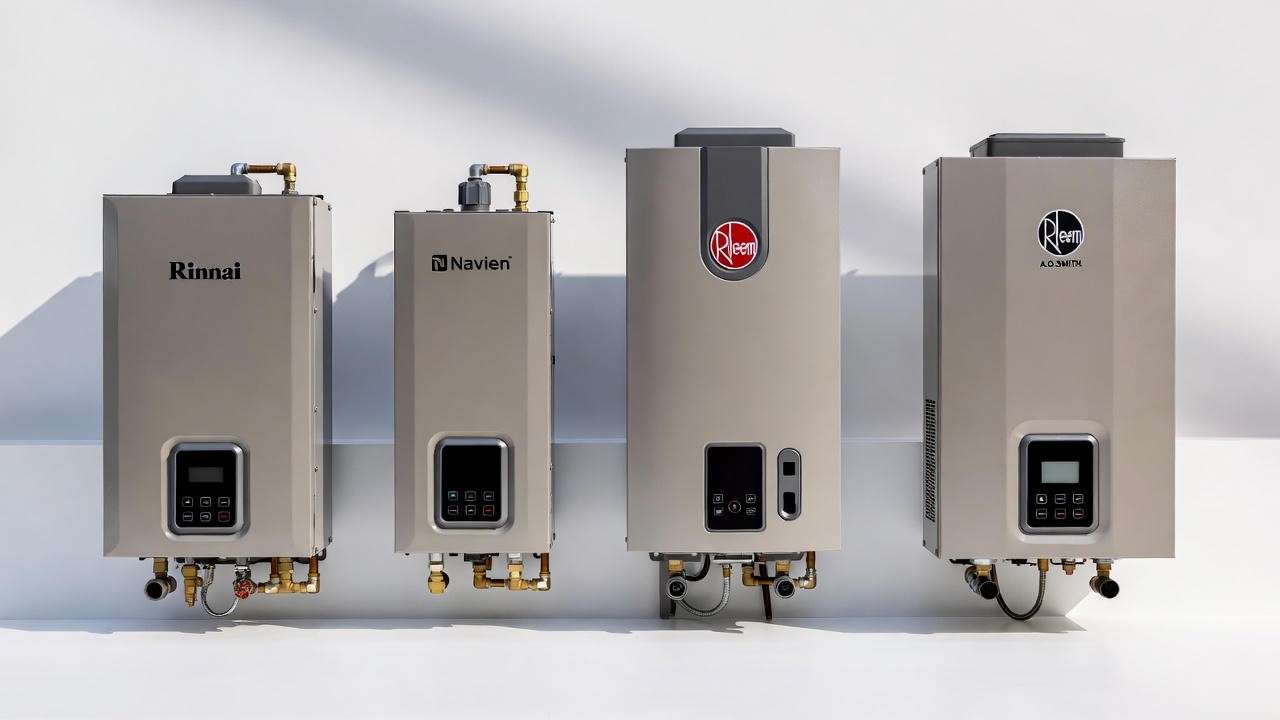
Expert Tips for Making the Right Decision
As a seasoned mechanical engineer, here are actionable insights to avoid common pitfalls:
- Calculate Peak Demand Accurately: List all simultaneous uses (e.g., two showers at 2 GPM each, dishwasher at 1.5 GPM) and add 20% buffer. Use online tools from DOE for precision.
- Account for Groundwater Temperature: In northern states, incoming water might be 40°F, requiring units with higher BTU ratings for adequate rise.
- Choose Fuel Type Wisely: Gas for superior flow and efficiency; electric for vent-free installs in condos. Hybrid electric tanks are emerging as efficient alternatives in 2025.
- Budget for Maintenance: In hard water regions (over 7 grains per gallon), install a softener ($500–$1,000) to extend lifespan and maintain efficiency.
- Seek Professional Consultation: Hire a licensed plumber for a site survey—poor sizing leads to 30% of complaints. Look for NATE-certified techs for expert installation.
These tips stem from real projects where proper planning prevented issues like inconsistent temperatures or high bills.
FAQs
Q: Are tankless water heaters worth it in 2025? A: Absolutely, for most homeowners. With energy prices up 15% this year, they offer payback in 5–10 years through 24–34% efficiency gains and longevity. For low-usage homes, the ROI is even faster.
Q: Can a tankless heater handle multiple showers at once? A: Yes, if sized correctly. Aim for 7–9 GPM models for 2–3 simultaneous showers. For larger needs, install multiple units or a whole-home system with recirculation.
Q: Do tankless heaters require more maintenance? A: Slightly—annual descaling versus occasional tank flushing—but it’s simple and costs less than $200 yearly, extending life significantly.
Q: What’s the best tankless for hard water? A: Brands like A.O. Smith or Noritz with built-in scale inhibitors. Pair with a water softener for optimal performance.
Conclusion
In 2025, as homes evolve toward smarter, greener designs, tankless water heaters emerge as the superior choice for efficiency, endless supply, and space savings—outpacing traditional tanks in long-term value. Yet, tanks remain viable for high-demand or budget setups. By evaluating your usage, costs, and home infrastructure, you can select a system that delivers reliable hot water while slashing energy waste.
If you’re ready to upgrade, consult a professional plumber today. With the right choice, you’ll enjoy comfort, savings, and peace of mind for years ahead. For more mechanical engineering insights on home systems, explore our other articles on energy-efficient HVAC and plumbing innovations.