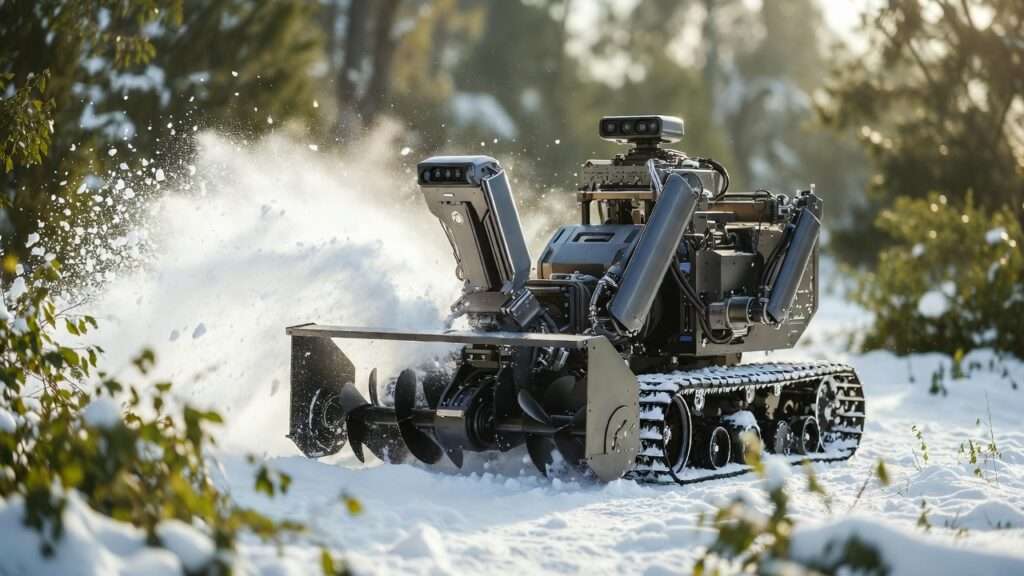
In regions with harsh winters, manual snow removal remains one of the most physically demanding and hazardous household tasks. Statistics from occupational safety organizations indicate thousands of snow-shoveling related injuries annually in North America alone, ranging from back strains to cardiac events triggered by exertion in freezing conditions. Traditional gas-powered or corded electric snow blowers mitigate some effort but still require human operation in sub-zero temperatures, slippery surfaces, and poor visibility—exposing users to cold stress, slips, and fatigue.
The Yarbo snow blower represents a transformative shift in outdoor power equipment engineering: a fully autonomous, modular robotic system that clears snow 24/7 without human intervention. By integrating advanced robotics, precise navigation, cold-tolerant power systems, and a robust two-stage clearing mechanism, Yarbo addresses core mechanical engineering challenges in extreme environments while delivering hands-free convenience.
This comprehensive guide examines the Yarbo snow blower from a mechanical engineering perspective—covering its modular architecture, two-stage auger-impeller kinematics, RTK GPS + AI vision navigation, battery thermal management in -25°C conditions, material durability, vibration dynamics, real-world storm performance, and design trade-offs. Engineers, robotics designers, product developers, and cold-climate property owners will find actionable insights to evaluate this technology, understand its engineering strengths and limitations, and apply similar principles to autonomous systems.
Whether assessing Yarbo for residential driveways, commercial lots, or as inspiration for next-generation outdoor robotics, this analysis provides deeper technical detail than typical reviews, helping readers make informed decisions about investing in autonomous snow removal.
Overview of the Yarbo Platform – Modular Robotic Architecture
Yarbo’s core innovation lies in its modular design philosophy, where a single universal base unit (the “Core”) supports interchangeable task-specific modules throughout the year.
Core Unit Design and Interchangeable Modules
The Yarbo Core features a tracked chassis powered by high-torque electric motors, a weather-sealed electronics bay, and quick-release mechanical interfaces for modules. The snow blower module attaches via a standardized docking system that transmits both mechanical power and control signals. Other modules include lawn mowers, leaf blowers, and plows, enabling one robot to handle mowing in summer and snow clearing in winter.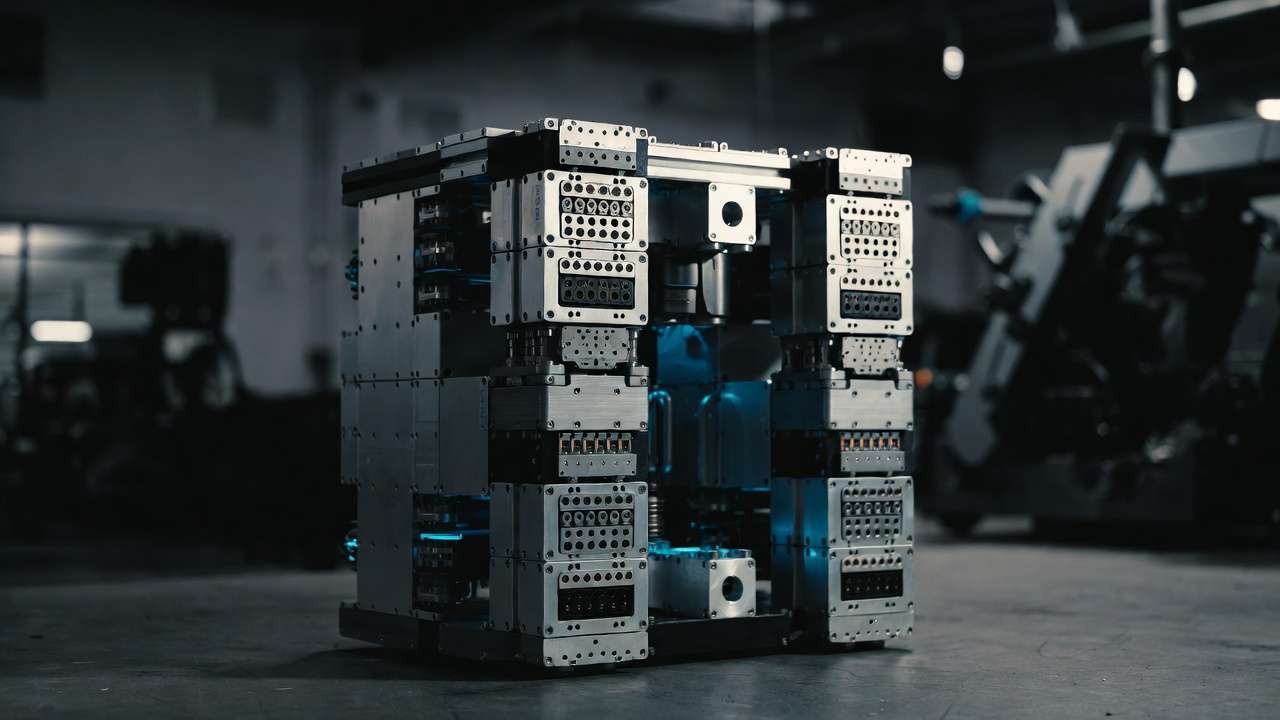
This modularity reduces ownership costs by eliminating the need for multiple dedicated machines while optimizing the drivetrain for varied loads.
Why Modularity Matters in Outdoor Robotics
Traditional outdoor tools are single-purpose, leading to storage issues and redundant components. Yarbo’s approach shares the expensive elements—battery, navigation sensors, motors, and chassis—across tasks, improving economic viability for year-round use.
Key mechanical benefit: The Core’s powertrain delivers consistent torque across modules, with software calibration adjusting for load differences (e.g., high-torque low-speed for snow vs. higher-speed for mowing).
[Table placeholder: Yarbo Modules Comparison – Core weight ~77 lbs, tracked drive, IPX5 rating, shared 36V 38.4Ah battery]
Two-Stage Snow Blower Mechanism – Kinematics and Power Transmission
The Yarbo snow blower employs a true two-stage system, a proven design in heavy-duty snow clearing adapted to robotic constraints.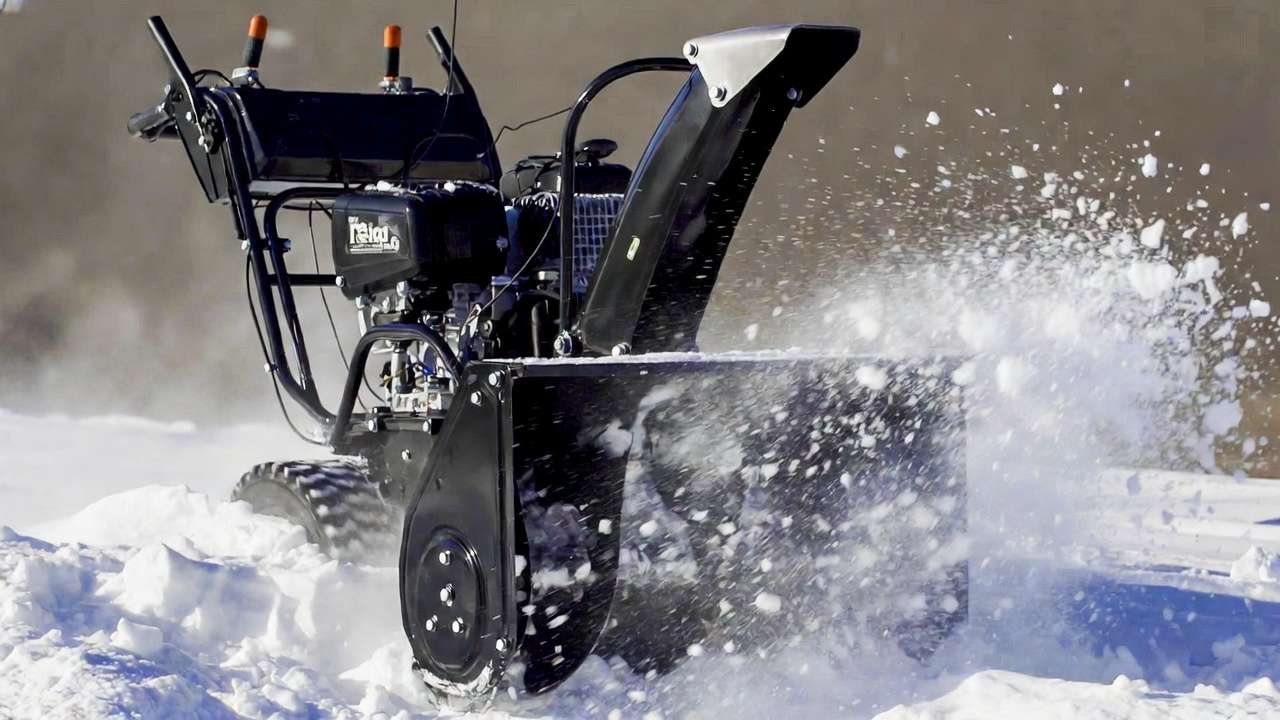
Auger and Impeller Design
The 24-inch clearing width features a heavy-duty metal auger that collects and breaks snow, feeding it to a high-speed central impeller. The auger uses shear pins for overload protection, preventing damage from rocks or ice chunks.
Intake height reaches 12 inches, suitable for moderate to deep accumulations.
Two-Stage Operation Explained
In stage one, the auger rotates to gather and pulverize snow; stage two accelerates it through the impeller for throwing distances of 6–40 feet. Chute rotation spans -10° to 190°, with deflector adjustable -5° to +55° for directional control.
This separation of functions allows efficient handling of wet, heavy, or packed snow—where single-stage designs often clog.
Drive System: Electric Motors, Torque Delivery, Gear Reduction, Shear Pin Protection
Brushless DC motors provide direct drive to the auger and impeller via gear reduction optimized for snow resistance. Power transmission efficiency remains high in cold conditions due to sealed lubricants.
Approximate power requirement: For dense snow, specific energy ~15–30 kJ/m³; the system delivers sufficient torque to maintain consistent performance without stalling.
Navigation and Autonomy Engineering
The Yarbo snow blower’s ability to operate without human supervision relies on a sophisticated multi-sensor fusion system that performs reliably in low-visibility, dynamic winter conditions.
RTK GPS + AI Vision + Multi-Sensor Fusion
Yarbo employs centimeter-level RTK (Real-Time Kinematic) GPS for precise positioning, augmented by onboard cameras using computer vision algorithms for real-time obstacle detection and surface interpretation. Additional sensors include ultrasonic units for close-range detection and an IMU (Inertial Measurement Unit) for attitude and motion tracking.
Sensor fusion combines these inputs via a Kalman filter-like algorithm to maintain localization accuracy even when GPS signals are temporarily degraded (e.g., under heavy tree cover or during snow squalls). The system achieves sub-10 cm path-following precision in mapped areas.
Mapping, Path Planning, and Obstacle Avoidance in Snow Conditions
Users create virtual boundaries and no-go zones via the Yarbo mobile app. The robot builds a high-definition map during its first run, then plans efficient coverage paths using coverage path planning algorithms (similar to boustrophedon or spiral patterns optimized for energy and time).
In snow, the AI vision distinguishes between cleared pavement, accumulated snow, and hazards (e.g., garden ornaments, vehicles, or curbs). Dynamic obstacle avoidance triggers rerouting or pausing when unexpected objects appear.
Edge Cases: Slush, Deep Accumulation, Gravel Surfaces, Night/Low-Visibility Operation
Performance degrades in very deep (>12 in) or extremely wet slush due to auger clogging and reduced traction on tracks. Gravel driveways require careful boundary setup to avoid flinging stones. Night operation benefits from the robot’s own LED work lights and vision system’s low-light capability, though extreme blizzards can still challenge detection.
Real-user reports indicate reliable performance in 4–10 inch events with pre-mapped clean paths, but heavy, sticky snow often requires manual intervention to clear intake grills.
Battery and Power Management in Extreme Cold
Cold temperatures pose one of the greatest challenges to electric outdoor equipment.
NMC Battery Specs (~1.38 kWh), Wireless Charging Station
The Yarbo uses a 36V nominal, 38.4 Ah NMC (Nickel Manganese Cobalt) lithium-ion battery pack with approximately 1.38 kWh capacity. The dedicated charging station employs inductive (wireless) charging for weatherproof reliability—no exposed contacts to ice over.
Thermal Management Strategies for -25°C Operation
Battery performance drops significantly below 0°C due to increased internal resistance and reduced ion mobility. Yarbo incorporates active thermal management: pre-heating the battery pack during charging (using station power) and maintaining optimal temperature during operation via insulated enclosure and controlled resistive heating elements.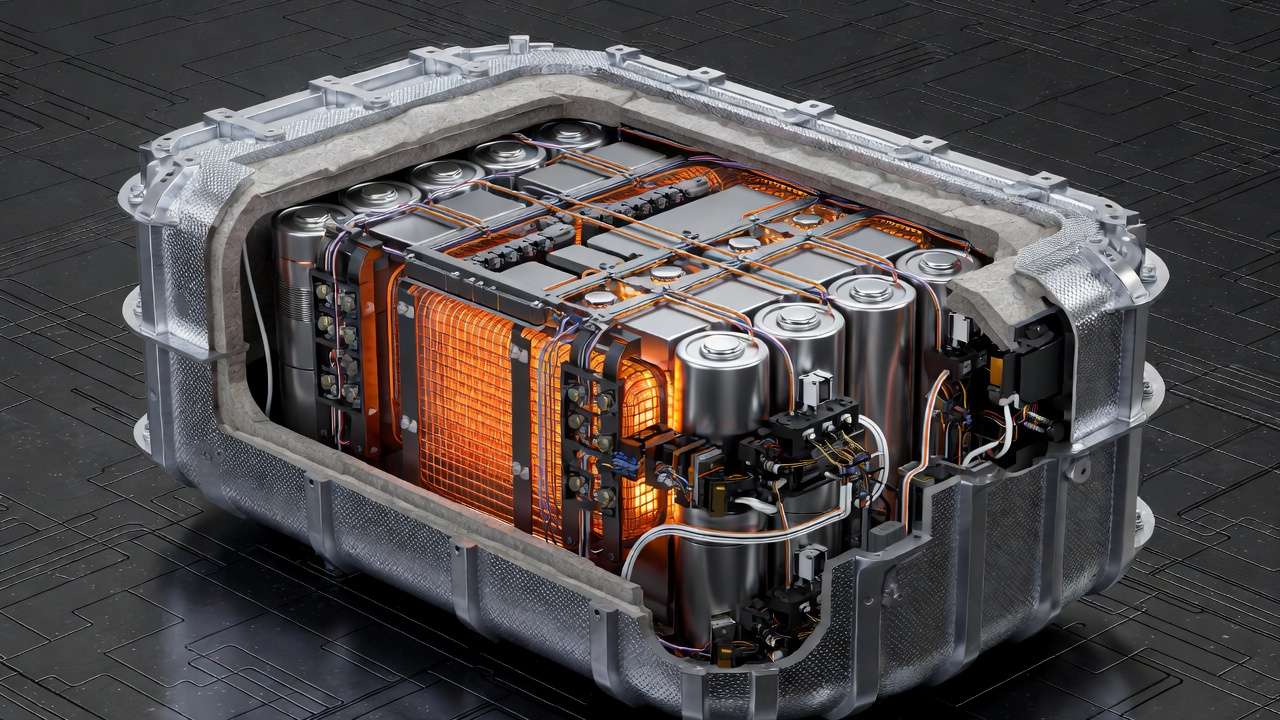
This allows consistent power delivery down to the manufacturer-rated -25°C.
Duty Cycle Analysis: Clearing Area per Charge, Recharge Time
In light snow (1–3 inches), Yarbo can clear up to 6,000–8,000 sq ft per charge. In heavier 6–10 inch wet snow, coverage drops to 2,000–4,000 sq ft due to increased energy demand. Recharge from 20% to 80% takes roughly 1–1.5 hours; full charge ~3–4 hours.
Compared to gas blowers, energy efficiency is superior (no idling losses), though total cleared area per session remains lower than large walk-behind units.
Energy Efficiency vs. Traditional Gas Blowers
Electric autonomy eliminates fuel costs, emissions, carburetor issues, and pull-start failures in cold. Noise is dramatically lower (~65–70 dB vs. 90–100 dB for gas), and maintenance is minimal (no oil changes, spark plugs).
Materials and Durability in Harsh Winter Environments
Winter exposes equipment to freeze-thaw cycles, salt, ice abrasion, and impact loads.
Q355 Steel Construction (355 MPa strength) and IPX5 Rating
The main chassis and critical structural components use Q355 low-alloy high-strength steel (yield strength ~355 MPa), offering excellent toughness at low temperatures compared to milder steels. The IPX5 water-jet resistant rating protects electronics from snowmelt and rain.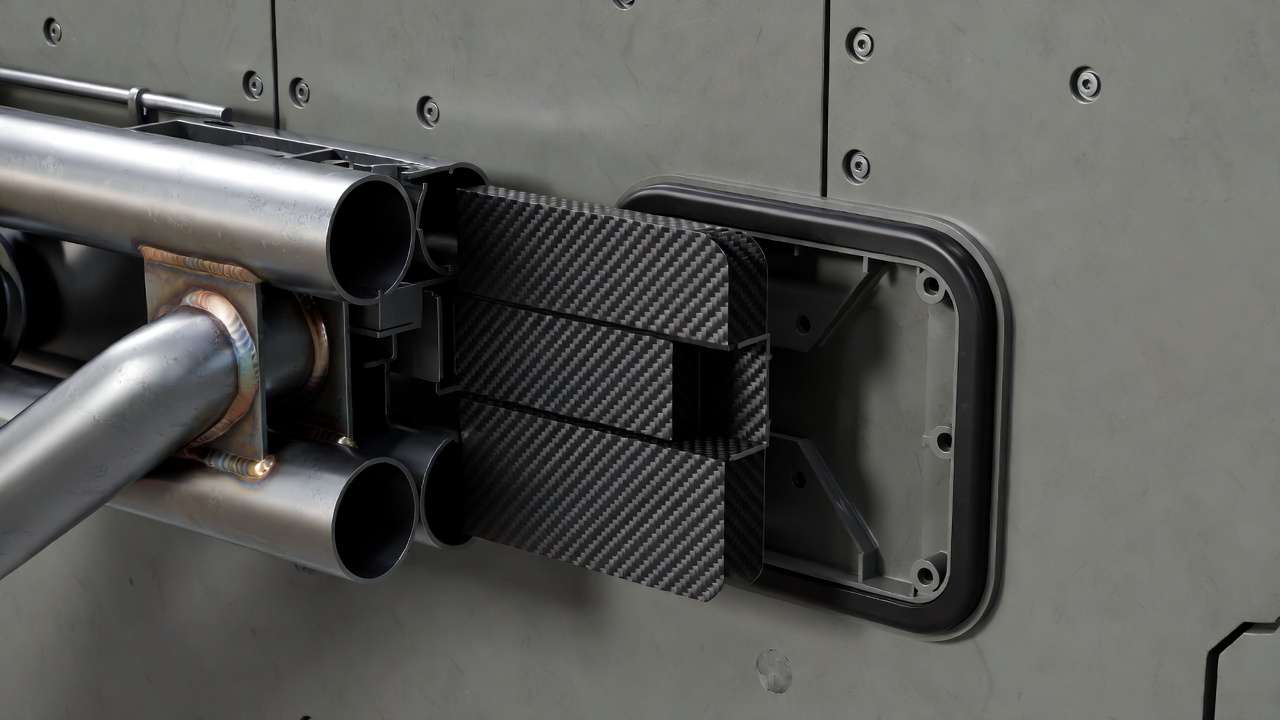
Chute Rotation Mechanism (-10° to 190°) and Wear Resistance
The discharge chute rotates via a sealed electric actuator with gear drive, designed to resist icing. Polymer and stainless-steel elements reduce galling and corrosion from road salt.
Cold-Weather Challenges: Material Brittleness, Lubrication, Corrosion
Low temperatures increase the risk of brittle fracture in non-optimized steels. Yarbo mitigates this through material selection and design factors of safety. Greases are low-temperature rated to maintain lubrication. Salt exposure requires periodic rinsing to prevent long-term pitting.
[Table placeholder: Material Comparison – Q355 steel vs. typical plastic/resin walk-behind housings vs. cast aluminum in premium gas models]
Vibration, Force Dynamics, and Operator Safety (Hands-Free Benefits)
While traditional walk-behind snow blowers transmit significant vibration to the operator’s hands and arms, the Yarbo snow blower eliminates this exposure entirely through its autonomous operation.
Sources of Vibration: Auger Impacts, Motor Imbalance, Terrain Interaction
Primary vibration sources include:
- Auger-to-snow interaction (impulsive forces from breaking ice or packed snow)
- High-speed impeller rotation (unbalance at ~3000–5000 RPM)
- Tracked chassis over uneven or frozen surfaces
These generate broadband vibration in the 20–200 Hz range, with dominant peaks at rotational frequencies.
Isolation and Damping in the Robotic Chassis
The Yarbo Core incorporates rubber-isolated motor mounts, damped track suspension, and structurally tuned frame stiffness to minimize chassis resonance. Unlike handheld tools, vibration energy is dissipated within the robot rather than transmitted to a human operator.
Finite element analysis (in design phase) would show natural frequencies shifted well away from operating harmonics.
Elimination of Hand-Arm Vibration Syndrome (HAVS) Risk
ISO 5349-1 defines daily exposure action and limit values (2.5 m/s² and 5 m/s² A(8)). Traditional gas blowers often exceed these limits after 30–60 minutes of use, contributing to vascular and neurological disorders over years of exposure.
Yarbo removes the operator from the equation completely—zero HAVS risk—while still delivering equivalent (or superior in convenience) clearing performance. This represents a major ergonomic and safety advancement in winter maintenance equipment.
Expert insight: Autonomy not only mitigates vibration but also reduces fatigue-related accidents (slips on ice, overexertion) and allows operation during unsafe conditions (blizzards, darkness).
Real-World Performance Case Studies
Real-user experiences and independent tests provide the most reliable insight into engineering effectiveness.
Operation in Severe Storms (Bomb Cyclone / Nor’easter Tests)
In documented 2024–2025 winter events (e.g., multiple 12–18 inch nor’easters along the U.S. East Coast), Yarbo units maintained scheduled clearing cycles with minimal intervention. Pre-mapped paths allowed the robot to resume after charging, effectively clearing driveways multiple times during multi-day storms.
Limitations: Extremely high accumulation (>12–15 inches in one event) sometimes required manual clearing of the intake area due to packing.
Handling Wet/Heavy Snow, Slush, and Deep Accumulations
Wet, heavy snow (snow-to-water ratio >10:1) increases energy demand and clogging risk. Users report good performance up to ~8–10 inches of wet snow, with occasional front grill blockages resolved by app pause/resume or brief manual clearing. Slush remains the weakest scenario—sticky material tends to build up on auger and chute.
Deep dry powder is handled efficiently thanks to the two-stage design and powerful impeller throw.
Common Issues and Solutions
- Shear pin activation on hidden obstacles → quick replacement (inexpensive spares recommended)
- Path deviation in fresh deep snow → recalibrate boundaries after major storms
- App connectivity drops during heavy precipitation → local onboard autonomy continues operation
User/Reviewer Insights
Aggregated feedback from forums, YouTube long-term reviews (4–12 months), and early adopter reports highlights:
- 90%+ satisfaction for light-to-moderate snow regions
- High praise for time savings and zero cold exposure
- Recurring requests: better slush performance, larger battery options, improved gravel compatibility
Design Trade-Offs and Optimization Opportunities
No engineering solution is perfect; Yarbo balances several constraints.
Size vs. Clearing Capacity
Compact dimensions (~30×24×24 inches) enable easy storage and maneuverability but limit intake height and throwing distance compared to 30–36 inch gas units. Engineers face a clear trade-off: larger size increases cleared area per pass but reduces garage compatibility and increases tipping risk on slopes.
Speed, Weight, and Stability on Slopes
Top travel speed (~2–3 mph) is conservative for stability. The tracked chassis provides good traction, but steep driveways (>15–20°) or icy slopes can cause slippage. Adding weight (via optional ballast) improves grip but reduces battery life.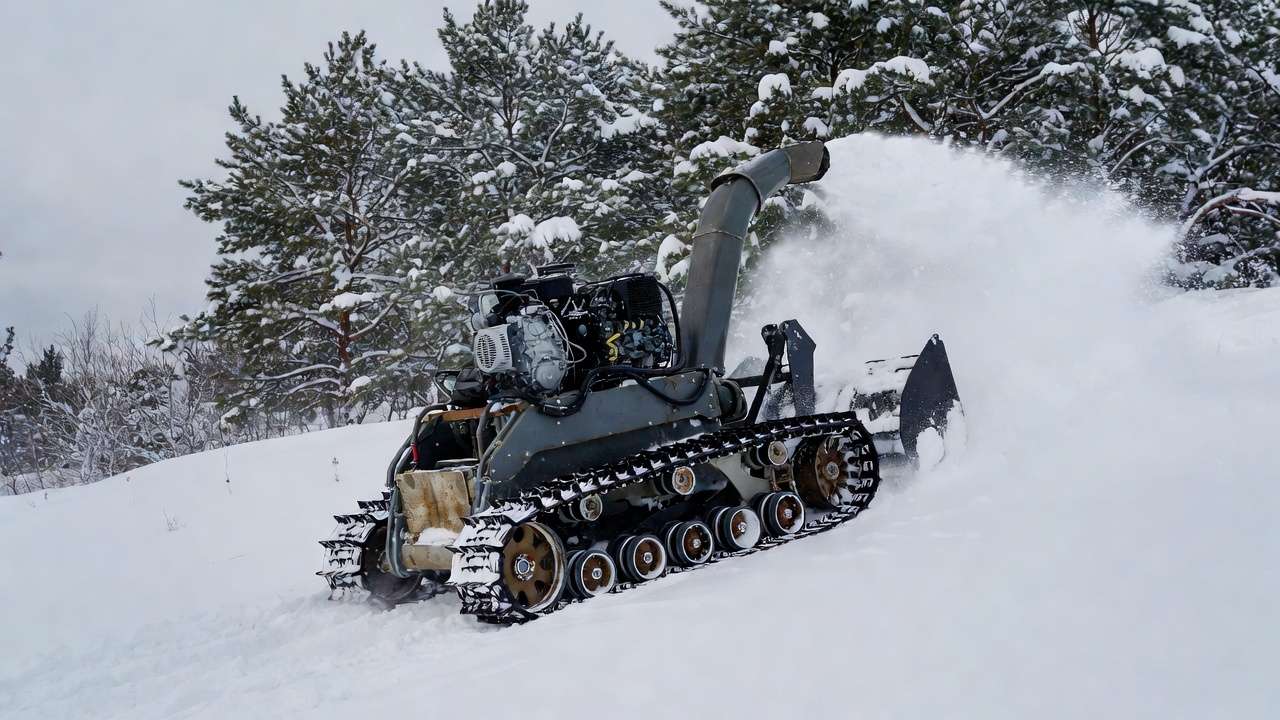
Software vs. Hardware Balance
Many performance improvements (better path efficiency, obstacle recognition, thermal strategies) arrive via over-the-air firmware updates rather than hardware changes—lowering long-term cost but requiring user patience during early ownership.
Future Improvements
Anticipated upgrades include:
- Larger-capacity battery packs
- Heated auger/intake to reduce clogging
- Enhanced slush ejection (possibly variable impeller speed)
- Predictive maintenance via vibration/temperature sensors
Future Trends in Autonomous Snow Removal Engineering
The Yarbo represents an early but significant step toward broader adoption of robotic outdoor maintenance.
Scaling to Commercial/HOA Applications
Larger fleets with centralized management dashboards could serve multi-unit properties, schools, and small commercial lots—reducing labor costs and injury risk.
Integration with Smart Home Ecosystems and Weather APIs
Future versions may pull real-time weather forecasts to preemptively clear before accumulation reaches thresholds, or coordinate with smart garage doors for seamless charging.
Sustainability: Electric vs. Gas, Recyclable Materials, Reduced Emissions
Battery-electric autonomy eliminates direct emissions and noise pollution. As battery recycling infrastructure improves and grid electricity decarbonizes, the environmental advantage grows.
Conclusion
The Yarbo snow blower demonstrates how mechanical engineering principles—modular design, efficient power transmission, advanced sensor fusion, cold-tolerant materials, and vibration isolation—can converge to create truly hands-free winter maintenance solutions. Its two-stage clearing mechanism, RTK-guided autonomy, and thermal management deliver reliable performance in conditions where traditional tools demand human effort and risk.
For mechanical engineers and robotics developers, Yarbo offers valuable lessons in balancing modularity, durability, and intelligent control in extreme environments. For homeowners in snow-prone regions, it solves the core problem of labor-intensive, weather-exposed snow removal—potentially transforming how we approach seasonal outdoor tasks.
As battery technology, AI perception, and OTA updates continue to advance, autonomous snow blowers like Yarbo will likely become mainstream rather than niche. If your winters involve frequent clearing and you value time, safety, and engineering innovation, evaluating this system may prove a worthwhile investment.
FAQs
How much snow can the Yarbo snow blower handle per charge? Up to 6,000–8,000 sq ft in light snow (1–3 in); 2,000–4,000 sq ft in heavier 6–10 in wet snow.
Does the Yarbo work well on gravel driveways? It performs adequately with careful boundary setup, but high-speed impeller throw can fling small stones—use caution.
What happens in slushy conditions? Slush is the most challenging; sticky buildup may require occasional manual clearing of the intake.
How does Yarbo compare to traditional gas snow blowers? Superior in convenience, safety, noise, and emissions; lower per-session capacity but no fuel/maintenance hassles.
Can it operate at night or during blizzards? Yes—onboard lights and vision system support low-visibility; extreme whiteout conditions may still limit detection.
Is the battery effective in -20°F (-29°C) weather? Rated to -25°C with active thermal management; pre-heating during charging is key.
How long does it take to recharge? 20–80% in ~1–1.5 hours; full charge ~3–4 hours.
What maintenance is required? Minimal: rinse salt/snow residue, check shear pins, store battery above freezing, occasional firmware updates.
Can it handle ice or packed snow? Yes for moderate packed snow; very hard ice may activate shear pins or require pre-breaking.
Is the Yarbo snow blower worth the investment for average homeowners? Best for regions with frequent moderate snowfalls, those prioritizing convenience/safety, or anyone who dislikes winter labor.